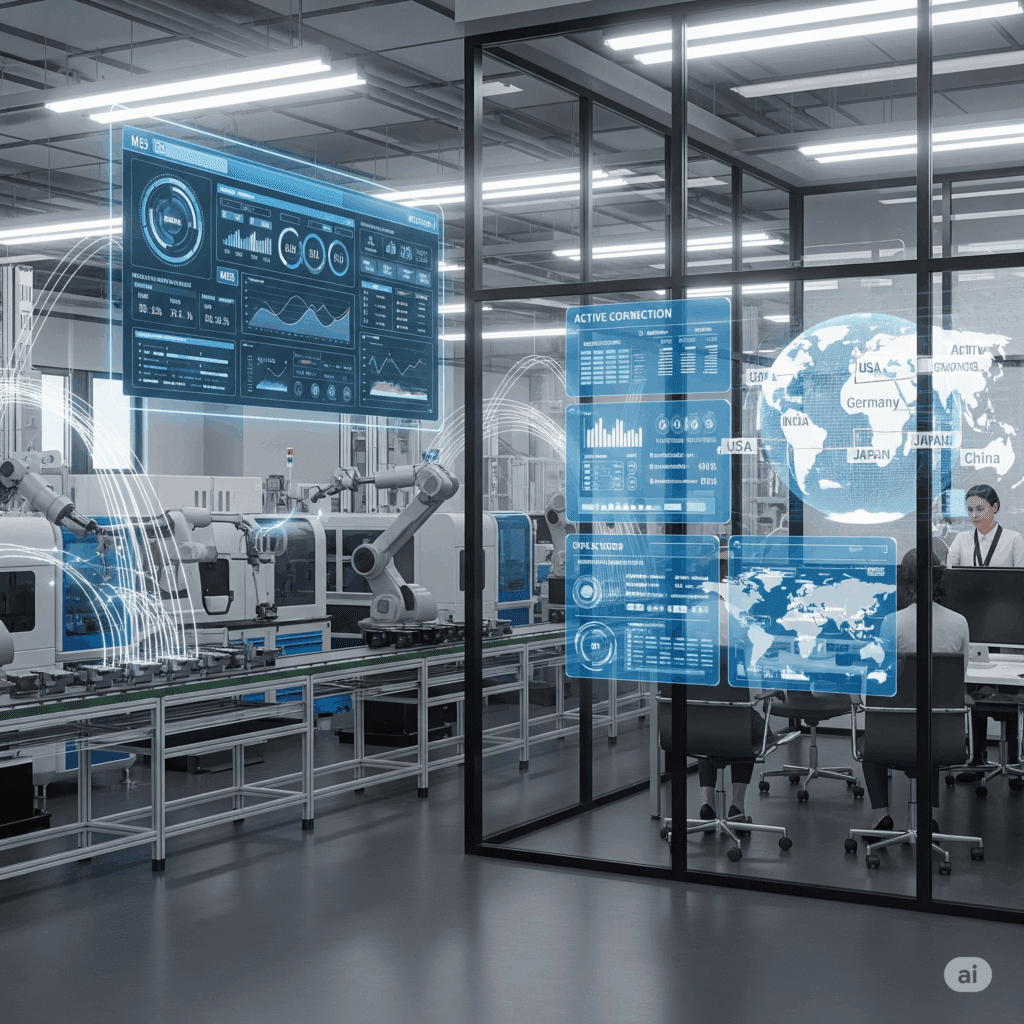
In today’s fast-evolving manufacturing landscape, choosing the right digital tools can define your factory’s success. Whether you are a manufacturer, MSME/SMB owner, engineer, or plant manager, understanding the difference between Manufacturing Execution Systems (MES) and Enterprise Resource Planning (ERP) software is crucial. This blog explores which system suits your factory best in 2025–2030, highlighting practical use-cases from India, USA, Germany, Japan, and China to help you overcome common manufacturing challenges like cost control, efficiency, workforce optimization, export readiness, and quality assurance.
MES and ERP: What Are They?
- MES (Manufacturing Execution System) is a software solution focused on managing and monitoring work on the factory floor in real-time. It bridges the gap between business planning (ERP) and actual production, ensuring production efficiency, quality control, and traceability.
- ERP (Enterprise Resource Planning) software is a broader system integrating various business functions such as finance, supply chain, HR, sales, and inventory management to streamline enterprise-wide operations.
MES vs ERP: Core Differences for Your Factory
| Feature | MES | ERP |
|---|---|---|
| Focus | Factory floor operations | Enterprise-wide management |
| Real-time data | Yes | Often batch processed |
| Production control | Detailed, shop-floor level | High-level planning |
| Quality monitoring | Built-in, immediate feedback | Usually post-production |
| Workforce management | Task allocation and tracking | HR and payroll |
| Supply chain | Limited | Extensive |
Real-World Use Cases (2025-2030)
🇮🇳 India: Bajaj Auto
Bajaj Auto adopted MES to reduce assembly line errors by 20%, improving quality and speeding up delivery to global markets. Their ERP handles vendor management and finance, ensuring a smooth end-to-end process.
🇺🇸 USA: Tesla
Tesla integrates ERP for supply chain and financial planning with MES monitoring battery production in real-time, which has significantly enhanced throughput while maintaining stringent quality standards.
🇩🇪 Germany: Bosch
Bosch employs a hybrid approach, using ERP to manage logistics and MES to optimize complex production processes in their smart factories, achieving high precision and operational efficiency.
🇯🇵 Japan: Toyota
Toyota’s famous Just-in-Time manufacturing benefits from MES for floor-level execution and ERP for demand forecasting and resource planning, enabling them to minimize inventory costs.
🇨🇳 China: Foxconn
Foxconn’s extensive use of MES systems allows real-time tracking of millions of components, while ERP software orchestrates supplier collaboration and global shipment scheduling.
Trends and Tools for 2025-2030
- AI & Machine Learning: MES increasingly integrates AI to predict machine failures and optimize scheduling.
- Cloud-based ERP: Many manufacturers shift to cloud ERP for flexibility and scalability.
- IoT Integration: Smart sensors feed real-time data into MES, improving decision-making.
- Digital Twins: Virtual replicas of factories that simulate production, supported by MES and ERP data.
- Cybersecurity: As factories digitalize, securing MES and ERP becomes vital.
Solving Your Pain Points with MES & ERP
- Cost Control: MES reduces waste on the shop floor; ERP optimizes procurement.
- Efficiency: Real-time monitoring enables faster response to production issues.
- Workforce Management: Automate task allocation and track performance.
- Quality Assurance: Immediate defect detection reduces rework.
- Export Readiness: ERP supports compliance with international trade regulations.
Which System Should You Choose?
- If your main challenge is real-time production visibility and control, MES is your go-to.
- If you need a holistic business management system covering finance, supply chain, and HR, ERP is essential.
- Most modern factories benefit from integrating both systems to leverage the strengths of each.
Are you a solution provider in MES, ERP, IoT, AI, or smart manufacturing? Machina Today offers a unique platform to showcase your innovative technologies to manufacturers, MSMEs, engineers, and plant owners across India, USA, Germany, Japan, and China. Partner with us to reach decision-makers driving the future of manufacturing!
Contact us now to explore advertising opportunities that put your brand at the forefront of Industry 4.0 transformation.

IMTS 2026 Opens in Chicago: AI, CNC, Robotics and Automation Take Center Stage
IMTS 2026 is officially underway in Chicago, bringing the global manufacturing technology industry together at…
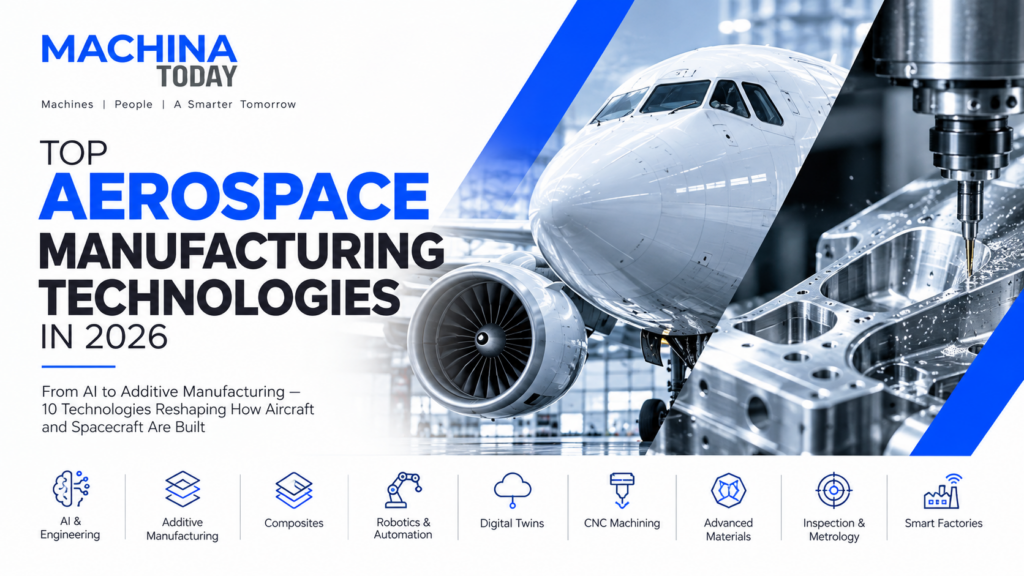
Top Aerospace Manufacturing Technologies in 2026: 10 Technologies Reshaping How Aircraft Are Built
Aerospace manufacturing is entering a new industrial era. From AI-driven engineering and digital twins to…
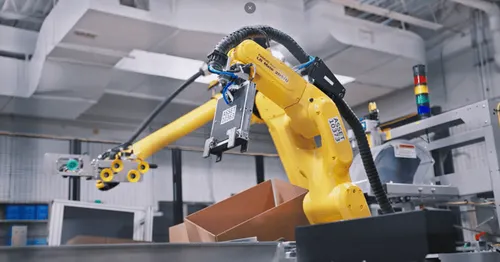
FANUC at IMTS 2026: Physical AI, Robotics and CNC Innovation Move Into the Factory
FANUC America is positioning IMTS 2026 as a showcase for the next stage of industrial…
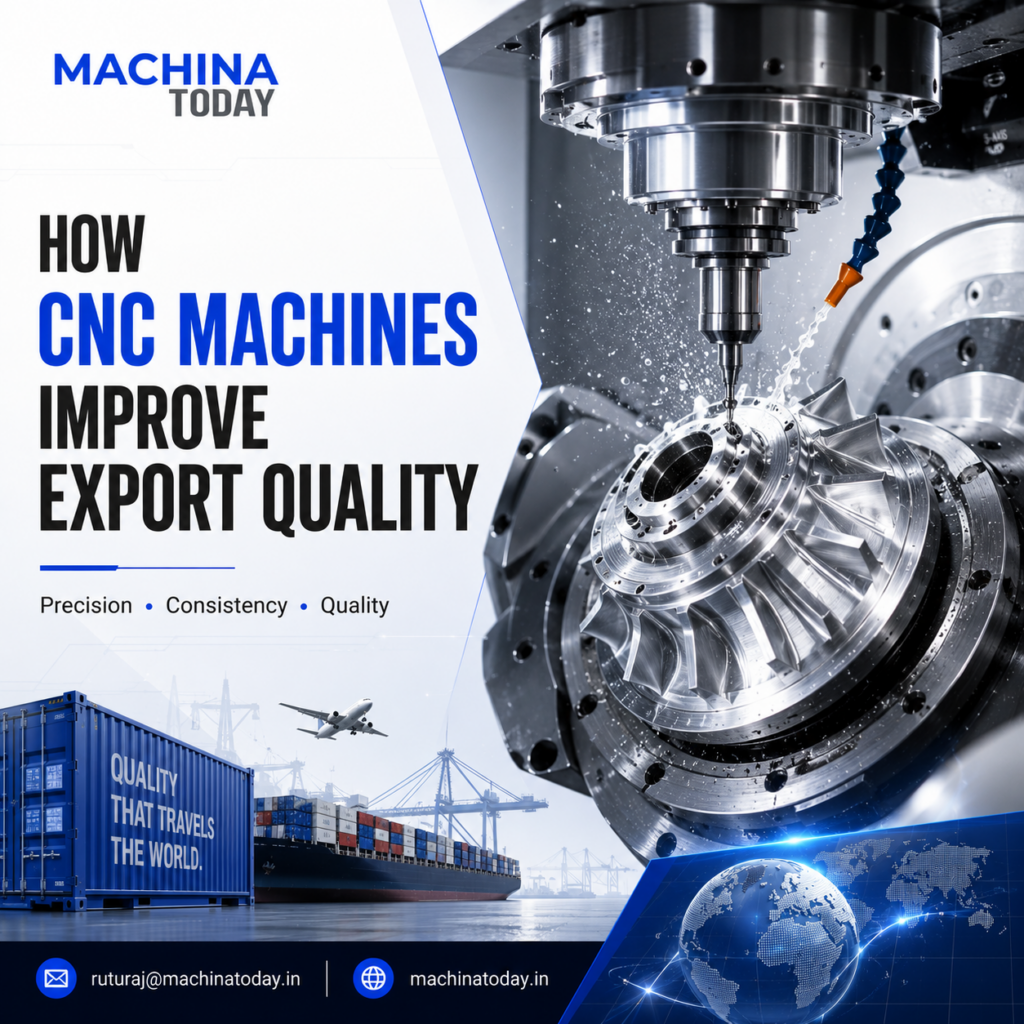
How CNC Machines Improve Export Quality: From Precision Machining to Process Control
Global manufacturing is increasingly built around supply chains where components may be designed in one…

ANCA at IMTS 2026: New Leadership, Precision Tooling and the Next Manufacturing Shift
A new CEO. A legendary founder. One booth. And a manufacturing industry moving faster than…
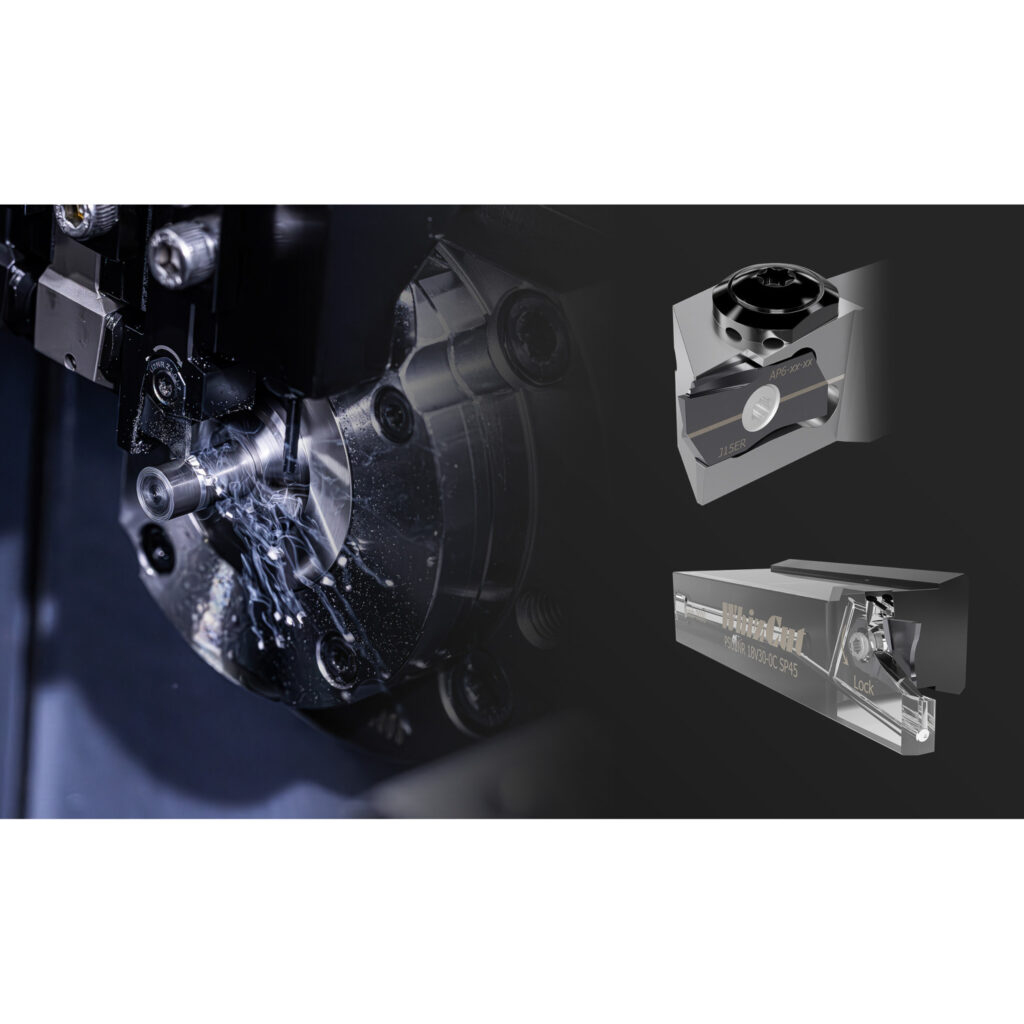
WhizCut at AMB Stuttgart 2026: Smarter Cutting Tools Target Material Waste, Productivity and Sustainable Machining
WhizCut is set to present its precision-tooling portfolio at AMB Stuttgart 2026, with products focused…