
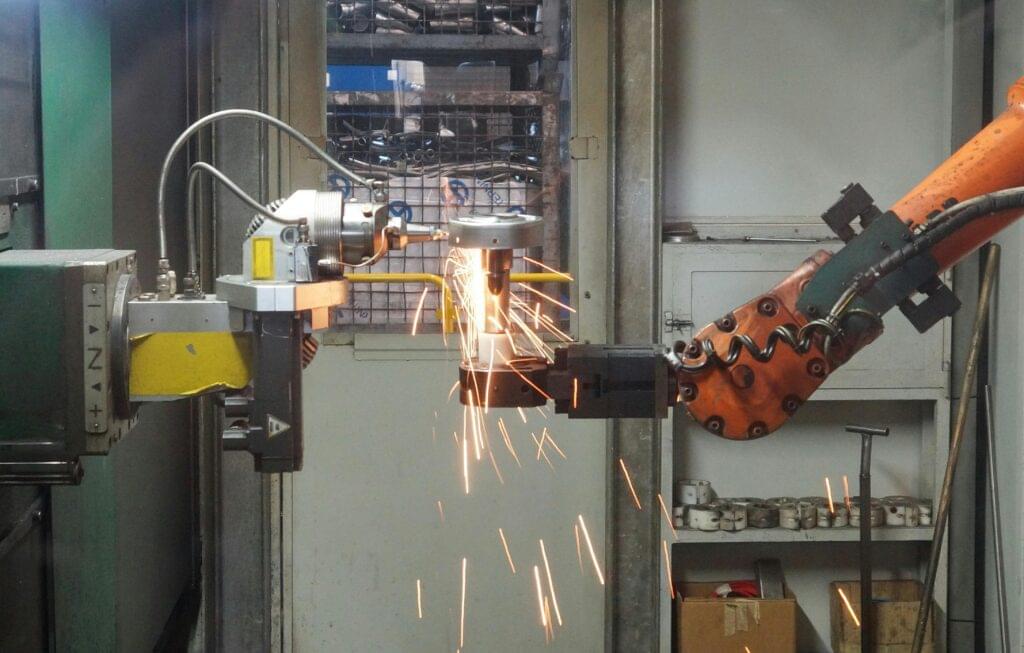
The global manufacturing sector is standing at a crossroads. With Industry 5.0 accelerating, companies are no longer asking if automation should be adopted but how fast it can be deployed. From artificial intelligence (AI) predicting machine breakdowns before they happen, to collaborative robots (cobots) working alongside humans on factory floors, the shift is undeniable.
In India, automation is not just a strategy for large corporations but a survival tool for MSMEs aiming to compete globally. According to recent industry reports, the Indian industrial automation market is projected to cross USD 25 billion by 2030, with SMEs being the fastest adopters.
So, what trends are shaping this transformation in 2025? Here are the top 10 automation trends redefining manufacturing worldwide and in India.
1. AI-Driven Predictive Maintenance
Downtime is the enemy of manufacturing. AI-powered predictive maintenance tools analyze sensor data, machine vibrations, and historical performance to predict breakdowns before they happen.
- Global Insight: Siemens and GE are deploying digital platforms for predictive maintenance in heavy industries.
- India Angle: Indian auto-component makers in Pune and Chennai are adopting low-cost AI monitoring solutions to cut maintenance costs by up to 30%.
2. Digital Twins for Real-Time Simulation
Digital twins—virtual replicas of physical machines—allow manufacturers to test production runs, optimize workflows, and reduce errors.
- Use Case: A digital twin of a CNC machine can simulate tool wear and schedule replacements before errors occur.
- India Angle: L&T and Tata Steel have begun experimenting with digital twins for large-scale manufacturing plants.
3. Rise of Collaborative Robots (Cobots)
Unlike traditional robots that replace human labor, cobots are designed to work with humans. They are safe, adaptive, and affordable for SMEs.
- Global Insight: Universal Robots leads globally with cobots for electronics and packaging industries.
- India Angle: MSMEs in Gujarat and Tamil Nadu are using cobots for repetitive assembly and quality checks.
4. 5G-Powered Smart Factories
5G networks are enabling ultra-low latency communication between machines, robots, and monitoring systems.
- Impact: Faster data transfer = real-time decisions on the factory floor.
- India Angle: With Reliance Jio and Airtel pushing industrial 5G, smart factories are expected to increase by 40% in India over the next 3 years.
5. Autonomous Mobile Robots (AMRs)
AMRs navigate shop floors independently, transporting materials, tools, and products without human intervention.
- Global Insight: Automotive factories in Germany and Japan have reduced logistics costs by 25% using AMRs.
- India Angle: E-commerce giants Flipkart and Amazon India are experimenting with AMRs in warehouses.
6. Sustainability-Driven Automation
Eco-friendly manufacturing is no longer optional. Automation systems are being designed to cut energy waste and carbon emissions.
- Example: Smart HVAC and energy-efficient CNC machines.
- India Angle: Indian textile factories are adopting automated energy monitoring to comply with ESG norms and reduce electricity bills.
7. Human-Robot Collaboration Platforms
Industry 5.0 is about people + technology synergy. Platforms that allow human expertise to guide robots in real time are growing.
- Use Case: Robots do heavy lifting while humans handle creative, design-driven tasks.
- India Angle: Bengaluru-based startups are developing hybrid robot-human workflow platforms for SMEs.
8. Additive Manufacturing + Automation
3D printing combined with robotic automation is creating new possibilities in prototyping and tooling.
- Global Insight: Aerospace companies are producing complex, lightweight components with hybrid 3D + robotic cells.
- India Angle: ISRO and Indian defense suppliers are scaling additive manufacturing with robotic arms for faster production.
9. AI in CNC Machines
CNC machines are becoming smarter with built-in AI for tool-path optimization, error correction, and auto-calibration.
- Global Insight: DMG Mori and Mazak are embedding AI in CNC systems.
- India Angle: MSMEs in Rajkot and Ahmedabad are adopting AI-based CNC retrofits to boost exports.
10. Workforce Upskilling with Automation
Technology is only as good as the people behind it. Training programs in AI, robotics, and data analytics are becoming mandatory.
- India Angle: The Government of India’s Skill India initiative is collaborating with Siemens and Bosch to train thousands of workers for smart factories.
- Global Angle: Germany’s apprenticeship model for Industry 5.0 is being studied worldwide.
The India Advantage: Automation for MSMEs
Unlike developed nations, India’s strength lies in its MSME ecosystem, which contributes nearly 30% to GDP. Automation is leveling the playing field for small manufacturers by:
- Reducing labor dependency.
- Improving consistency and quality.
- Enabling exports to markets like the USA and Germany.
Indian SMEs are no longer lagging; they’re fast becoming global suppliers of precision parts and automated solutions.
The manufacturing world of 2025 is faster, smarter, and greener. From predictive AI tools to cobots and sustainable automation, these trends are not just for big corporations but also for India’s growing MSME sector.
For manufacturers, the choice is clear: embrace automation now or risk being left behind in the global race.
👉 At Machina Today, we track these changes daily—bringing insights, case studies, and industry updates so that businesses of all sizes can stay ahead.
Pingback: Top 10 Automation Trends in Manufacturing for 2025 – RUNIC Engineering