Advertising & Partnership Enquiries:
📧 ruturaj@machinatoday.in | Machina Today
How Automation Helps MSMEs Grow Faster
For years, automation was seen as something only giant factories could afford. But in 2026, that reality has completely changed.
Today, even small and medium manufacturers are using automation to increase production, reduce labor dependency, improve quality, and compete globally. From CNC job shops in Gujarat to electronics manufacturers in Germany and packaging factories in Southeast Asia, automation is becoming the biggest growth engine for MSMEs.
The companies adopting automation early are scaling faster, exporting more, and attracting larger customers.
The companies delaying automation are struggling with rising labor costs, inconsistent quality, and shrinking margins.
This is no longer a “future trend.”
It is happening right now.
Why MSMEs Are Rapidly Adopting Automation
Global manufacturing competition has intensified after supply chain disruptions, labor shortages, and rising operational costs.
Manufacturers are now expected to deliver:
- Faster production
- Better quality
- Lower costs
- Real-time tracking
- Shorter lead times
- Zero-defect manufacturing
For MSMEs, achieving all this manually is becoming impossible.
Automation solves this challenge.
According to industry reports, global industrial automation spending is expected to cross hundreds of billions of dollars over the next few years, with Asia-Pacific leading adoption. India’s MSME manufacturing sector is also seeing rapid investment in CNC automation, robotics, industrial software, and smart factory technologies.
The Biggest Misconception About Automation
Most MSMEs still think automation means:
- Fully robotic factories
- Multi-crore investments
- Removing all workers
- Extremely complicated systems
That is outdated thinking.
Modern automation is modular.
A small factory can start with:
- Automatic tool changers
- Bar feeders
- IoT production monitoring
- Collaborative robots (cobots)
- Smart quality inspection
- Automated loading/unloading
- Production dashboards
- AI-based predictive maintenance
Even a single automation upgrade can dramatically improve profitability.
Real Problem MSMEs Face Today
Many manufacturing MSMEs are stuck in this cycle:
| Problem | Business Impact |
|---|---|
| Skilled labor shortage | Delayed production |
| Human errors | Rejection & scrap |
| Machine downtime | Lost revenue |
| Manual tracking | No production visibility |
| High setup time | Lower productivity |
| Energy waste | Increased operating cost |
| Inconsistent quality | Lost customers |
Automation directly attacks these bottlenecks.
And this is where growth starts.
Hidden Automation Advantage Competitors Rarely Discuss
Most articles only talk about “saving time” or “reducing labor.”
But the biggest hidden advantage is:
Automation Makes MSMEs Look Bigger Than They Are
This changes everything.
When a factory uses:
- Real-time production dashboards
- Automated quality reports
- Smart machine monitoring
- Digital production tracking
- ERP-connected manufacturing
Large OEMs and international buyers trust them more.
Why?
Because automation creates:
- Predictability
- Data transparency
- Process consistency
- Export confidence
- Faster scaling ability
Many MSMEs are winning export orders not because they are the cheapest — but because they appear technologically reliable.
This is one of the biggest competitive advantages in modern manufacturing.
How Automation Increases MSME Profits
1. Higher Machine Utilization
Manual factories often run machines inefficiently.
Automation improves:
- Spindle utilization
- Production scheduling
- Machine uptime
- Night shift productivity
A CNC machine running efficiently for 18 hours instead of 10 hours can completely change factory revenue.
2. Reduced Rejection Rates
AI-powered vision inspection systems and automated measurement systems reduce:
- Human inspection errors
- Dimensional variations
- Surface finish inconsistency
- Rework costs
Even a 2–5% reduction in rejection can save lakhs annually for MSMEs.
3. Faster Delivery = More Orders
Customers value speed.
Factories using:
- Automated loading systems
- Smart scheduling
- Robotic handling
- Digital workflows
can deliver faster than competitors.
This leads to:
- Repeat customers
- Better reputation
- More RFQs
- Export opportunities
4. Lower Dependence on Skilled Operators
One of the biggest manufacturing problems globally is skilled labor shortage.
Automation helps MSMEs:
- Reduce dependency on highly specialized manpower
- Train operators faster
- Standardize processes
- Scale production more easily
This is especially critical in CNC machining and precision manufacturing.
Smart Factory Technologies MSMEs Are Adopting in 2026
CNC Automation
Modern CNC systems now support:
- Automatic tool monitoring
- Smart cycle optimization
- Predictive maintenance
- Remote diagnostics
Popular industrial automation ecosystems include solutions from companies like Siemens, FANUC, ABB, and Mitsubishi Electric.
Collaborative Robots (Cobots)
Cobots are becoming popular because they:
- Require less space
- Are easier to program
- Work alongside humans
- Offer faster ROI
MSMEs use cobots for:
- Machine tending
- Packaging
- Welding
- Pick-and-place operations
- Inspection
Industrial IoT (IIoT)
IIoT allows factories to monitor:
- Machine performance
- Production efficiency
- Downtime
- Energy usage
- Maintenance schedules
This creates data-driven manufacturing.
AI in Manufacturing
AI is now helping MSMEs with:
- Predictive maintenance
- Tool life prediction
- Production optimization
- Demand forecasting
- Quality analytics
Factories using AI-driven systems reduce unexpected downtime significantly.
India’s MSME Automation Opportunity
India is becoming one of the world’s largest manufacturing hubs.
Government initiatives like:
- Make in India
- Digital manufacturing incentives
- Production-linked incentives (PLI)
- Smart manufacturing initiatives
are accelerating industrial modernization.
Indian MSMEs that adopt automation early can benefit from:
- Export growth
- Better global competitiveness
- Faster scaling
- Improved margins
- Stronger customer trust
This is especially important as global companies diversify supply chains beyond single-country dependence.
What Automation ROI Actually Looks Like
Many MSMEs avoid automation because they focus only on upfront investment.
But modern factories calculate ROI differently.
Automation ROI includes:
- Reduced labor dependency
- Lower rejection cost
- Faster delivery
- Increased machine uptime
- Better customer retention
- More production capacity
- Export opportunities
In many cases, MSMEs recover automation investments within 12–36 months.
Biggest Mistake MSMEs Make
The biggest mistake is waiting too long.
Many factory owners think:
“We will automate after we grow.”
But globally, manufacturers are growing because they automated early.
Automation is no longer optional infrastructure.
It is becoming a survival advantage.
Future of MSME Manufacturing
The next generation of manufacturing will be driven by:
- AI-powered factories
- Autonomous production systems
- Digital twins
- Smart CNC ecosystems
- Human-robot collaboration
- Cloud-connected manufacturing
- Real-time analytics
The gap between automated and non-automated factories will grow rapidly over the next five years.
MSMEs adopting technology today will become the industry leaders of tomorrow.
Final Thoughts
Automation is not about replacing humans.
It is about making factories:
- Faster
- Smarter
- More scalable
- More competitive
- More profitable
For MSMEs, automation is no longer a luxury reserved for giant corporations.
It is the fastest path toward sustainable manufacturing growth.
The factories investing in automation today are building the industrial brands of the future.
And in the coming decade, the winners in manufacturing will not necessarily be the biggest companies — but the smartest ones.
FAQ Section
Is automation affordable for MSMEs?
Yes. Modern automation systems are modular and scalable. MSMEs can start small and expand gradually.
Which industries benefit most from automation?
CNC machining, automotive, packaging, electronics, plastics, fabrication, food processing, and precision manufacturing benefit heavily.
Does automation reduce jobs?
Automation changes job roles rather than eliminating all jobs. It creates demand for skilled operators, programmers, and maintenance professionals.
What is the first step for MSMEs?
Start with production monitoring, CNC automation, or simple robotic systems with measurable ROI.
Can small factories compete globally using automation?
Absolutely. Many MSMEs are winning export business through automation-driven consistency and faster delivery.
Advertising & Partnership Enquiries:
📧 ruturaj@machinatoday.in | Machina Today

IMTS 2026 Opens in Chicago: AI, CNC, Robotics and Automation Take Center Stage
IMTS 2026 is officially underway in Chicago, bringing the global manufacturing technology industry together at…
Top Aerospace Manufacturing Technologies in 2026: 10 Technologies Reshaping How Aircraft Are Built
Aerospace manufacturing is entering a new industrial era. From AI-driven engineering and digital twins to…
FANUC at IMTS 2026: Physical AI, Robotics and CNC Innovation Move Into the Factory
FANUC America is positioning IMTS 2026 as a showcase for the next stage of industrial…
How CNC Machines Improve Export Quality: From Precision Machining to Process Control
Global manufacturing is increasingly built around supply chains where components may be designed in one…

ANCA at IMTS 2026: New Leadership, Precision Tooling and the Next Manufacturing Shift
A new CEO. A legendary founder. One booth. And a manufacturing industry moving faster than…
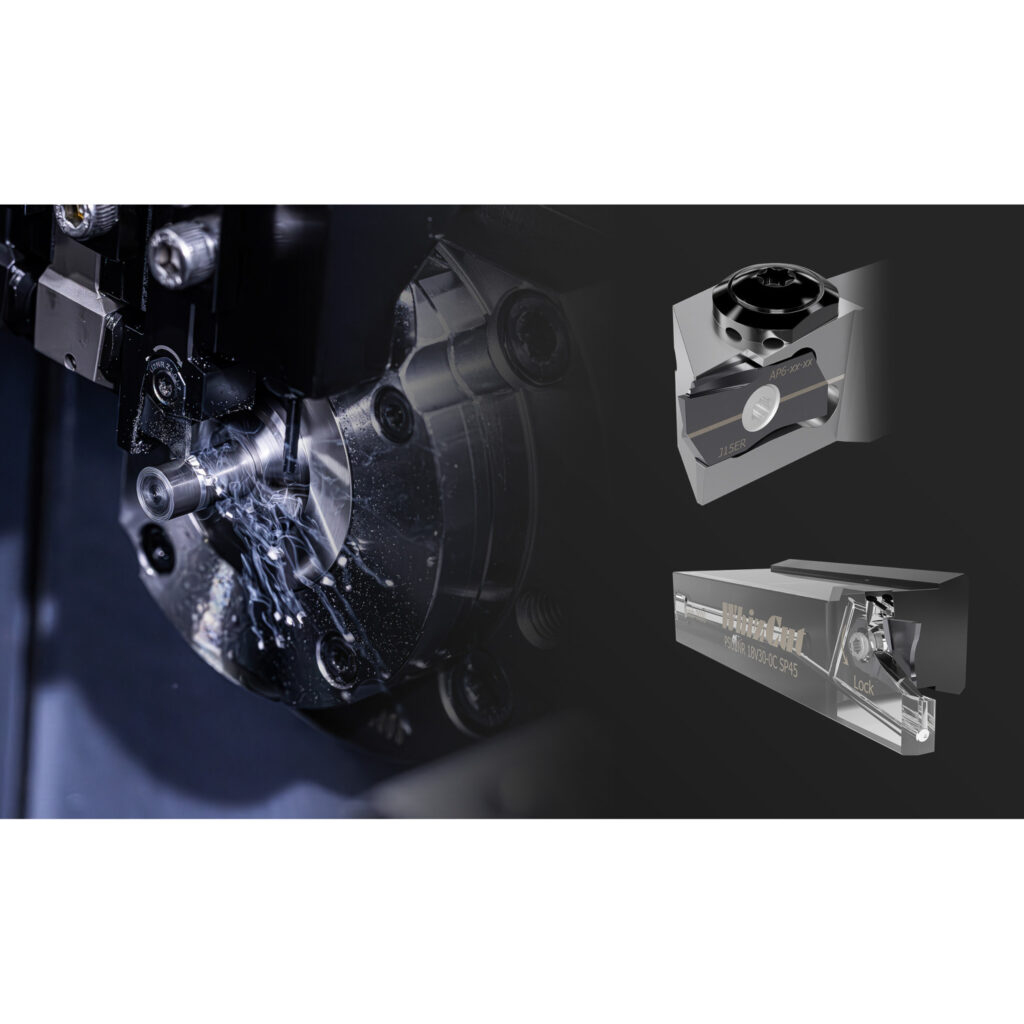
WhizCut at AMB Stuttgart 2026: Smarter Cutting Tools Target Material Waste, Productivity and Sustainable Machining
WhizCut is set to present its precision-tooling portfolio at AMB Stuttgart 2026, with products focused…