The Machines Behind Every AI Breakthrough
Artificial Intelligence is transforming industries at an unprecedented pace. Every ChatGPT prompt, autonomous vehicle, industrial robot, smartphone, medical scanner, and aerospace system relies on one invisible technology: semiconductors.
Yet chips do not manufacture themselves.
Behind every advanced processor is a highly sophisticated ecosystem of semiconductor manufacturing equipment—machines capable of working with atomic-scale precision in ultra-clean environments. These systems represent the pinnacle of engineering, optics, robotics, vacuum technology, precision motion control, and artificial intelligence.
As governments invest billions into domestic semiconductor production and companies race to build next-generation fabs, the semiconductor manufacturing equipment industry is entering one of the fastest periods of growth in industrial history.
For manufacturers, automation companies, industrial suppliers, and technology investors, understanding this transformation is no longer optional—it is essential.
Why Semiconductor Manufacturing Equipment Matters
Semiconductor manufacturing equipment consists of highly specialized machines used to fabricate, inspect, package, and test integrated circuits.
These machines manufacture chips used in:
- Artificial Intelligence
- Data Centers
- Electric Vehicles
- Smartphones
- Aerospace
- Medical Devices
- Robotics
- Industrial Automation
- Smart Manufacturing
- Defense Systems
- Consumer Electronics
Without advanced equipment, there would be no AI revolution.
Global Market Outlook
The semiconductor equipment market continues to expand as worldwide demand for computing power accelerates.
Major growth drivers include:
- Artificial Intelligence
- High Performance Computing
- Electric Vehicles
- Industry 4.0
- 5G Infrastructure
- Industrial IoT
- Robotics
- Smart Factories
- Cloud Computing
- Defense Electronics
Countries including the United States, Germany, Japan, Taiwan, South Korea, Singapore, India, and the Netherlands are investing billions of dollars into semiconductor manufacturing capacity.
This is creating enormous opportunities for equipment manufacturers, automation companies, machine builders, software developers, precision engineering suppliers, and industrial service providers.
Inside a Semiconductor Factory
Modern semiconductor fabs are among the world’s most advanced manufacturing facilities.
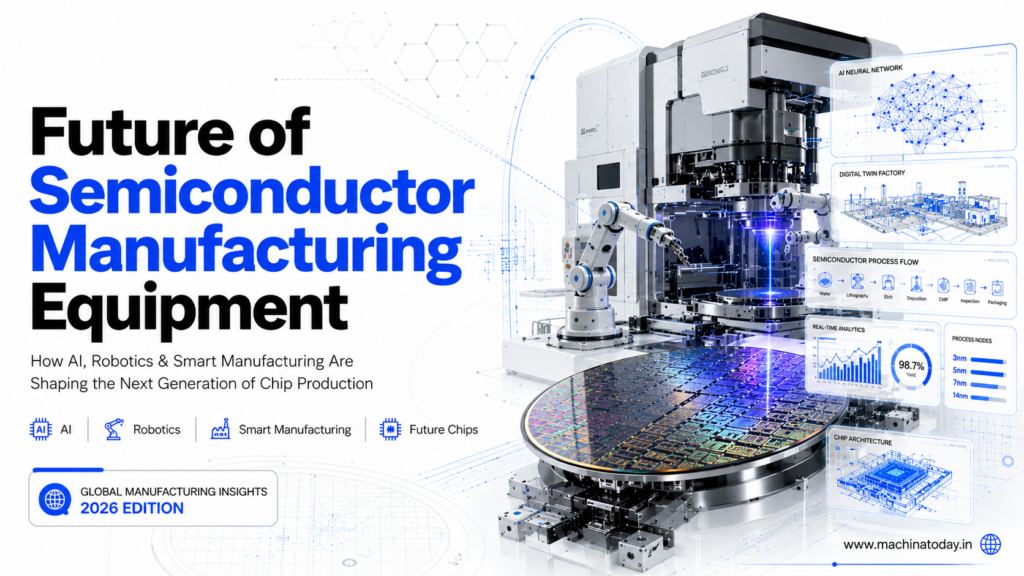
The manufacturing process includes:
• Wafer Manufacturing
• Oxidation
• Thin Film Deposition
• Photolithography
• Etching
• Ion Implantation
• Chemical Mechanical Planarization
• Cleaning
• Inspection
• Metrology
• Packaging
• Testing
Each stage requires specialized equipment operating with nanometer-level precision.
Key Equipment Used in Semiconductor Manufacturing
Photolithography Systems
Often considered the most advanced manufacturing machines ever built, lithography equipment transfers microscopic circuit patterns onto silicon wafafers.
Extreme Ultraviolet (EUV) systems enable production of the world’s most advanced processors.
Deposition Equipment
Deposition machines create ultra-thin material layers only a few atoms thick.
Applications include:
- Logic Chips
- Memory Devices
- Power Electronics
- Sensors
Etching Equipment
Etching removes microscopic material with incredible precision.
Modern AI processors require billions of transistors, making advanced plasma etching essential.
Inspection & Metrology
Defects smaller than a virus particle can destroy an expensive semiconductor wafer.
Advanced inspection systems use:
- AI Vision
- Optical Imaging
- Electron Beams
- Machine Learning
- Data Analytics
Wafer Handling Robots
Automation robots transport wafers inside cleanrooms without contamination.
These robots deliver:
- Higher Yield
- Better Quality
- Faster Production
- Lower Human Error
Industrial robotics continues to become one of the fastest-growing sectors within semiconductor manufacturing.
Global Leaders Driving Semiconductor Equipment Innovation
The semiconductor industry is dominated by several world-class technology companies.
Leading innovators include:
• ASML
• Applied Materials
• Lam Research
• Tokyo Electron
• KLA
• SCREEN Holdings
• ASM International
• Canon
• Nikon
• Hitachi High-Tech
• Advantest
• DISCO
• Kulicke & Soffa
These companies collectively define the future of advanced manufacturing.
Artificial Intelligence is Changing Semiconductor Manufacturing
AI is now embedded inside semiconductor factories.
Applications include:
✔ Predictive Maintenance
✔ Automatic Defect Detection
✔ Production Optimization
✔ Digital Twin Simulation
✔ Process Control
✔ Energy Optimization
✔ Yield Prediction
✔ Autonomous Manufacturing
Factories are becoming increasingly autonomous through AI-driven decision making.
Robotics in Chip Manufacturing
Industrial robots perform tasks impossible for humans.
Benefits include:
- Ultra-clean operation
- High repeatability
- 24/7 production
- Reduced contamination
- Lower operating costs
- Higher productivity
Future fabs will rely on collaborative robots, autonomous mobile robots, and intelligent robotic systems working alongside AI software.
Smart Factories and Industry 5.0
The semiconductor industry is rapidly adopting Industry 5.0 principles.
Future semiconductor factories will feature:
• Human-AI Collaboration
• Autonomous Quality Control
• Digital Twins
• Real-Time Analytics
• Cloud Manufacturing
• Connected Machines
• Predictive Intelligence
• Sustainable Manufacturing
These technologies are redefining industrial productivity.
Sustainability is Becoming a Competitive Advantage
Modern semiconductor plants focus on:
- Water Recycling
- Renewable Energy
- Carbon Reduction
- Waste Management
- Energy Efficient Equipment
- Circular Manufacturing
Customers increasingly evaluate suppliers based on ESG performance in addition to manufacturing capability.
Opportunities for Industrial Manufacturers
Semiconductor growth is creating opportunities across multiple industries.
Companies supplying these sectors are expected to benefit significantly:
- CNC Machine Builders
- Precision Machining
- Automation Integrators
- Industrial Robotics
- Metrology Equipment
- Industrial Software
- Motion Control
- Industrial Sensors
- Vacuum Technology
- Cleanroom Equipment
- Machine Vision
- Industrial AI
- Factory Automation
IMTS 2026 & AMB 2026: Where the Future Will Be Unveiled
The world’s leading manufacturing exhibitions are becoming the launchpads for next-generation semiconductor and automation technologies.
At IMTS 2026 (Chicago) and AMB 2026 (Stuttgart), visitors can expect to see:
- AI-powered manufacturing solutions
- Precision CNC innovations
- Digital twin platforms
- Robotics for advanced manufacturing
- Smart factory software
- Industrial automation systems
- Precision measurement technologies
- Next-generation machining solutions
- Connected manufacturing ecosystems
These events provide manufacturers with an opportunity to discover technologies that will shape the next decade of industrial production.
Machina Today will closely follow global manufacturing trends, technology launches, industry interviews, and product innovations from major international exhibitions, helping readers stay informed about the future of manufacturing.
Why Industrial Companies Need Digital Marketing Today
Building great machines is no longer enough.
Global buyers begin their purchasing journey online.
Manufacturers investing in digital visibility gain significant competitive advantages through:
- SEO-Optimized Websites
- Technical Content Marketing
- LinkedIn Thought Leadership
- Product Launch Campaigns
- Industrial Branding
- Manufacturing News Coverage
- Video Marketing
- Exhibition Promotion
- AI Search Optimization
- Global Lead Generation
Companies that educate the market become trusted industry leaders.
How Machina Today Helps Manufacturing Companies Grow
Machina Today is more than an industrial publication—we are a digital-first manufacturing media platform connecting global manufacturers with engineers, decision-makers, and industrial buyers.
Our services include:
- Industrial Content Marketing
- Sponsored Articles
- Product Launch Coverage
- Manufacturing News
- LinkedIn Marketing
- SEO & GEO Content Strategy
- AI Search Optimization
- Exhibition Promotion
- Brand Awareness Campaigns
- Global Manufacturing Media Partnerships
Whether you are launching a CNC machine, industrial robot, automation software, semiconductor solution, or smart factory technology, our goal is to help your brand reach the right audience.
The Road to 2035
Over the next decade, semiconductor manufacturing equipment will become even more intelligent.
Expect major advances in:
- AI-driven factories
- Quantum computing hardware
- Advanced packaging
- Silicon photonics
- Chiplet manufacturing
- Fully autonomous fabs
- Sustainable semiconductor production
- Hyper-automation
- Smart robotics
- Digital manufacturing ecosystems
Manufacturing companies that embrace innovation today will lead tomorrow’s industrial economy.
Final Thoughts
Semiconductor manufacturing equipment represents far more than specialized machinery—it is the foundation of the digital world.
Every breakthrough in artificial intelligence, electric mobility, cloud computing, robotics, aerospace, healthcare, and industrial automation begins with advanced semiconductor manufacturing.
As governments expand domestic chip production and global manufacturers accelerate investment in smart factories, the demand for cutting-edge equipment, automation, software, and precision engineering will continue to grow.
For manufacturers, suppliers, and technology innovators, the opportunity has never been greater.
The future of manufacturing will be built by companies that combine engineering excellence with digital innovation—and those who share their expertise with the world.
Stay ahead of the future with Machina Today, your trusted source for global manufacturing intelligence, industrial innovation, and technology insights.

IMTS 2026 Opens in Chicago: AI, CNC, Robotics and Automation Take Center Stage
IMTS 2026 is officially underway in Chicago, bringing the global manufacturing technology industry together at…
Top Aerospace Manufacturing Technologies in 2026: 10 Technologies Reshaping How Aircraft Are Built
Aerospace manufacturing is entering a new industrial era. From AI-driven engineering and digital twins to…
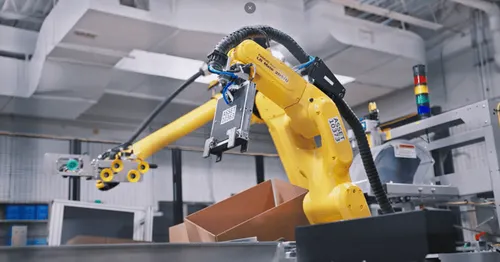
FANUC at IMTS 2026: Physical AI, Robotics and CNC Innovation Move Into the Factory
FANUC America is positioning IMTS 2026 as a showcase for the next stage of industrial…
How CNC Machines Improve Export Quality: From Precision Machining to Process Control
Global manufacturing is increasingly built around supply chains where components may be designed in one…

ANCA at IMTS 2026: New Leadership, Precision Tooling and the Next Manufacturing Shift
A new CEO. A legendary founder. One booth. And a manufacturing industry moving faster than…
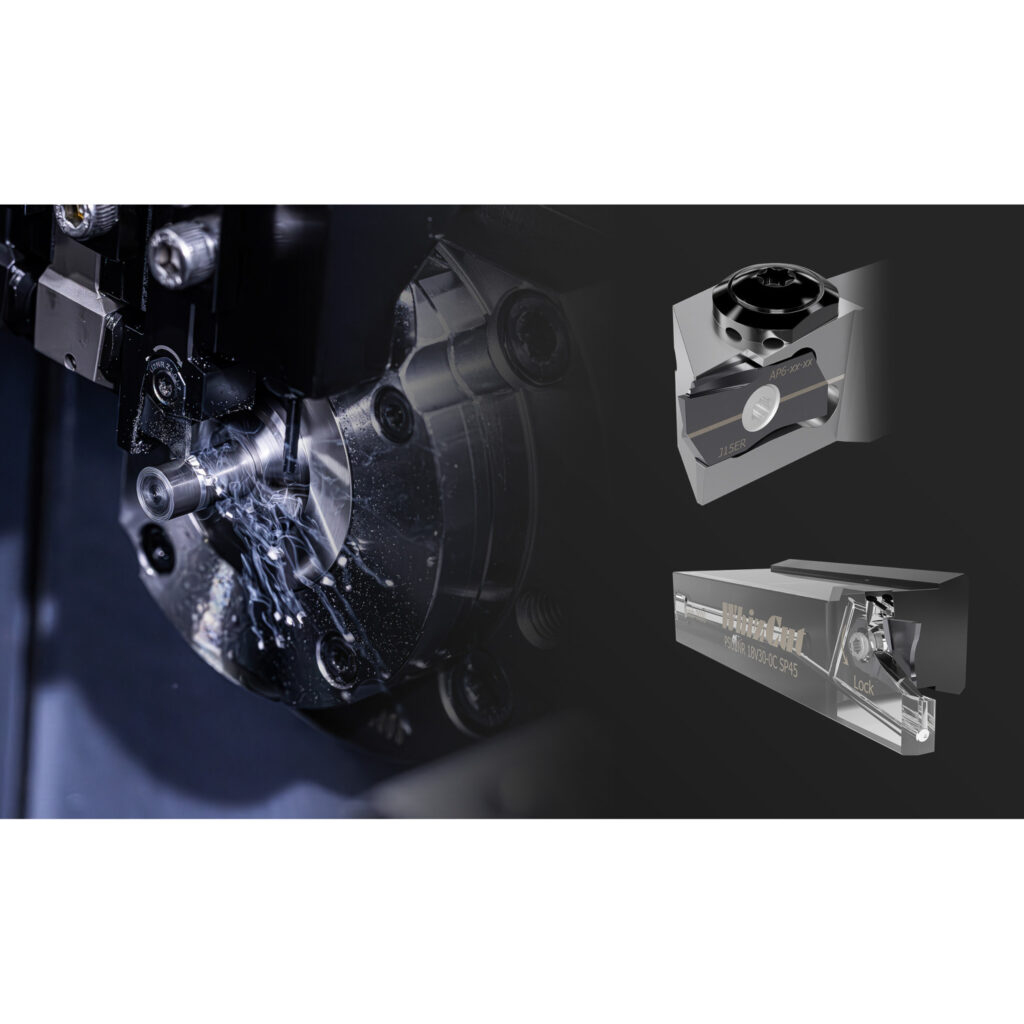
WhizCut at AMB Stuttgart 2026: Smarter Cutting Tools Target Material Waste, Productivity and Sustainable Machining
WhizCut is set to present its precision-tooling portfolio at AMB Stuttgart 2026, with products focused…