Robots have been part of manufacturing for decades. They weld automotive bodies, move components, machine parts, package products and perform repetitive assembly operations.
But traditional industrial robots generally follow predefined instructions.
Artificial intelligence is changing that.
When AI and robotics work together, robots can increasingly understand their surroundings, identify objects, detect abnormalities, optimize processes and make decisions based on real-time data.
This combination is creating a new generation of intelligent manufacturing systems where machines are not simply automated—they are becoming increasingly adaptive, connected and data-driven.
From automotive factories in Germany and Japan to semiconductor plants in the United States and smart factories across India, AI-powered robotics is becoming an important part of the next generation of manufacturing.
What Is the Difference Between Robotics and AI?
Before understanding how they work together, it is important to distinguish the two technologies.
Robotics
Robotics combines mechanical engineering, electronics, sensors, control systems and software to build machines capable of performing physical tasks.
Industrial robots can:
- Move components
- Weld parts
- Pick and place products
- Assemble components
- Perform inspection
- Handle materials
- Paint surfaces
- Load and unload machines
- Package products
Traditional robots are extremely precise and repeatable, but many operate according to predefined programs.
Artificial Intelligence
Artificial intelligence (AI) enables machines and software to analyze information, recognize patterns, make predictions and support decisions.
In manufacturing, AI can analyze:
- Machine data
- Images
- Production parameters
- Sensor information
- Quality data
- Maintenance history
- Energy consumption
- Production schedules
The real transformation happens when these capabilities are combined.
How Do Robotics and AI Work Together?
A simple way to understand the relationship is:
Robotics provides the physical capability.
AI provides intelligence.
A robot can physically move an object.
AI can help determine which object to pick, where it is located, whether it is defective and what action should happen next.
A typical AI-enabled robotic system can work through several stages:
Sensors → Data → AI Analysis → Decision → Robot Action → Feedback
This creates a continuous feedback loop.
For example, a robotic inspection system can use cameras to capture an image of a machined component. AI-based vision software analyzes the image and identifies a potential defect. The system then instructs a robot to remove the defective component from the production line.
Instead of simply repeating a programmed movement, the system responds to information from the manufacturing environment.
1. AI Gives Robots Better Machine Vision
One of the most important applications of AI in robotics is computer vision.
Traditional machine vision systems often depend on predefined rules.
AI-based vision systems can learn patterns from large datasets and identify variations that may be difficult to detect using conventional inspection methods.
In manufacturing, AI-powered robotic vision can be used for:
- Defect detection
- Surface inspection
- Part identification
- Dimensional inspection
- Component orientation
- Assembly verification
- Barcode and object recognition
- Sorting
For example, a robot equipped with cameras and AI vision can identify different components moving along a conveyor and determine which component should be picked.
This is particularly valuable for factories producing multiple product variants.
2. AI Helps Robots Make Better Decisions
Traditional automation generally follows a fixed sequence.
AI introduces greater adaptability.
Imagine a warehouse robot encountering several objects positioned differently on a workstation.
Instead of requiring every possible position to be manually programmed, an AI system can analyze camera and sensor data and determine the appropriate movement.
This makes robotic systems more useful in environments where:
- Product sizes change
- Components are randomly positioned
- Production volumes fluctuate
- Manufacturing processes vary
- Human operators interact with machines
The result is more flexible automation.
3. Predictive Maintenance for Robotic Systems
AI can also help manufacturers maintain robotic equipment.
Industrial robots generate large quantities of operational data, including information related to:
- Motor performance
- Temperature
- Vibration
- Torque
- Operating cycles
- Servo performance
- Energy consumption
AI algorithms can analyze these signals to identify patterns associated with potential equipment problems.
Instead of waiting for a robot to fail, manufacturers can potentially identify abnormal behavior earlier and schedule maintenance.
This approach is known as predictive maintenance.
Why it matters
Unexpected equipment downtime can disrupt production schedules and increase operating costs.
AI-assisted predictive maintenance can help manufacturers move from:
Reactive maintenance → Preventive maintenance → Predictive maintenance
That shift can improve equipment availability and maintenance planning.
4. AI + Robots for Quality Control
Quality inspection is another major application.
A robotic inspection system can combine:
Robot + Camera + AI Vision + Manufacturing Data
The robot positions the camera or component precisely while AI analyzes the collected images or measurements.
Applications include:
- Detecting scratches
- Identifying cracks
- Checking assembly errors
- Inspecting welds
- Detecting surface defects
- Verifying component presence
- Checking product orientation
For high-volume manufacturing, this can provide consistent inspection across large numbers of components.
5. AI Makes Robots More Flexible
Manufacturing is moving away from purely mass-production models toward greater customization.
Customers increasingly expect:
- More product variants
- Smaller production batches
- Faster delivery
- Greater customization
Traditional fixed automation can become difficult to justify when production changes frequently.
AI-powered robotics can make automation more adaptable.
For example, a robotic system can use AI vision to recognize different components and automatically determine how each component should be handled.
This supports the concept of flexible manufacturing.
6. Collaborative Robots and AI
Collaborative robots, or cobots, are designed to work alongside humans in appropriate manufacturing environments.
AI can make these systems more capable by helping them understand:
- Human movement
- Object locations
- Production conditions
- Task requirements
- Environmental changes
AI can therefore support more dynamic human-robot collaboration.
Instead of completely replacing human workers, the goal in many Industry 5.0 applications is to combine:
Human creativity + AI intelligence + robotic precision
This can be particularly valuable for tasks requiring both manual expertise and repetitive physical operations.
7. AI and Autonomous Mobile Robots
The combination of AI and robotics extends beyond robotic arms.
Autonomous mobile robots (AMRs) can transport materials around factories and warehouses.
AI can help these systems:
- Navigate environments
- Avoid obstacles
- Optimize routes
- Identify locations
- Coordinate with other systems
- Respond to changing conditions
For a smart factory, this means material movement can become increasingly connected to production requirements.
For example, if a machining cell requires a particular component, a connected system could coordinate material movement based on production demand.
8. Robotics + AI + Digital Twins
Another important development is the combination of robotics, AI and digital twins.
A digital twin creates a digital representation of a physical machine, production line or manufacturing process.
Manufacturers can use digital models to simulate:
- Robot movements
- Production layouts
- Cycle times
- Bottlenecks
- Maintenance scenarios
- Process changes
AI can analyze simulation and operational data to identify potential improvements.
This creates a powerful technology stack:
Digital Twin + AI + Robotics + Industrial IoT
Together, these technologies can support more intelligent production planning and optimization.
AI + Robotics in CNC Manufacturing
The combination is particularly interesting for the machine-tool industry.
Modern CNC factories increasingly connect:
CNC Machines + Robots + Sensors + AI + Manufacturing Software
A robotic system can load and unload CNC machines while AI analyzes production data.
Potential applications include:
- Automated machine tending
- Tool wear prediction
- Process monitoring
- Part inspection
- Production scheduling
- Anomaly detection
- Predictive maintenance
- Automated material handling
For manufacturers operating multiple CNC machines, intelligent automation can help improve machine utilization and reduce repetitive manual operations.
Why AI-Powered Robotics Matters for Manufacturers
The value of AI and robotics is not simply about replacing manual tasks.
The bigger opportunity is creating a more intelligent production system.
Key benefits include:
Higher productivity
Robots can operate continuously and perform repetitive tasks consistently.
Improved quality
AI vision can support automated inspection and defect detection.
Reduced downtime
Predictive analytics can help identify potential equipment problems.
Greater flexibility
AI can help robots adapt to changing products and environments.
Better worker safety
Robots can perform certain repetitive, hazardous or physically demanding tasks.
Data-driven decisions
Manufacturers can use production data to optimize operations.
What Does the Future of AI and Robotics Look Like?
The next stage of industrial automation is moving toward autonomous and intelligent production systems.
Future factories could increasingly combine:
- AI agents
- Industrial robots
- Cobots
- AMRs
- Computer vision
- Digital twins
- Industrial IoT
- Cloud and edge computing
- Predictive analytics
- Connected CNC machines
The important shift is from automation of individual tasks toward intelligence across entire production systems.
Instead of asking:
“How can we automate this machine?”
manufacturers may increasingly ask:
“How can we make the entire production system intelligent?”
That is where the real potential of AI and robotics lies.
AI + Robotics: Challenges Manufacturers Need to Consider
Despite the potential, implementing intelligent robotics is not always straightforward.
Manufacturers need to consider:
Initial investment
AI-enabled robotic systems can require significant investment in robots, sensors, cameras, software, integration and infrastructure.
Data quality
AI systems depend heavily on reliable and relevant data.
Poor-quality data can lead to poor results.
Integration
AI robotics often needs to communicate with existing:
- CNC machines
- PLCs
- MES platforms
- ERP systems
- SCADA systems
- Industrial networks
Workforce skills
Factories need engineers and technicians who understand robotics, automation, data and AI.
Cybersecurity
As robots become more connected, cybersecurity becomes increasingly important.
AI and Robotics by Region
United States
The U.S. manufacturing sector is increasingly focused on automation, AI, semiconductor manufacturing, aerospace, automotive and advanced manufacturing.
Germany
Germany remains a major center for industrial automation, machine tools, automotive manufacturing and Industry 4.0 technologies.
Japan
Japan has long been a global leader in industrial robotics and automation, particularly in automotive and electronics manufacturing.
India
India is seeing growing adoption of robotics and automation across automotive, engineering, electronics, warehousing and MSME manufacturing.
For Indian manufacturers, AI-powered automation could become increasingly important as companies look to improve productivity and compete in global supply chains.
South Korea
South Korea has strong adoption of robotics and automation across electronics, automotive and advanced manufacturing.
AI + Robotics and Industry 5.0
Industry 4.0 focused heavily on connectivity, automation and data.
Industry 5.0 increasingly emphasizes collaboration between:
Humans + Machines + AI
This does not necessarily mean factories without humans.
Instead, the future may involve humans focusing on:
- Problem solving
- Creativity
- Process improvement
- Complex decisions
- Engineering
- Supervision
while robots handle repetitive and physically demanding operations.
AI becomes the bridge between data and action.
Frequently Asked Questions
How do robotics and AI work together?
Robotics provides the physical ability to perform tasks, while AI analyzes data, recognizes patterns and supports decision-making. Together, they allow machines to perform more adaptive and intelligent manufacturing operations.
What is AI-powered robotics?
AI-powered robotics combines robotic hardware with artificial intelligence technologies such as machine learning, computer vision and predictive analytics.
How is AI used in industrial robots?
AI can be used for machine vision, object recognition, predictive maintenance, path optimization, quality inspection, anomaly detection and adaptive automation.
Can AI replace industrial workers?
AI and robotics can automate certain repetitive or hazardous tasks, but manufacturing also requires human engineering, supervision, creativity and decision-making. In many applications, the future is likely to involve humans and machines working together.
What industries use AI and robotics?
Major applications include automotive, aerospace, electronics, semiconductor manufacturing, logistics, food processing, pharmaceuticals, machine tools and general manufacturing.
What is the difference between robotics and AI?
Robotics focuses on machines that perform physical actions, while AI focuses on systems that analyze information and make predictions or decisions. Combining both creates intelligent robotic systems.
How will AI and robotics affect smart factories?
AI and robotics can help smart factories become more automated, adaptive and data-driven by connecting physical machines with real-time data, intelligent analytics and automated decision-making.
Robotics gives machines the ability to act. AI gives them the ability to understand, predict and adapt.
Together, they are creating a new generation of intelligent manufacturing.
The factories of the future will not simply contain more robots.
They will contain more connected, intelligent and adaptive machines working alongside people.
For manufacturers, the opportunity is not just automation.
It is the transition from automated factories to intelligent factories.

IMTS 2026 Opens in Chicago: AI, CNC, Robotics and Automation Take Center Stage
IMTS 2026 is officially underway in Chicago, bringing the global manufacturing technology industry together at…
Top Aerospace Manufacturing Technologies in 2026: 10 Technologies Reshaping How Aircraft Are Built
Aerospace manufacturing is entering a new industrial era. From AI-driven engineering and digital twins to…
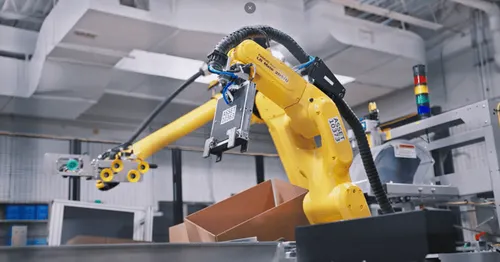
FANUC at IMTS 2026: Physical AI, Robotics and CNC Innovation Move Into the Factory
FANUC America is positioning IMTS 2026 as a showcase for the next stage of industrial…
How CNC Machines Improve Export Quality: From Precision Machining to Process Control
Global manufacturing is increasingly built around supply chains where components may be designed in one…

ANCA at IMTS 2026: New Leadership, Precision Tooling and the Next Manufacturing Shift
A new CEO. A legendary founder. One booth. And a manufacturing industry moving faster than…
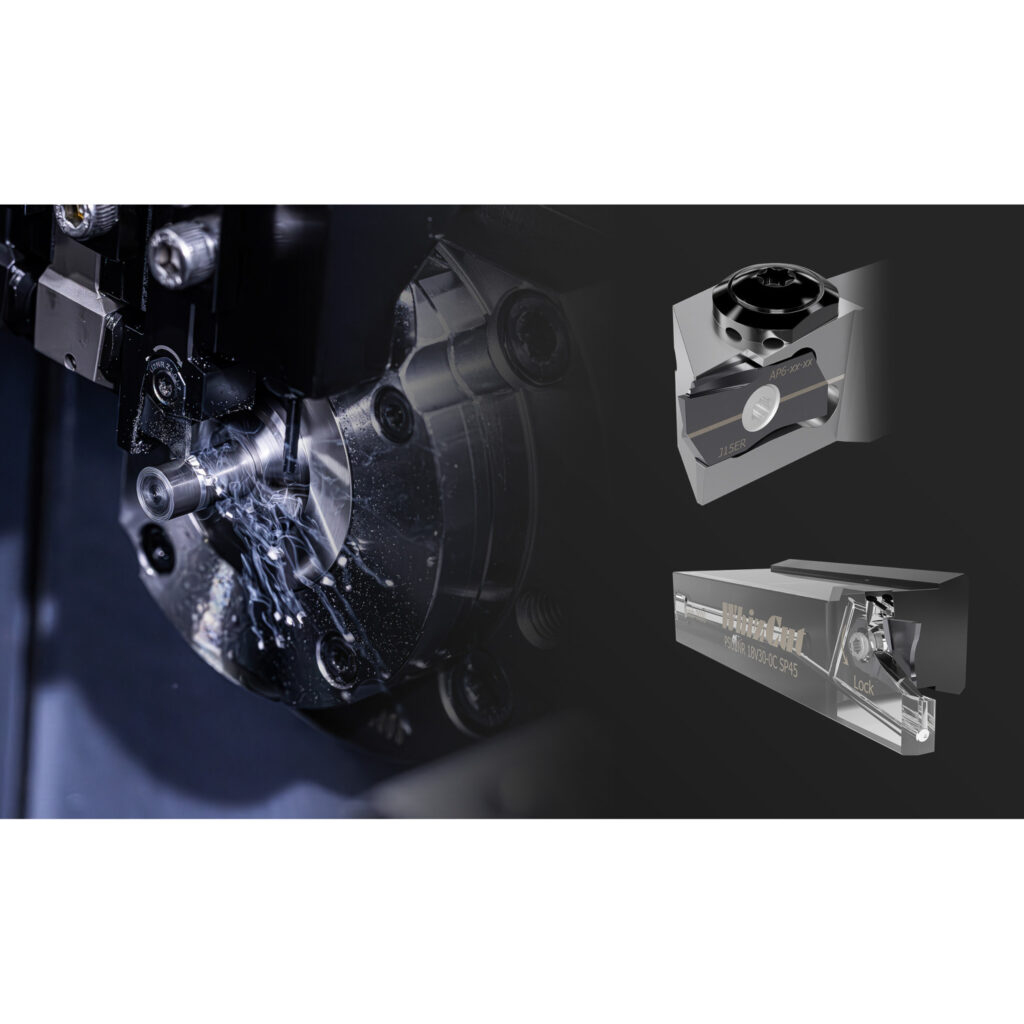
WhizCut at AMB Stuttgart 2026: Smarter Cutting Tools Target Material Waste, Productivity and Sustainable Machining
WhizCut is set to present its precision-tooling portfolio at AMB Stuttgart 2026, with products focused…