For decades, spindle speed has been one of the easiest numbers to compare when evaluating CNC machine performance.
10,000 RPM.
15,000 RPM.
20,000 RPM.
30,000 RPM.
Higher numbers look impressive.
But is spindle speed alone still the best indicator of CNC machining performance?
Maybe not.
The next competitive advantage in CNC manufacturing may come from something less obvious: how effectively a machine converts its available speed, rigidity, control intelligence, tooling, and automation into productive cutting time.
For manufacturers competing on cycle time, quality, energy consumption, machine utilization, and cost per component, the question is changing.
It’s no longer simply “How fast can the spindle rotate?”
It’s “How efficiently can the entire machine produce a good part?”
That shift could define the next generation of CNC manufacturing.
The RPM Race Has a Limit
Spindle speed matters.
It directly influences cutting conditions, especially in applications involving small-diameter tools, aluminum, aerospace components, medical components, and high-speed machining.
But increasing RPM does not automatically mean increasing productivity.
A machine running at 20,000 RPM can still be less productive than a 12,000-RPM machine if it suffers from:
- Excessive vibration
- Poor thermal stability
- Long tool-change times
- Slow acceleration and deceleration
- Inefficient workholding
- Poor chip evacuation
- Unstable cutting conditions
- Excessive setup time
- Manual intervention
- Unoptimized toolpaths
This is where the next CNC advantage becomes interesting.
The spindle is only one part of the production system.
What Could Define the Next CNC Advantage?
1. Rigidity Could Matter More Than Maximum RPM
A high-speed spindle is valuable only when the machine structure can control the forces generated during machining.
Machine rigidity affects:
- Vibration
- Surface finish
- Tool life
- Dimensional accuracy
- Cutting stability
- Material-removal capability
This is particularly important when machining difficult materials or performing aggressive cutting.
A rigid machine running at a moderate spindle speed can sometimes outperform a faster machine that cannot maintain stable cutting conditions.
The real question:
Can the machine maintain cutting performance at the required speed and load?
That is a much more useful question than simply asking for the maximum RPM.
2. Acceleration May Become as Important as Maximum Speed
Imagine two machines.
Machine A: 20,000 RPM spindle
Machine B: 15,000 RPM spindle
At first glance, Machine A appears to have the advantage.
But what happens if Machine B reaches its productive cutting speed faster, changes tools faster, moves between features faster, and spends less time waiting?
The result can be very different.
Modern machining productivity depends heavily on dynamic performance.
That includes:
- Axis acceleration
- Rapid traverse
- Spindle acceleration
- Deceleration
- Tool-change time
- Positioning response
- Look-ahead capability
- Servo response
The machine that spends less time waiting can ultimately produce more parts.
3. The Toolpath Is Becoming Part of the Machine
A CNC machine is no longer simply hardware.
The combination of:
Machine + CNC control + CAM + tooling + cutting data + software
increasingly determines the final result.
Modern controls can analyze upcoming toolpath movements and optimize machine motion before the tool reaches the cutting area.
Look-ahead algorithms, high-speed machining functions, smoothing technologies, adaptive control and intelligent toolpath strategies can help reduce:
- Sudden axis movements
- Unnecessary acceleration
- Cutting instability
- Cycle time
- Surface defects
This means two machines with similar mechanical specifications can produce very different results.
The specification sheet doesn’t always tell the whole story.
4. Thermal Stability Is Becoming a Competitive Advantage
Here is a less glamorous specification that can have a major effect on production:
Temperature.
As machining systems operate for longer periods, heat can affect:
- Spindle accuracy
- Ball screws
- Machine geometry
- Workpiece dimensions
- Tool position
- Repeatability
For high-precision manufacturing, maintaining stability throughout a production run can be more important than achieving an impressive peak spindle speed.
The next generation of CNC machines will increasingly compete on their ability to remain accurate, not simply become fast.
5. Automation Changes the Productivity Equation
A machine can only cut metal when it is cutting.
The rest of the time, production may be spent on:
- Loading
- Unloading
- Tool changes
- Inspection
- Setup
- Material handling
- Workpiece positioning
- Operator intervention
This is where automation becomes critical.
Robotic loading, pallet systems, automatic probing, tool management, in-process measurement and connected production systems can significantly increase machine utilization.
Consider a machine that cuts 10% faster but spends substantial time waiting for an operator.
Now compare it with a machine that cuts slightly slower but operates with automated loading, probing and process monitoring.
Which machine creates more production value?
That’s the question manufacturers should be asking.
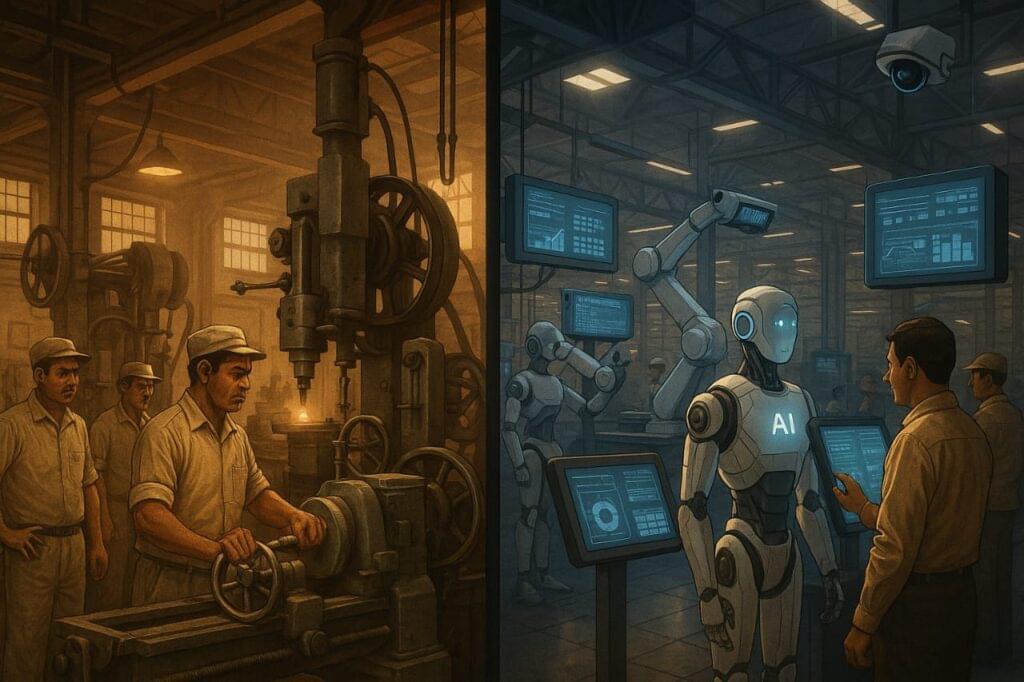
6. AI Could Move CNC Optimization From Reactive to Predictive
Artificial intelligence is increasingly entering manufacturing workflows.
But the real opportunity isn’t simply putting “AI” on a CNC machine.
The value comes from using data to make better production decisions.
Potential applications include:
- Predictive maintenance
- Tool-wear prediction
- Process monitoring
- Anomaly detection
- Cutting-parameter optimization
- Quality prediction
- Energy optimization
- Production scheduling
Instead of waiting for a tool to fail, a system could identify patterns suggesting that tool performance is deteriorating.
Instead of discovering quality problems after machining, monitoring systems could identify abnormal process behavior earlier.
That changes the role of the CNC machine.
It becomes a source of production intelligence—not just a machine that executes G-code.
7. Tool Life Can Be More Valuable Than Spindle Speed
A faster spindle is not necessarily better if it dramatically reduces tool life.
Tooling costs can represent a significant part of machining economics, particularly when manufacturing expensive components or working with difficult materials.
The optimal machining strategy must balance:
Speed + Feed + Depth of Cut + Tool Life + Surface Finish + Material Removal Rate
The objective is not maximum RPM.
The objective is maximum productive output at an acceptable cost.
8. The New KPI: Cost Per Good Part
This may be the most important shift.
Manufacturers don’t ultimately sell spindle RPM.
They sell components.
So instead of asking:
“How fast is the spindle?”
Manufacturers should increasingly ask:
“What is my cost per good part?”
That calculation can include:
- Cycle time
- Machine utilization
- Tool consumption
- Energy consumption
- Labor
- Scrap
- Maintenance
- Setup time
- Downtime
- Inspection
- Automation
A machine that produces a part 8% faster but generates more tool wear and scrap may not actually be the better investment.
9. The Rise of the “Total Machine Performance” Era
The CNC industry may be moving from a specification-driven conversation toward a system-performance conversation.
Instead of comparing machines primarily through:
RPM → horsepower → travel → table size
buyers may increasingly evaluate:
Cycle time → utilization → accuracy → automation → tool life → energy → uptime → cost per part
This doesn’t mean traditional specifications are becoming irrelevant.
They aren’t.
Spindle speed still matters.
Spindle power still matters.
Axis travel still matters.
Accuracy still matters.
But the competitive advantage increasingly comes from how those specifications work together.
CNC Machine Performance: What Should Manufacturers Evaluate?
When comparing CNC machines, consider these questions:
| Performance Area | What to Ask |
|---|---|
| Spindle | What speed and torque are available across the operating range? |
| Rigidity | How stable is the machine under aggressive cutting? |
| Dynamics | How quickly can the axes accelerate and decelerate? |
| Thermal stability | How well does accuracy hold during long production cycles? |
| Tool changer | How quickly can tools be changed? |
| Control | What high-speed machining and look-ahead capabilities are available? |
| Automation | Can loading, probing and inspection be automated? |
| Tool life | How does the machine affect tooling consumption? |
| Monitoring | Can the process detect abnormalities in real time? |
| Connectivity | Can production data be integrated into the factory system? |
| Maintenance | How effectively can downtime be predicted and reduced? |
| Economics | What is the actual cost per good part? |
This is a much more complete picture of CNC performance.
What This Means for CNC Manufacturers
For machine-tool builders, the message is equally important.
The market is becoming harder to win with specifications alone.
A brochure saying “20,000 RPM” may attract attention.
But manufacturers increasingly want to know:
How many parts can I produce?
How consistent will those parts be?
How much will tooling cost?
How much downtime should I expect?
Can I automate the process?
Can the machine communicate with my factory?
What happens to productivity after five years?
The future machine-tool winner may therefore be the company that can demonstrate measurable production outcomes, not simply impressive specifications.
The Next CNC Race May Be About Seconds We Don’t Notice
The biggest productivity gains may not come from adding another 5,000 RPM.
They may come from removing small inefficiencies throughout the machining process.
One second saved during a tool change.
Two seconds saved during positioning.
Five seconds removed from probing.
Ten seconds eliminated from loading.
Better tool life.
Less vibration.
Fewer rejected components.
More predictable maintenance.
Individually, these improvements look small.
Across 100,000 components, they become enormous.
That’s where the next CNC advantage could emerge.
Our View: Stop Asking Only “How Fast?”
At Machina Today, we believe the next phase of CNC competition will be less about a single headline specification and more about total production performance.
The question isn’t:
“Which CNC has the highest spindle speed?”
The better question is:
“Which CNC system can consistently turn machine capability into more good parts, less downtime, and lower cost?”
That is a much harder engineering problem.
And potentially a much bigger competitive advantage.
Frequently Asked Questions
Is higher spindle speed always better for CNC machining?
No. Higher spindle speed can improve productivity for certain applications, particularly when using small-diameter tools, but actual performance also depends on rigidity, spindle torque, tooling, thermal stability, cutting parameters, machine dynamics and workpiece material.
What is more important than spindle speed in CNC machining?
There is no single specification that is always more important. Machine rigidity, acceleration, control performance, thermal stability, tool life, automation, machine utilization and overall cost per part can be equally or more important depending on the application.
How does CNC automation improve productivity?
Automation can reduce manual loading, unloading, inspection and setup activities. Robotic loading, pallet systems, probing and automated measurement can increase machine utilization and reduce non-cutting time.
Will AI replace CNC operators?
AI is more likely to augment CNC operators and manufacturing engineers than simply replace them. AI can assist with monitoring, optimization, predictive maintenance and process analysis while skilled personnel remain important for process planning, troubleshooting and production decisions.
What should manufacturers consider when buying a CNC machine?
Manufacturers should evaluate the complete production requirement, including spindle performance, rigidity, axis dynamics, accuracy, thermal stability, tool changing, control capabilities, automation, tooling, maintenance, energy use, connectivity and expected cost per good part.
What is the most important CNC manufacturing KPI?
For many production environments, cost per good part is a more meaningful business KPI than maximum spindle speed. It combines productivity, quality, tooling, labor, downtime and other manufacturing costs into a measure directly connected to profitability.
Final Thought
The next CNC advantage may not be another 5,000 RPM.
It may be the ability to make every RPM, every movement, every tool change and every second of machine time count.
The future of CNC manufacturing won’t necessarily belong to the machine with the biggest number on the specification sheet.
It may belong to the machine that delivers the best production outcome.
What do you think?
Is the CNC industry still too focused on spindle speed and headline specifications?
Or is the real competitive advantage shifting toward automation, AI, rigidity, cycle-time optimization and total cost per part?
Join the conversation below.

IMTS 2026 Opens in Chicago: AI, CNC, Robotics and Automation Take Center Stage
IMTS 2026 is officially underway in Chicago, bringing the global manufacturing technology industry together at…

Top Aerospace Manufacturing Technologies in 2026: 10 Technologies Reshaping How Aircraft Are Built
Aerospace manufacturing is entering a new industrial era. From AI-driven engineering and digital twins to…
FANUC at IMTS 2026: Physical AI, Robotics and CNC Innovation Move Into the Factory
FANUC America is positioning IMTS 2026 as a showcase for the next stage of industrial…
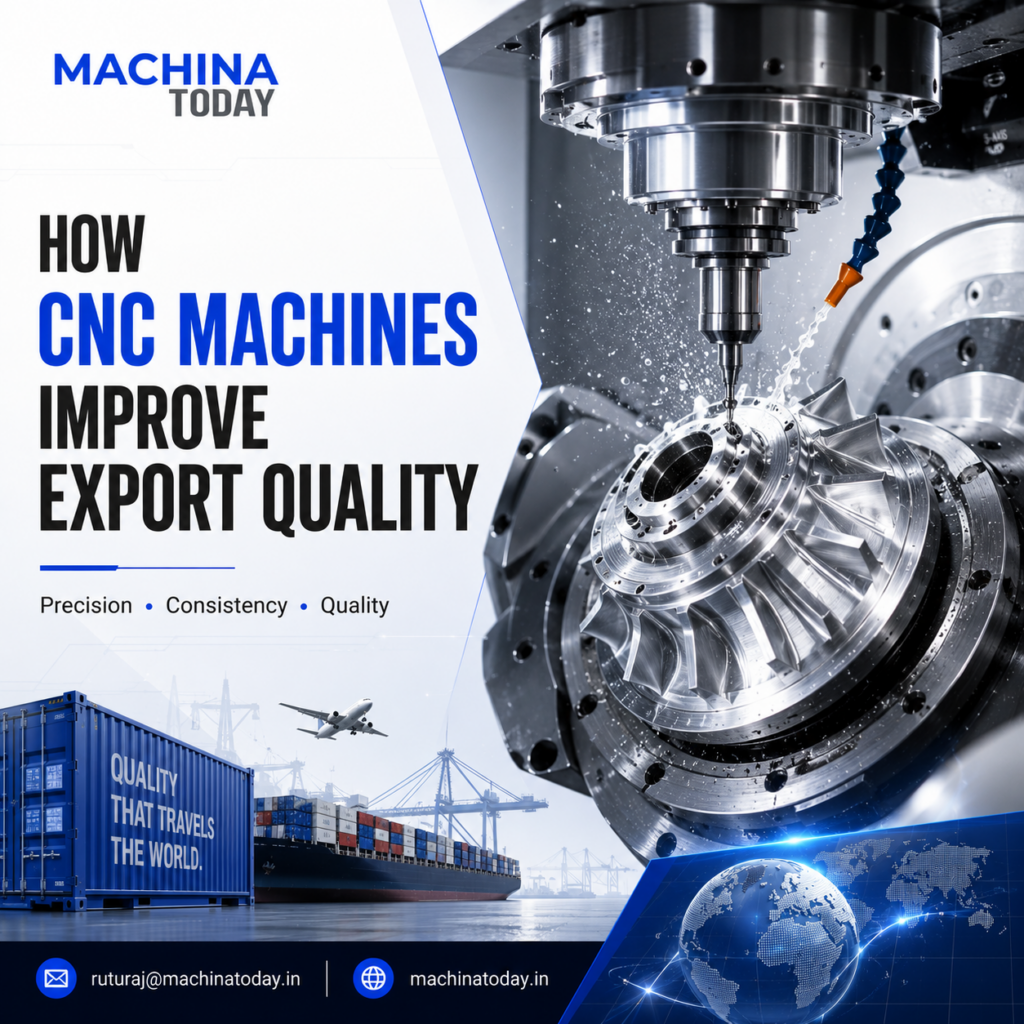
How CNC Machines Improve Export Quality: From Precision Machining to Process Control
Global manufacturing is increasingly built around supply chains where components may be designed in one…

ANCA at IMTS 2026: New Leadership, Precision Tooling and the Next Manufacturing Shift
A new CEO. A legendary founder. One booth. And a manufacturing industry moving faster than…
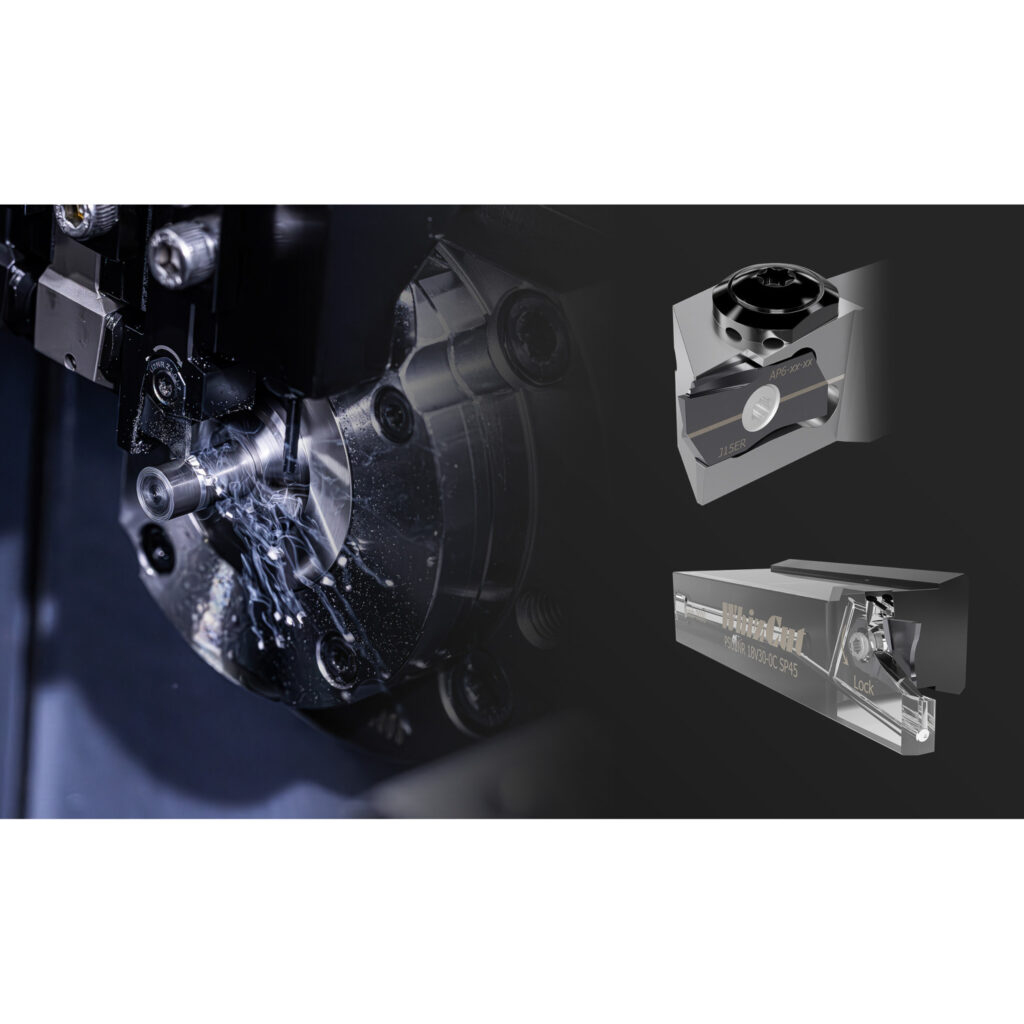
WhizCut at AMB Stuttgart 2026: Smarter Cutting Tools Target Material Waste, Productivity and Sustainable Machining
WhizCut is set to present its precision-tooling portfolio at AMB Stuttgart 2026, with products focused…