How AI Is Improving CNC Machining Accuracy in 2026
The manufacturing industry is entering a new era where artificial intelligence is no longer optional — it is becoming a core part of modern production systems. From aerospace components in the USA to automotive factories in Germany, precision engineering companies in Japan, and rapidly growing manufacturing hubs in India and Africa, AI-powered CNC machining is changing how industries achieve accuracy, consistency, and productivity.
Traditional CNC machining already delivers high precision, but even the best machines face challenges such as tool wear, thermal expansion, vibration, programming errors, and inconsistent material behavior. Artificial intelligence is helping manufacturers solve these problems in real time.
In 2026, AI is making CNC machines smarter, faster, and significantly more accurate than ever before.
Why CNC Machining Accuracy Matters More Than Ever
Modern industries demand extremely tight tolerances. Aerospace, medical, semiconductor, defense, EV manufacturing, and robotics industries often require micron-level precision.
Even a small machining deviation can result in:
- Production waste
- Expensive material loss
- Machine downtime
- Product failure
- Delayed deliveries
- Reduced customer trust
As global competition increases between manufacturing giants like the USA, China, Germany, Japan, and India, companies are investing heavily in AI-driven machining systems to maintain competitive quality standards.
How AI Improves CNC Machining Accuracy
1. Real-Time Tool Wear Monitoring
One of the biggest causes of dimensional inaccuracies in CNC machining is tool wear. Traditionally, operators inspect tools manually or replace them after fixed cycles.
AI-powered systems now use:
- Sensors
- Vibration analysis
- Acoustic monitoring
- Temperature tracking
- Machine learning algorithms
These systems continuously analyze cutting conditions and predict tool wear before accuracy is affected.
Benefits include:
- Better surface finish
- Reduced scrap rates
- Higher repeatability
- Longer tool life
- Lower maintenance costs
Factories using AI-based tool monitoring are seeing major improvements in machining consistency and spindle efficiency.
2. Adaptive Machining and Self-Correction
Modern AI-enabled CNC machines can automatically adjust machining parameters during operation.
The system can analyze:
- Cutting force
- Tool pressure
- Material hardness
- Machine vibration
- Thermal expansion
Then AI instantly adjusts:
- Feed rate
- Spindle speed
- Tool path
- Coolant flow
This adaptive machining approach allows machines to maintain precision even when production conditions change unexpectedly.
For industries producing aerospace blades, medical implants, or high-precision automotive parts, adaptive machining is becoming a major competitive advantage.
3. Predictive Maintenance Reduces Machine Errors
Machine inaccuracies often happen because of hidden mechanical problems such as:
- Ball screw wear
- Spindle imbalance
- Bearing damage
- Servo issues
- Lubrication failures
AI-based predictive maintenance systems continuously monitor machine health and detect abnormalities early.
Instead of waiting for machine failure, manufacturers can fix issues before precision is affected.
This results in:
- Reduced downtime
- Higher machine availability
- Better dimensional stability
- Improved long-term machine accuracy
Many smart factories now combine AI predictive maintenance with Industrial IoT sensors for 24/7 monitoring.
4. AI-Powered CAM Software Optimization
Advanced CAM software is now integrating artificial intelligence to optimize machining strategies automatically.
AI can:
- Generate smarter toolpaths
- Reduce unnecessary movements
- Improve cutting efficiency
- Minimize vibration
- Prevent collisions
This significantly improves machining precision while also reducing cycle time.
Modern AI-assisted CAM systems are especially valuable for:
- 5-axis machining
- High-speed machining
- Complex geometries
- Mold manufacturing
- Aerospace components
5. Vision Systems and AI Quality Inspection
AI-powered vision systems are transforming quality control inside manufacturing plants.
Instead of relying only on manual inspection, smart systems use:
- Industrial cameras
- Computer vision
- Deep learning models
- Automated metrology
These systems can detect:
- Surface defects
- Micro-cracks
- Dimensional variations
- Tool marks
- Improper finishing
Real-time inspection allows manufacturers to correct machining errors immediately, reducing rejection rates and improving customer satisfaction.
AI + Robotics + CNC = The Smart Factory Revolution
The combination of:
- AI
- CNC machines
- Robotics
- Industrial IoT
- Automation software
is creating fully connected smart factories worldwide.
In these facilities:
- Robots load and unload parts
- AI optimizes machining parameters
- Sensors monitor machine conditions
- Data analytics predict failures
- Automated systems maintain quality control
Countries like Germany, Japan, the USA, and South Korea are already leading this transition, while India is rapidly expanding smart manufacturing investments under Industry 4.0 initiatives.
How AI Is Helping Small and Medium Manufacturers
AI is not only for giant factories anymore.
Affordable AI solutions are now helping MSMEs and small workshops improve:
- Production quality
- CNC programming
- Tool management
- Process optimization
- Machine uptime
Cloud-based AI software and affordable industrial sensors are making smart manufacturing accessible even for smaller companies.
For emerging manufacturing markets in India, Africa, and Southeast Asia, this creates major growth opportunities.
Challenges of AI in CNC Manufacturing
Although AI offers major benefits, manufacturers still face some challenges:
- High initial investment
- Skilled workforce requirements
- Data integration complexity
- Cybersecurity concerns
- Compatibility with older CNC machines
However, as AI technology becomes more affordable, adoption is expected to accelerate rapidly across global industries.
The Future of AI in CNC Machining
The future of CNC machining is moving toward autonomous manufacturing systems.
In the coming years, factories may feature:
- Self-learning CNC machines
- Fully autonomous production lines
- AI-generated machining programs
- Digital twins
- Real-time cloud manufacturing analytics
- Human-robot collaboration
Manufacturers that adopt AI early will likely gain advantages in:
- Quality
- Speed
- Export competitiveness
- Production scalability
- Customer trust
Artificial intelligence is no longer just a futuristic concept in manufacturing — it is actively transforming CNC machining accuracy today.
From predictive maintenance and adaptive machining to AI-powered inspection systems and smart factory integration, AI is helping manufacturers achieve levels of precision that were previously difficult to maintain consistently.
As global industries continue shifting toward automation and Industry 4.0, AI-driven CNC machining will become one of the most important technologies shaping the future of manufacturing.
For companies aiming to compete globally in 2026 and beyond, investing in smart machining technologies may no longer be a choice — it may become a necessity.
How does AI improve CNC machining accuracy?
AI improves CNC machining accuracy by monitoring tool wear, optimizing cutting parameters, predicting machine failures, and automatically correcting machining errors in real time.
What industries benefit most from AI-powered CNC machining?
Industries such as aerospace, automotive, medical manufacturing, robotics, defense, and semiconductor manufacturing benefit heavily from AI-powered CNC systems.
Can small manufacturers use AI in CNC machining?
Yes. Affordable sensors, cloud software, and smart monitoring tools now allow small and medium manufacturers to adopt AI solutions.
What is predictive maintenance in CNC machines?
Predictive maintenance uses AI and sensors to detect machine problems before failure occurs, helping maintain machining precision and reduce downtime.
Is AI replacing CNC machinists?
AI is helping machinists become more efficient rather than fully replacing them. Skilled operators are still essential for programming, supervision, and process optimization.
Want your company, machine technology, automation solution, or manufacturing innovation featured on Machina Today?
Connect with us for global industrial visibility, SEO-powered exposure, and worldwide manufacturing audience reach.
📩 Contact: ruturaj@machinatoday.in

IMTS 2026 Opens in Chicago: AI, CNC, Robotics and Automation Take Center Stage
IMTS 2026 is officially underway in Chicago, bringing the global manufacturing technology industry together at…
Top Aerospace Manufacturing Technologies in 2026: 10 Technologies Reshaping How Aircraft Are Built
Aerospace manufacturing is entering a new industrial era. From AI-driven engineering and digital twins to…
FANUC at IMTS 2026: Physical AI, Robotics and CNC Innovation Move Into the Factory
FANUC America is positioning IMTS 2026 as a showcase for the next stage of industrial…
How CNC Machines Improve Export Quality: From Precision Machining to Process Control
Global manufacturing is increasingly built around supply chains where components may be designed in one…

ANCA at IMTS 2026: New Leadership, Precision Tooling and the Next Manufacturing Shift
A new CEO. A legendary founder. One booth. And a manufacturing industry moving faster than…
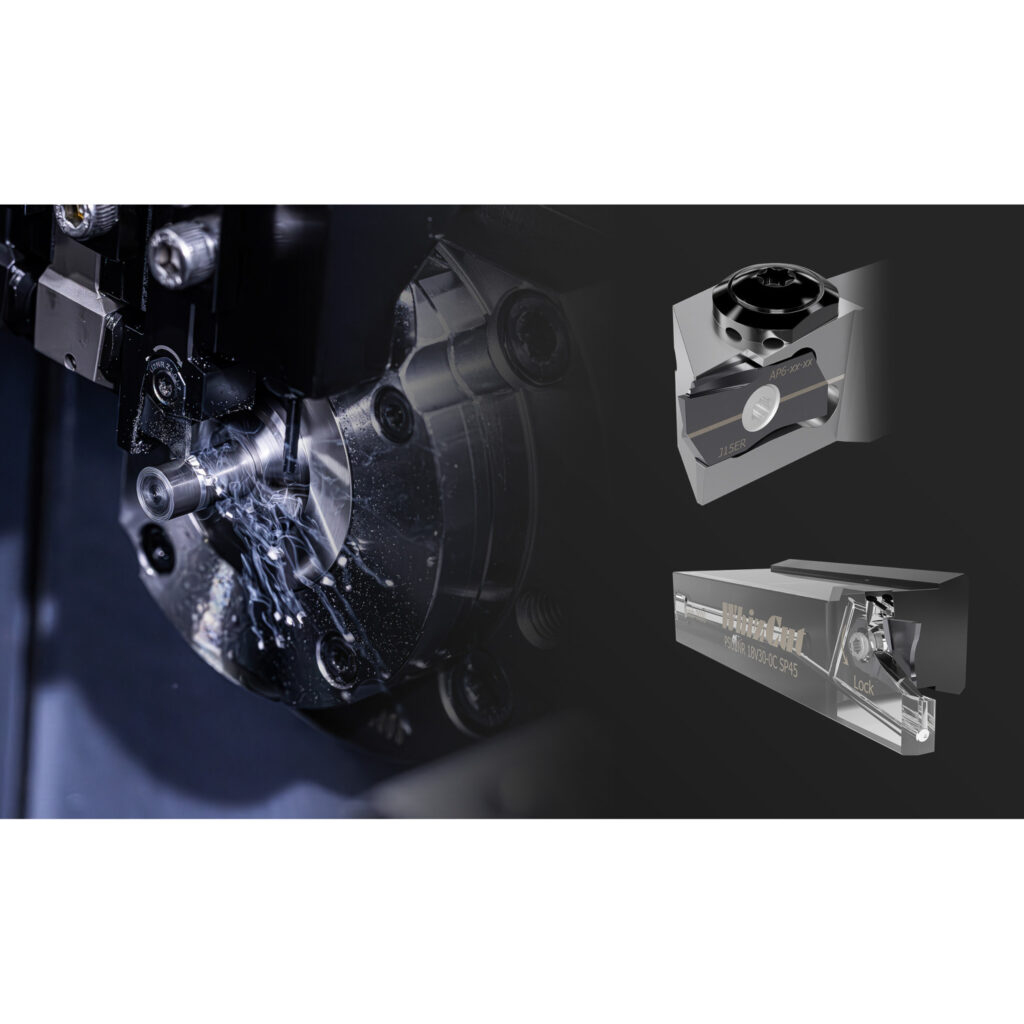
WhizCut at AMB Stuttgart 2026: Smarter Cutting Tools Target Material Waste, Productivity and Sustainable Machining
WhizCut is set to present its precision-tooling portfolio at AMB Stuttgart 2026, with products focused…