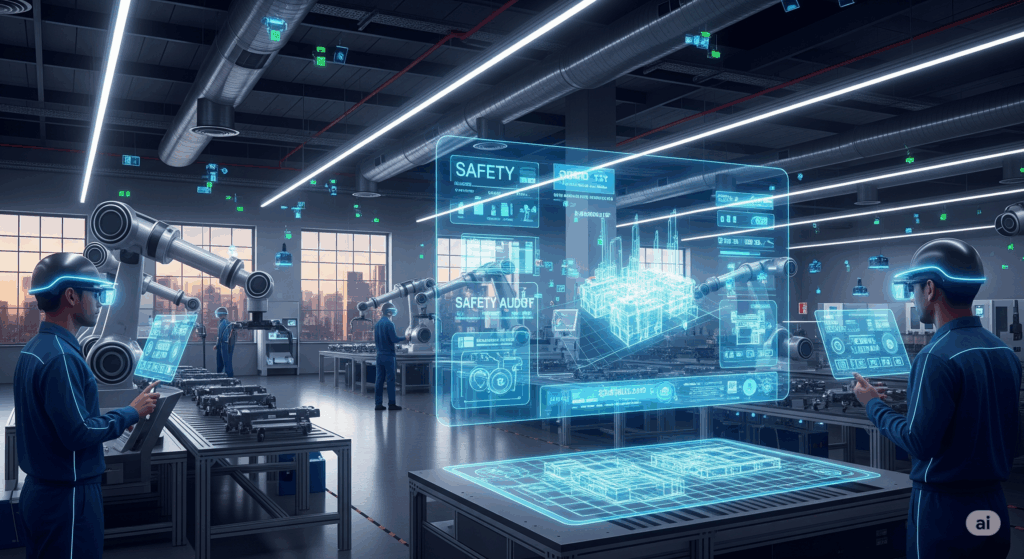
Smart factories, the hallmark of Industry 4.0, are not just about efficiency and automation—they are also revolutionizing worker safety. With AI, IoT, robotics, and predictive analytics, manufacturers can prevent accidents before they happen, reduce risks, and create safer working environments.
This blog explores how safety is evolving in smart factories, the latest technologies driving it, and why businesses must prioritize safety as much as productivity.
Why Safety in Smart Factories Matters
Traditional manufacturing faced challenges like:
- High accident rates due to manual operations
- Exposure to hazardous machinery and chemicals
- Lack of real-time monitoring and emergency response
- Reactive safety protocols instead of preventive measures
Smart factories change this equation by embedding safety into the core of automation.
Key Safety Technologies in Smart Factories
1. IoT Sensors and Wearables
- Track worker movement in hazardous zones
- Detect temperature, gas leaks, vibration, and unsafe noise levels
- Send real-time alerts to prevent accidents
2. AI-Powered Predictive Analytics
- Predict machine breakdowns that could cause accidents
- Analyze safety data patterns to identify risks before they escalate
3. Collaborative Robots (Cobots)
- Work safely alongside humans with built-in sensors
- Auto-stop functions to prevent collisions
- Reduce the need for workers in dangerous tasks
4. Digital Twins
- Create virtual replicas of factories to simulate risks
- Test emergency response plans digitally
- Enhance compliance with safety regulations
5. Augmented Reality (AR) for Training
- Workers can train in virtual hazardous environments safely
- Step-by-step AR guidance during machine operations
- Reduced human error through immersive learning
Benefits of Safety in Smart Factories
✔️ Fewer workplace accidents
✔️ Improved compliance with global safety standards (OSHA, ISO)
✔️ Reduced insurance and compensation costs
✔️ Increased employee confidence and productivity
✔️ Better brand reputation and client trust
Safety Challenges in Smart Factories
While smart safety is powerful, it comes with challenges:
- Cybersecurity Risks: Safety data can be hacked or manipulated
- High Implementation Costs: Advanced safety tech requires investment
- Skill Gaps: Workers need training to adapt to new safety protocols
- Over-Reliance on Automation: Human supervision is still essential
Future of Safety in Smart Factories
- AI-driven safety dashboards will provide 360° visibility
- Autonomous safety drones to monitor factory floors
- Real-time biometric monitoring to track worker fatigue and stress
- Global Safety Standards 5.0 integrating human–machine safety collaboration

Smart factories are not just about production efficiency—they are safety-first ecosystems where humans and machines collaborate seamlessly. By integrating IoT, AI, and robotics, industries can prevent accidents before they happen and create safer, smarter workplaces.
For businesses, investing in safety-driven automation is not optional—it’s the future of sustainable manufacturing.
🚀 Want to showcase your company’s innovations in smart factory safety? Advertise with Machina Today, a leading magazine read by decision-makers across India, USA, Germany, Japan, and China.
📩 Contact: ruturaj@machinatoday.in | 📞 +91 9510235230
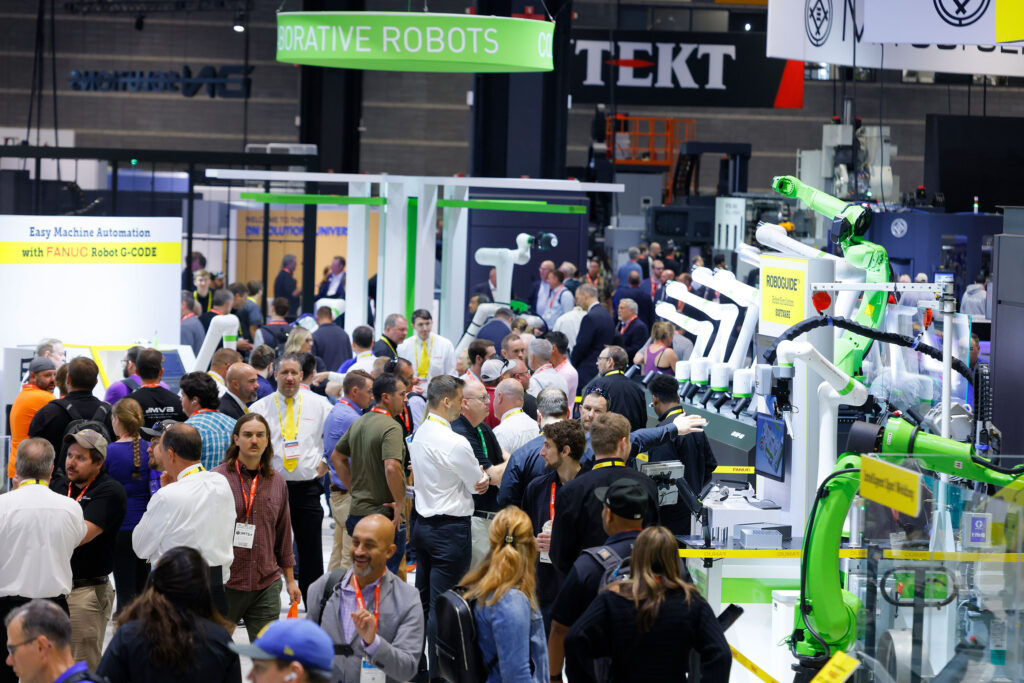
IMTS 2026 Opens in Chicago: AI, CNC, Robotics and Automation Take Center Stage
IMTS 2026 is officially underway in Chicago, bringing the global manufacturing technology industry together at…
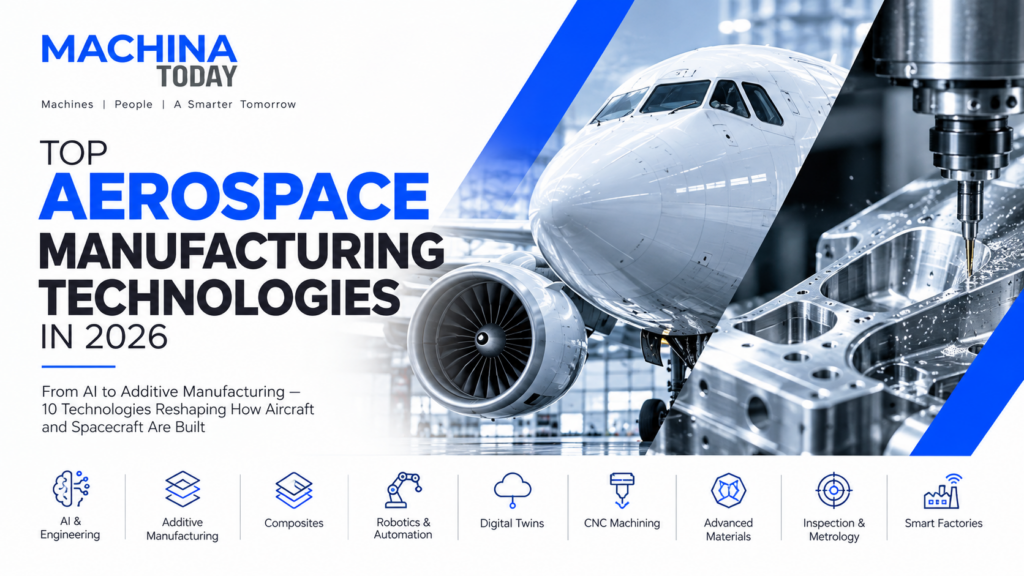
Top Aerospace Manufacturing Technologies in 2026: 10 Technologies Reshaping How Aircraft Are Built
Aerospace manufacturing is entering a new industrial era. From AI-driven engineering and digital twins to…
FANUC at IMTS 2026: Physical AI, Robotics and CNC Innovation Move Into the Factory
FANUC America is positioning IMTS 2026 as a showcase for the next stage of industrial…
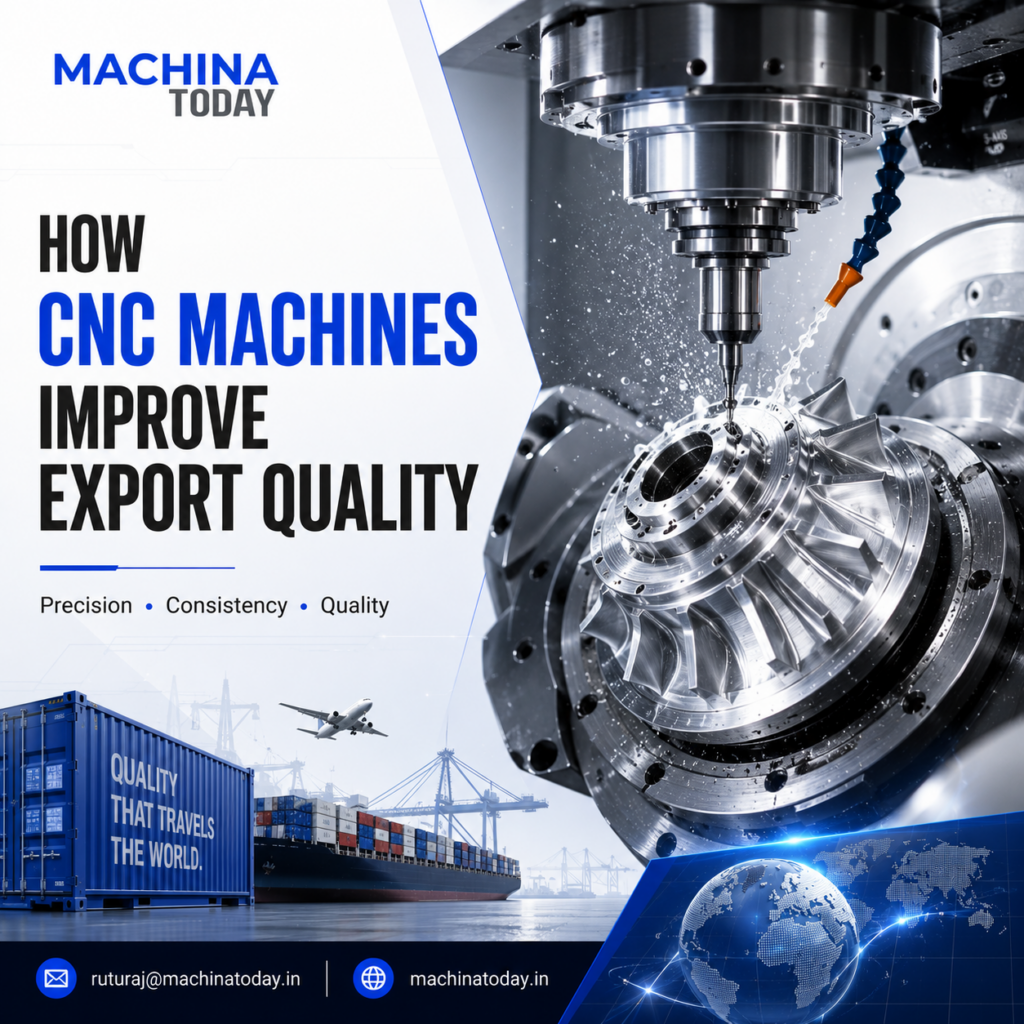
How CNC Machines Improve Export Quality: From Precision Machining to Process Control
Global manufacturing is increasingly built around supply chains where components may be designed in one…

ANCA at IMTS 2026: New Leadership, Precision Tooling and the Next Manufacturing Shift
A new CEO. A legendary founder. One booth. And a manufacturing industry moving faster than…
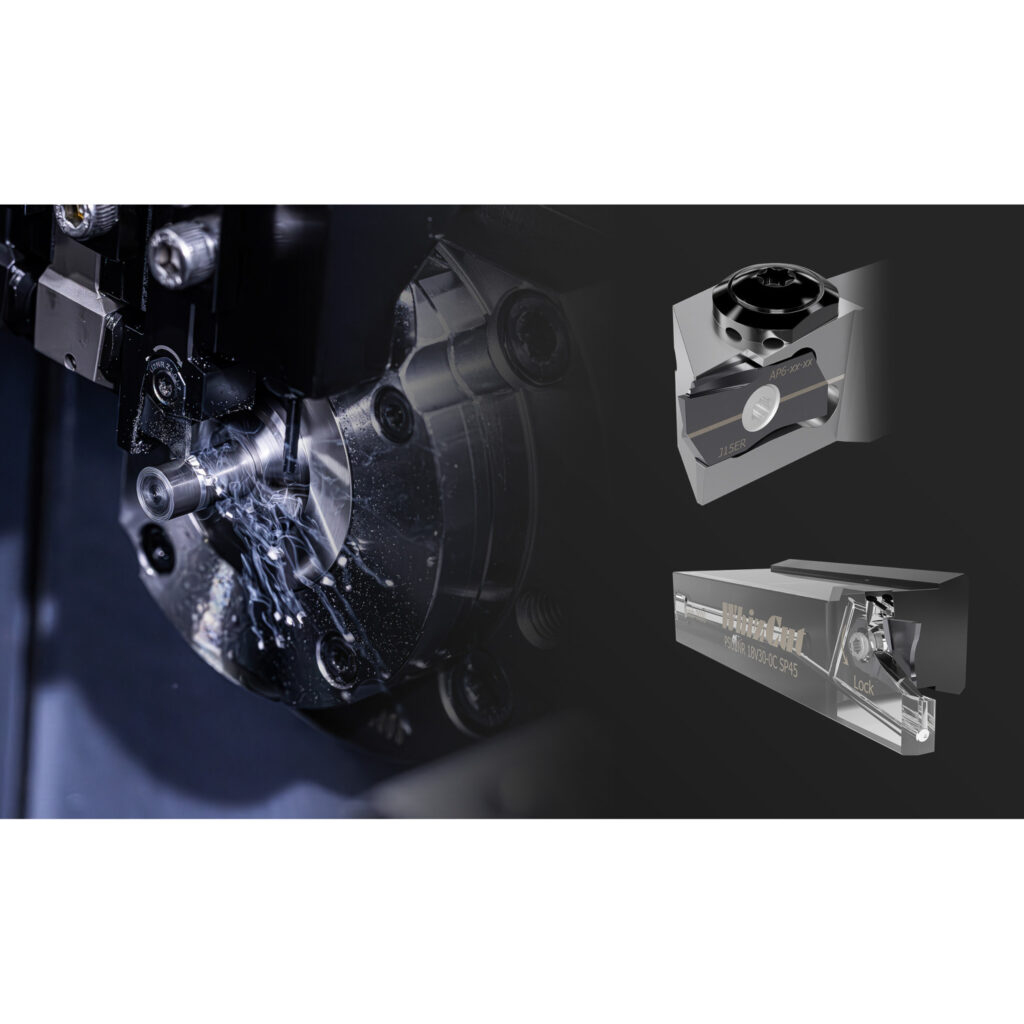
WhizCut at AMB Stuttgart 2026: Smarter Cutting Tools Target Material Waste, Productivity and Sustainable Machining
WhizCut is set to present its precision-tooling portfolio at AMB Stuttgart 2026, with products focused…