Aerospace manufacturing is entering a new industrial era. From AI-driven engineering and digital twins to metal additive manufacturing, automated composite production and robotic inspection, the technologies used to build aircraft and spacecraft are changing almost as rapidly as the vehicles themselves.
The interesting part is that this transformation is not being driven by one technology.
It is the convergence of AI + robotics + advanced materials + additive manufacturing + digital twins + precision machining + automated inspection that could fundamentally change how aerospace manufacturers design, produce and maintain complex components.
The American Institute of Aeronautics and Astronautics (AIAA), drawing on input from more than 700 aerospace experts, has identified AI-aided advanced design and engineering, high-temperature materials, in-space manufacturing and other technologies among those expected to shape aerospace through 2045.
At the factory level, companies such as Airbus and Boeing are already investing in digital twins, robotics, advanced composites, additive manufacturing and digitally connected production systems.
So, what are the aerospace manufacturing technologies that matter most right now?
Here are 10 worth watching.
1. AI-Powered Design and Engineering
AI is moving deeper into aerospace engineering.
Traditionally, engineers may spend significant time evaluating design alternatives, running simulations and optimizing components against multiple requirements.
AI can help accelerate this process by exploring large numbers of design possibilities and identifying solutions that may be difficult to discover through conventional approaches.
The technology is particularly interesting when combined with:
- Generative design
- Topology optimization
- Computational simulation
- Machine learning
- High-performance computing
- Digital engineering
- Model-based engineering
AIAA’s 2026 technology assessment places AI-aided advanced design and engineering among the technologies expected to have a major influence on aerospace over the coming decades.
Why it matters
The objective isn’t simply to “design with AI.”
The bigger opportunity is to shorten the loop between:
Design → Simulation → Manufacturing → Testing → Improvement
That could help aerospace companies develop increasingly complex structures while controlling development time and manufacturing constraints.
2. Additive Manufacturing: From Prototypes to Production
3D printing has been discussed in aerospace for years.
But the important shift is that additive manufacturing is increasingly being considered for functional and production aerospace components, not just prototypes.
Airbus, for example, is developing titanium components using wire Directed Energy Deposition (w-DED).
The process uses a robotic multi-axis system to deposit titanium wire layer by layer, creating a near-net-shape blank that can subsequently be processed into a finished component. Airbus highlights the potential for reducing material waste compared with manufacturing components from large metal blocks.
Airbus has also showcased a 3D-printed titanium door-latch shaft used on the A350. The component consolidates multiple parts into one and is reported by Airbus to be 45% lighter than its predecessor.
That illustrates one of the biggest advantages of aerospace additive manufacturing:
Design freedom.
Instead of asking:
“How do we machine this shape?”
Engineers can increasingly ask:
“What is the most efficient shape we can manufacture?”
Where additive manufacturing can make an impact
- Lightweight components
- Complex internal channels
- Part consolidation
- Tooling
- Repair
- Low-volume components
- Replacement parts
- Space hardware
- Heat-management components
NASA’s Jet Propulsion Laboratory also uses additive manufacturing research for optimized geometries, multifunctional spacecraft structures and advanced materials.
3. Advanced Composite Manufacturing
Aircraft manufacturers are constantly fighting one battle:
How do you make an aircraft lighter without sacrificing performance and structural integrity?
Advanced composites are one of the answers.
Composite manufacturing technologies include:
- Automated Fibre Placement (AFP)
- Automated Tape Laying (ATL)
- Resin Transfer Moulding (RTM)
- Out-of-Autoclave processing
- Thermoplastic processing
- Infusion
- Robotic fibre placement
Airbus uses technologies including AFP, ATL, RTM, compression moulding, filament winding and automated composite processes across its manufacturing and research activities.
NASA’s Hi-Rate Composite Aircraft Manufacturing (HiCAM) project is also focused on scaling advanced composite manufacturing technologies for future aircraft production.
In 2026, NASA reported that the project was progressing toward large-scale demonstrations of composite fuselage and wing structures planned for 2028 and 2029.
Why this is important
The aerospace industry doesn’t only need lightweight materials.
It needs lightweight materials that can be manufactured at higher rates, repeatedly and with consistent quality.
That is where automation becomes critical.
4. Robotics and Automated Assembly
Walk into a modern aerospace factory and you’ll increasingly see something different from the traditional image of manufacturing.
Robots are becoming part of:
- Drilling
- Trimming
- Milling
- Composite layup
- Inspection
- Assembly
- Material handling
- Painting
- Logistics
Airbus describes robotics and automation as major enablers of future aircraft production, with applications spanning assembly, painting, quality control, logistics and composites.
Airbus has also developed its own robotics capabilities to automate specific aircraft-production processes.
One example is CabinMarker, a small robot designed to automate aircraft seat-installation-related production tasks. Airbus says the robot achieved industrial certification in December 2025.
The objective isn’t necessarily to eliminate people from the factory.
It is to let humans focus on tasks requiring:
judgement + problem solving + craftsmanship + engineering expertise.
5. Digital Twins and the Aerospace “Digital Thread”
One of the biggest changes in manufacturing may not be visible on the shop floor.
It is happening digitally.
A digital twin is a digital representation of a physical product, machine, process or production environment that can be connected to real-world data.
In aerospace manufacturing, digital twins can connect information across:
Engineering → Manufacturing → Inspection → Operations → Maintenance
This creates what is often called the digital thread.
Boeing says it is investing in digital twins and collaborative robots to support real-time inspection, productivity and safety while reducing rework and accelerating the transition from development to production.
The UK Aerospace Technology Institute’s 2026 roadmap similarly highlights digital passports, advanced manufacturing, AI, robotics and digitally connected factories as important elements of aerospace competitiveness.
The bigger idea
The future aerospace factory won’t simply collect manufacturing data.
It will increasingly use that data to make decisions.
6. Automated Inspection and Metrology
In aerospace, manufacturing a component isn’t enough.
You have to prove that it meets the required specifications.
That makes inspection and metrology extremely important.
Modern aerospace manufacturing increasingly combines:
- Coordinate Measuring Machines
- 3D scanning
- Machine vision
- Automated inspection
- Non-destructive testing
- In-process measurement
- AI-assisted defect detection
- Digital inspection records
The next step is moving inspection closer to the manufacturing process itself.
Instead of:
Manufacture → Remove Part → Inspect → Discover Problem
the goal becomes:
Manufacture → Measure → Detect → Correct
That can reduce scrap and rework while improving process control.
Boeing’s current manufacturing technology strategy specifically highlights digital twins and collaborative robots for real-time inspection applications.
7. High-Precision CNC Machining and Hybrid Manufacturing
Despite the rise of additive manufacturing, subtractive manufacturing isn’t disappearing.
Far from it.
Aerospace still requires extremely precise machining of materials such as:
- Titanium
- Aluminium alloys
- Nickel-based superalloys
- Stainless steels
- High-performance materials
CNC machining remains critical for producing and finishing aerospace structures, engine components, landing-gear components and other precision parts.
The interesting development is the combination of additive + subtractive manufacturing.
A component can potentially be:
Additively manufactured → CNC machined → inspected
This hybrid approach combines the geometry freedom of additive manufacturing with the dimensional accuracy and surface finish achievable through precision machining.
Industry research in 2026 continues to identify hybrid approaches as an important route for aerospace and defense manufacturing, particularly where complex geometries and demanding qualification requirements intersect.
8. Automated Fibre Placement and Robotic Composites
If additive manufacturing is changing how metals can be produced, automated fibre placement is changing how composite structures can be manufactured.
AFP systems use robotic mechanisms to place composite fibre materials precisely according to a programmed path.
This becomes particularly valuable for large aerospace structures.
The technology can help manufacturers control:
- Fibre orientation
- Placement accuracy
- Material usage
- Repeatability
- Production consistency
Airbus identifies automated fibre placement, automated tape laying and robotic fibre placement among its composite manufacturing technologies.
Airbus has also investigated robotic automation for composite manufacturing processes including handling, preparation, trimming, drilling, milling and deburring.
The long-term goal?
More automation without losing manufacturing flexibility.
9. Advanced Materials and High-Temperature Alloys
Manufacturing technology is only half the aerospace equation.
Materials are the other half.
Modern aircraft and spacecraft operate under extreme requirements involving:
- Temperature
- Pressure
- Fatigue
- Corrosion
- Vibration
- Weight
- Strength
- Thermal performance
That is driving interest in advanced materials such as:
- Titanium alloys
- High-temperature alloys
- Advanced composites
- Ceramic matrix composites
- Thermoplastics
- Lightweight structural materials
- Functionally graded materials
AIAA identifies high-temperature materials as one of its technologies expected to shape aerospace through 2045.
Meanwhile, the UK Aerospace Technology Institute’s 2026 roadmap highlights high-strength, resilient, durable and sustainable alloys, composites and coatings as key areas for aerospace competitiveness.
The challenge isn’t simply developing a stronger material.
It is developing a material that can also be manufactured economically, repeatedly and at aerospace quality.
10. Smart Factories: AI + Robotics + Data
This may be the biggest trend of them all.
The future aerospace factory isn’t going to be defined by one machine.
It will be defined by connected machines.
Imagine a manufacturing environment where:
AI optimizes production.
Robots perform repetitive operations.
CNC machines manufacture precision components.
Sensors collect process data.
Digital twins model production.
Automated inspection checks quality.
Software connects the entire production chain.
That is the direction of the smart aerospace factory.
Airbus has described future manufacturing around Industry 4.0/5.0 technologies including smart automation, AI, robotics, digital twins and additive manufacturing.
Boeing is similarly investing in digital engineering, advanced manufacturing, autonomy, sustainable materials and technologies intended to support higher-rate production.
The Real Aerospace Manufacturing Revolution Isn’t One Technology
Here’s the important part.
The aerospace manufacturing revolution isn’t:
AI vs Robotics vs 3D Printing vs CNC.
It is:
AI + Materials + Manufacturing + Robotics + Data
When these technologies work together, the manufacturing process changes fundamentally.
Consider a future component:
1. AI generates the design
↓
2. Simulation validates the geometry
↓
3. Additive manufacturing creates the near-net shape
↓
4. CNC machining achieves critical dimensions
↓
5. Robotics handles the component
↓
6. Automated inspection verifies the part
↓
7. Digital twin records the manufacturing history
↓
8. Data follows the component throughout its lifecycle
That is much bigger than simply buying a new machine.
It is a new manufacturing architecture.
Why Aerospace Manufacturing Is Moving This Fast
There are several forces pushing the industry.
1. Aircraft production rates
Manufacturers need to increase production without compromising quality.
2. Weight reduction
Every kilogram matters in aviation.
3. Supply-chain resilience
Aerospace companies need greater control over critical components and materials.
Deloitte’s 2026 aerospace and defense outlook notes that additive manufacturing is increasingly being explored as a resilience tool for selected low-volume, long-lead or difficult-to-source parts.
4. More complex designs
Next-generation aircraft, spacecraft, drones and propulsion systems require increasingly sophisticated components.
5. Sustainability
Manufacturers are under pressure to reduce material waste, energy consumption and lifecycle impact.
6. Workforce transformation
Automation can help manufacturers deal with repetitive tasks while allowing skilled employees to focus on higher-value work.
What Comes Next?
The next major leap may happen when these technologies become deeply integrated.
Aerospace manufacturing is moving toward factories where physical production and digital engineering operate as one system.
That means the competitive advantage may no longer come simply from owning the fastest CNC machine or the newest robot.
It may come from how effectively a manufacturer connects:
People + Machines + Software + Materials + Data.
AIAA’s aerospace technology outlook reinforces this broader direction, identifying technologies ranging from AI-aided engineering and high-temperature materials to in-space manufacturing and other advanced systems as forces capable of reshaping aerospace through 2045.
Final Takeaway
The aerospace factory of the future won’t look like a traditional factory with a few robots added to it.
It will be a digitally connected manufacturing ecosystem.
AI will help engineers design.
Advanced materials will enable lighter and more capable structures.
Additive manufacturing will unlock complex geometries.
CNC machining will continue delivering precision.
Robots will automate repetitive and difficult operations.
Digital twins will connect physical production with digital engineering.
Automated inspection will move quality control closer to the process.
And data will connect the entire lifecycle.
The real question isn’t whether aerospace manufacturing will become smarter.
It is:
How quickly can manufacturers connect all these technologies into one production system?
That is where the next aerospace manufacturing advantage could be created.
Frequently Asked Questions
What is aerospace manufacturing?
Aerospace manufacturing is the production, machining, assembly and inspection of components and systems used in aircraft, spacecraft, satellites, drones and related aerospace applications.
What are the most important aerospace manufacturing technologies in 2026?
Key technologies include AI-assisted engineering, additive manufacturing, advanced composites, robotics, digital twins, automated inspection, CNC machining, automated fibre placement, advanced materials and smart manufacturing.
Is 3D printing used in aerospace manufacturing?
Yes. Aerospace companies and research organizations are using additive manufacturing for applications including structural components, tooling, thermal-management components, prototypes and other specialized parts. Airbus, for example, is developing titanium components using wire Directed Energy Deposition.
Will robots replace aerospace manufacturing workers?
Robotics is more commonly being developed to automate repetitive, physically demanding or highly repeatable operations while allowing people to focus on complex tasks, engineering and decision-making. Airbus explicitly describes this human-centric approach to production automation.
Why are digital twins important in aerospace manufacturing?
Digital twins can connect digital engineering models with physical production and real-world data, supporting simulation, monitoring, inspection, optimization and lifecycle management.
What role does CNC machining play in aerospace?
CNC machining remains essential for manufacturing and finishing high-precision aerospace components, particularly from difficult-to-machine materials such as titanium and high-performance alloys.
What is the future of aerospace manufacturing?
The future is likely to involve greater integration of AI, robotics, additive manufacturing, precision machining, advanced composites, automated inspection, digital twins and connected factory systems.

IMTS 2026 Opens in Chicago: AI, CNC, Robotics and Automation Take Center Stage
IMTS 2026 is officially underway in Chicago, bringing the global manufacturing technology industry together at…
Top Aerospace Manufacturing Technologies in 2026: 10 Technologies Reshaping How Aircraft Are Built
Aerospace manufacturing is entering a new industrial era. From AI-driven engineering and digital twins to…
FANUC at IMTS 2026: Physical AI, Robotics and CNC Innovation Move Into the Factory
FANUC America is positioning IMTS 2026 as a showcase for the next stage of industrial…
How CNC Machines Improve Export Quality: From Precision Machining to Process Control
Global manufacturing is increasingly built around supply chains where components may be designed in one…

ANCA at IMTS 2026: New Leadership, Precision Tooling and the Next Manufacturing Shift
A new CEO. A legendary founder. One booth. And a manufacturing industry moving faster than…
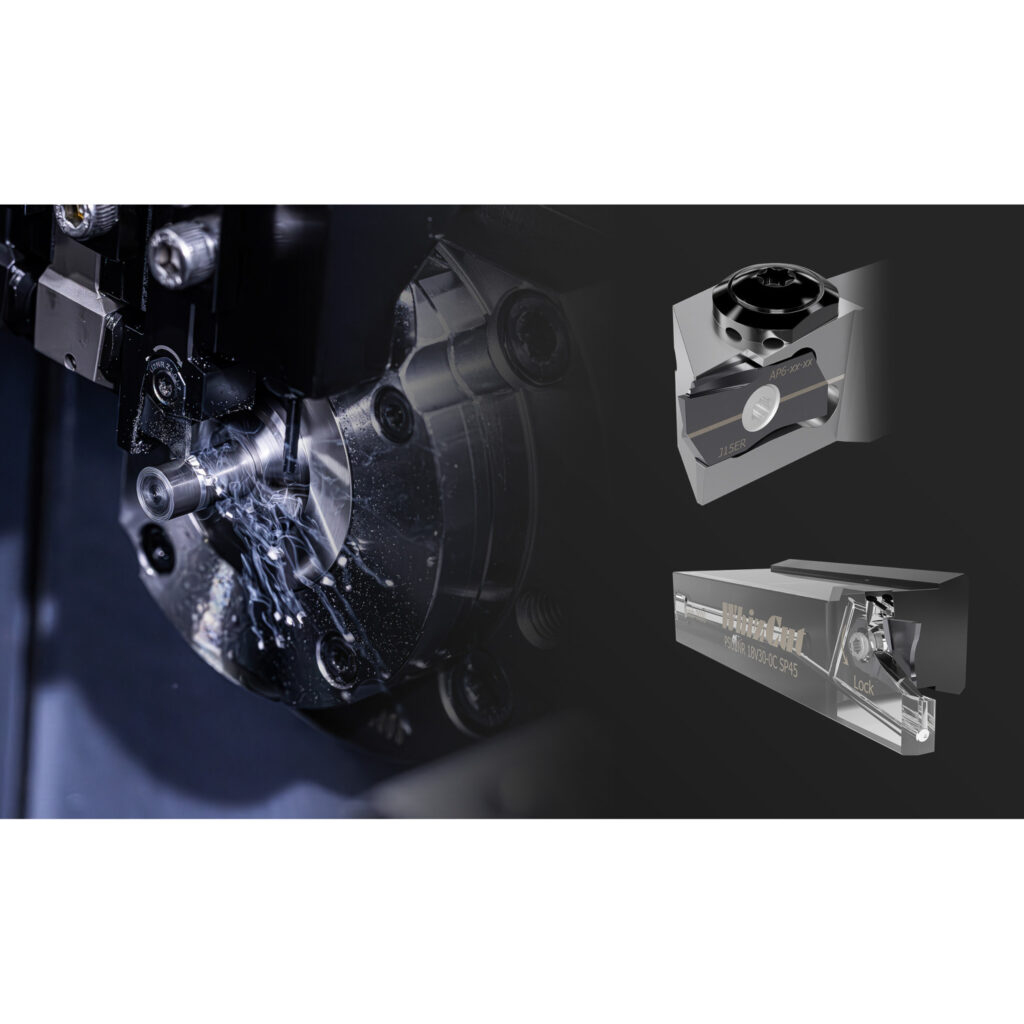
WhizCut at AMB Stuttgart 2026: Smarter Cutting Tools Target Material Waste, Productivity and Sustainable Machining
WhizCut is set to present its precision-tooling portfolio at AMB Stuttgart 2026, with products focused…