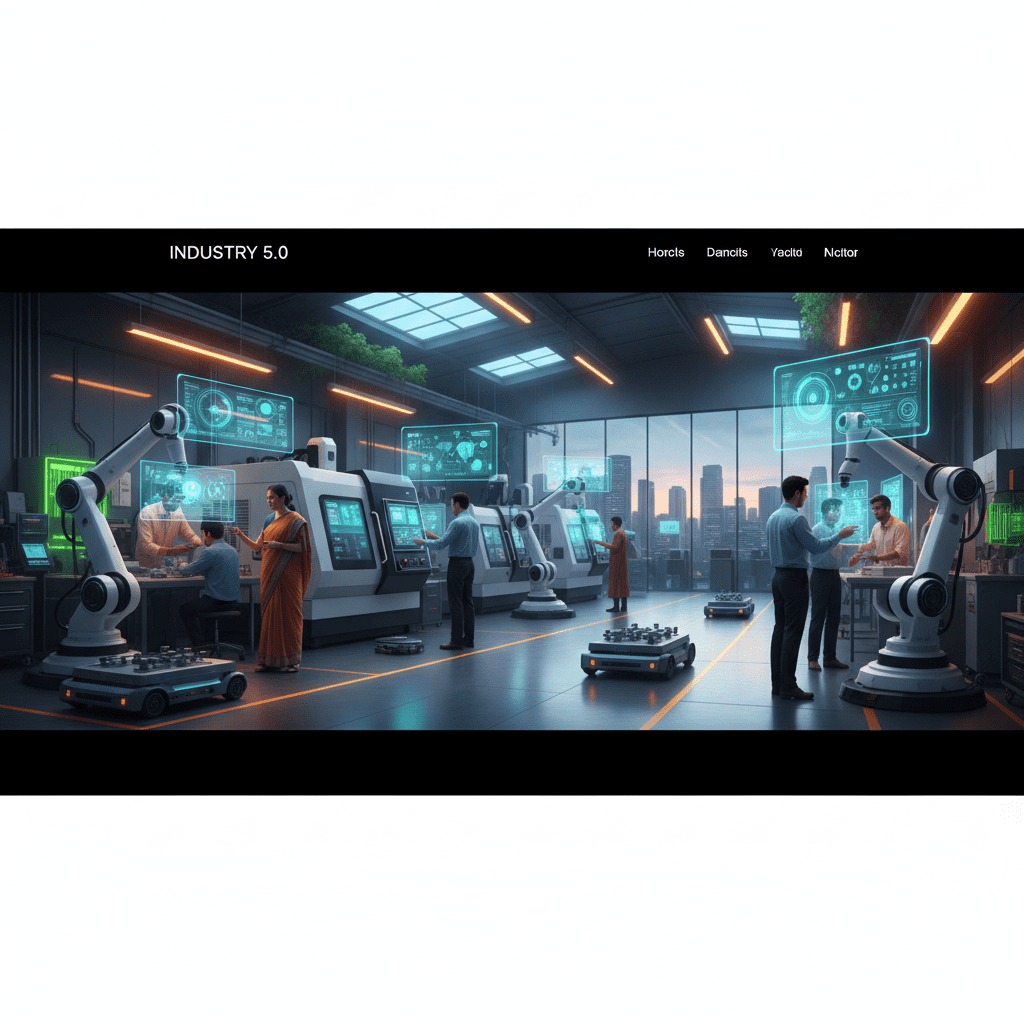
The manufacturing sector in India is at the edge of a massive transformation. After embracing automation and digitalization through Industry 4.0, the new phase—Industry 5.0—is all about human-robot collaboration. Instead of replacing workers with machines, Industry 5.0 empowers humans to work alongside intelligent robots, combining creativity, empathy, and flexibility with speed and precision. For Indian manufacturers aiming to compete globally, this shift could be the game-changer.
Main Body
1. What is Industry 5.0?
Industry 5.0 is the next evolution of industrial transformation, where humans and machines collaborate. Unlike Industry 4.0, which focused heavily on automation, connectivity, and IoT, Industry 5.0 emphasizes human-centric innovation.
2. Why It Matters for India
- India’s MSMEs and large factories are under pressure to improve productivity and meet global demand.
- Skilled labor is abundant, but automation has often been seen as a threat.
- Industry 5.0 solves this by blending human creativity with machine efficiency, making factories smarter and more adaptive.
3. Benefits of Industry 5.0 in Indian Manufacturing
- Enhanced Product Customization – Workers collaborate with robots to create customized solutions.
- Better Sustainability – Smart energy systems reduce wastage.
- Global Competitiveness – Aligns with “Make in India” and export-driven growth.
- Improved Worker Safety – Robots take over hazardous tasks while humans handle decision-making.
4. Real-World Example
At Jyoti CNC in Rajkot, advanced robotic arms are being integrated with CNC machines. Instead of replacing machinists, these robots assist them—speeding up production while machinists focus on quality and precision.
5. Future Outlook
Industry 5.0 is expected to dominate the next decade. With initiatives like Digital India and Smart Manufacturing Hubs, Indian industries have the chance to become global leaders in human-machine innovation.
Industry 5.0 isn’t about machines taking over; it’s about machines working with us. For Indian manufacturers, this is an opportunity to build future-ready factories that are sustainable, competitive, and innovative. The factories of tomorrow will no longer be just “smart”—they will be human-smart.
👉 Stay tuned with Machina Today for more insights on Industry 4.0, Industry 5.0, and the future of manufacturing.

IMTS 2026 Opens in Chicago: AI, CNC, Robotics and Automation Take Center Stage
IMTS 2026 is officially underway in Chicago, bringing the global manufacturing technology industry together at…
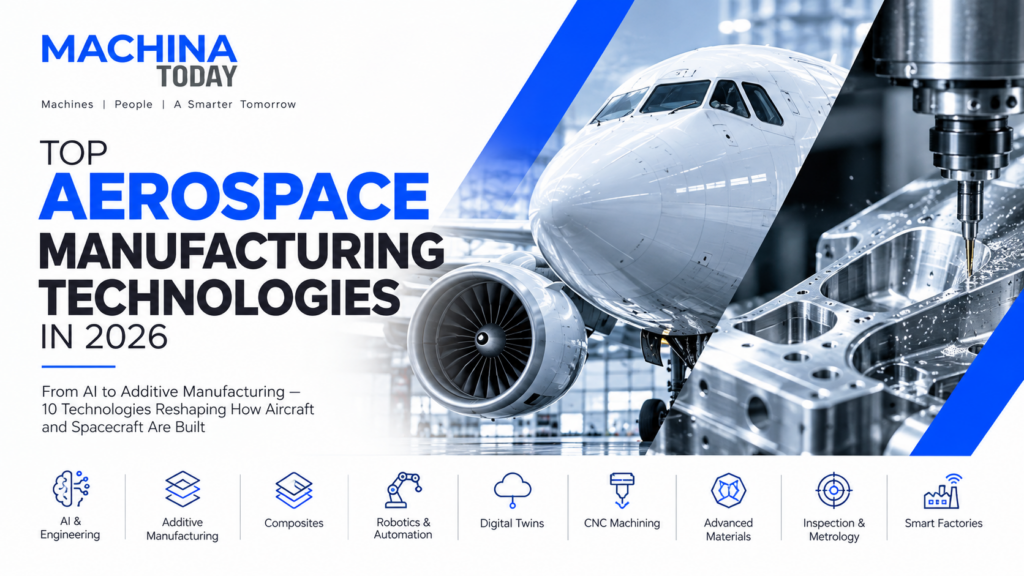
Top Aerospace Manufacturing Technologies in 2026: 10 Technologies Reshaping How Aircraft Are Built
Aerospace manufacturing is entering a new industrial era. From AI-driven engineering and digital twins to…
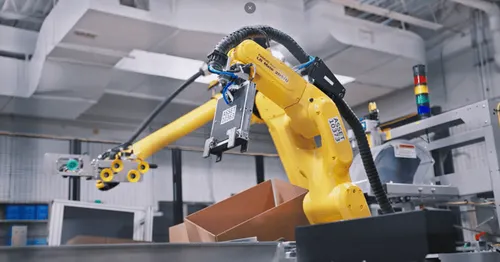
FANUC at IMTS 2026: Physical AI, Robotics and CNC Innovation Move Into the Factory
FANUC America is positioning IMTS 2026 as a showcase for the next stage of industrial…
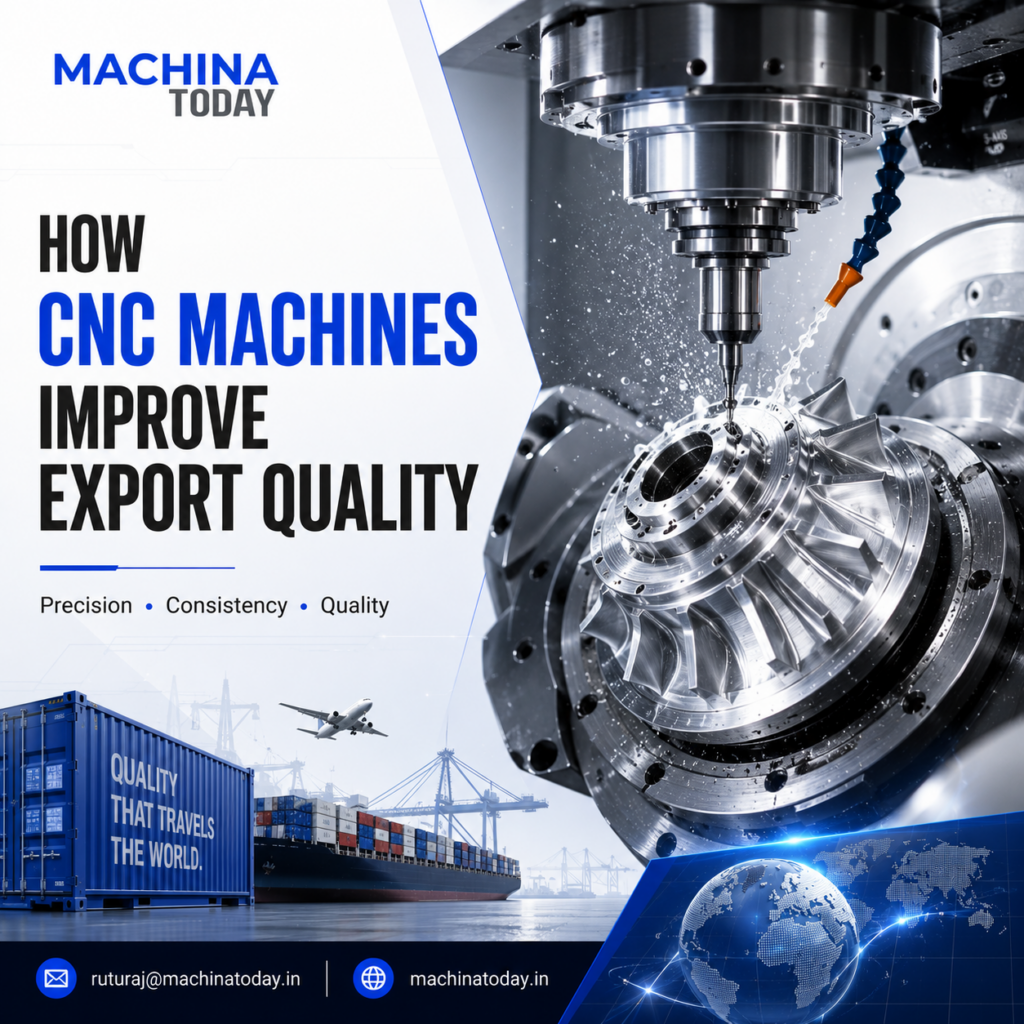
How CNC Machines Improve Export Quality: From Precision Machining to Process Control
Global manufacturing is increasingly built around supply chains where components may be designed in one…

ANCA at IMTS 2026: New Leadership, Precision Tooling and the Next Manufacturing Shift
A new CEO. A legendary founder. One booth. And a manufacturing industry moving faster than…
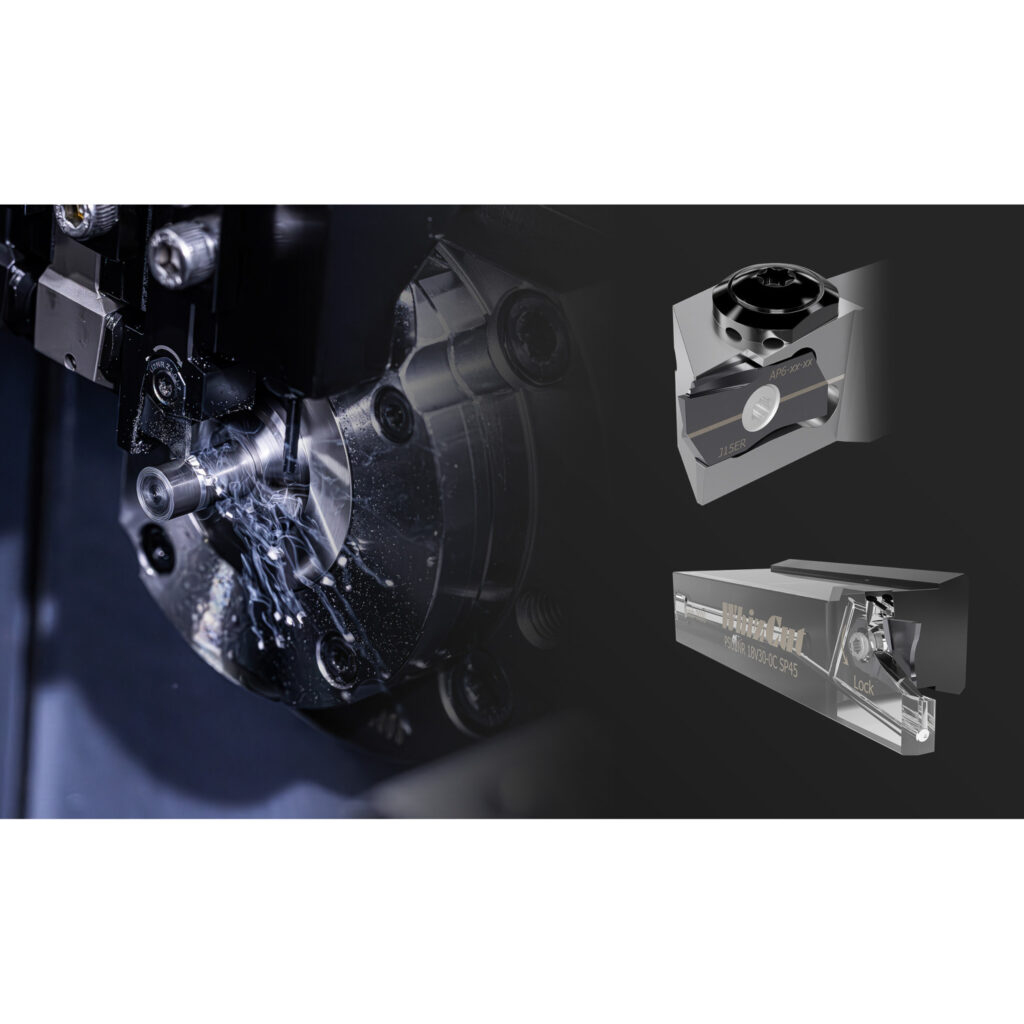
WhizCut at AMB Stuttgart 2026: Smarter Cutting Tools Target Material Waste, Productivity and Sustainable Machining
WhizCut is set to present its precision-tooling portfolio at AMB Stuttgart 2026, with products focused…