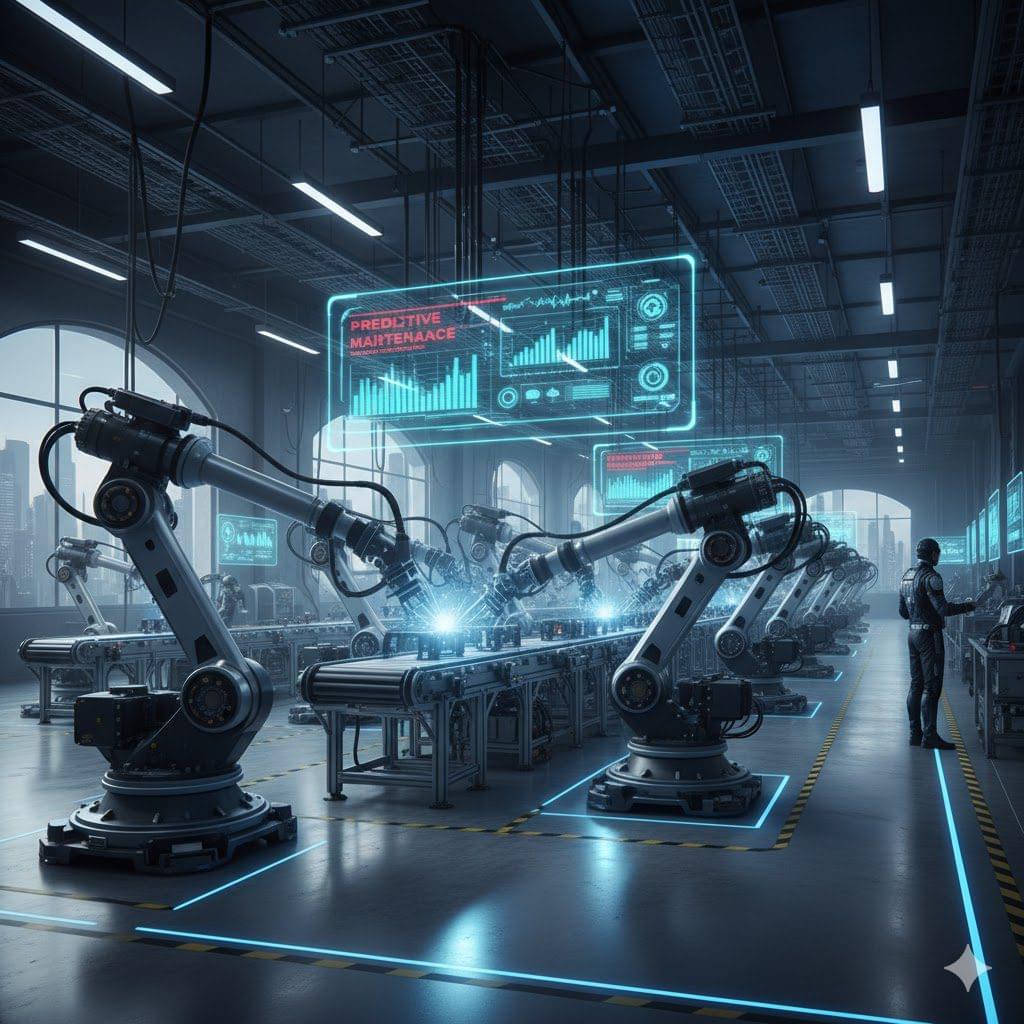
Imagine a factory that fixes its machines before they break down. Sounds futuristic? That’s the power of predictive maintenance — a key pillar of Industry 4.0 and smart manufacturing.
In a world where every second of downtime costs money, predictive maintenance uses data, sensors, and AI to keep machines running smoothly and efficiently.
What Is Predictive Maintenance?
Predictive maintenance (PdM) is a data-driven approach that monitors machine performance in real-time to predict when a part might fail.
Unlike traditional preventive maintenance, where machines are serviced at regular intervals, predictive maintenance only acts when necessary, reducing unnecessary repairs and costs.
How It Works
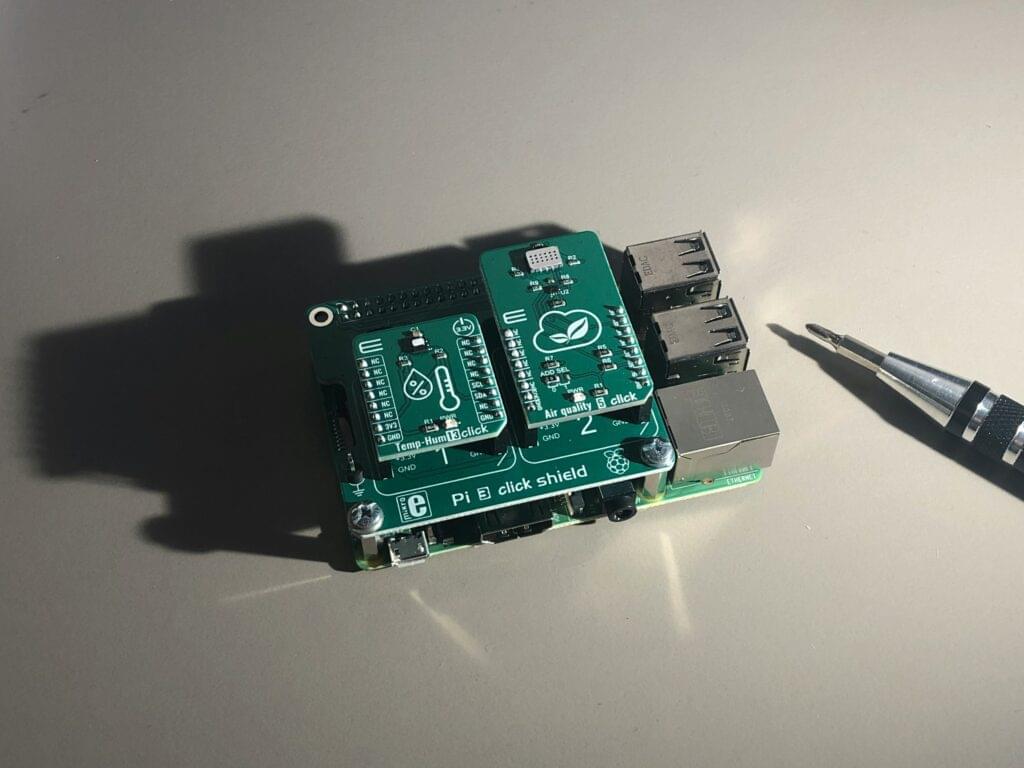
The system collects continuous data from machine sensors — such as vibration, temperature, and pressure.
Then, AI algorithms analyze trends and detect anomalies that signal early signs of wear or malfunction.
🧠 Example: A CNC machine might start vibrating slightly more than usual. The AI system flags it as a potential spindle issue, allowing engineers to act before it fails.
Benefits of Predictive Maintenance
✅ Reduced Downtime: By predicting issues early, factories minimize unplanned shutdowns.
✅ Lower Maintenance Costs: Service only when required — no more over-maintenance.
✅ Extended Equipment Life: Continuous monitoring reduces stress on machinery.
✅ Improved Safety: Early alerts prevent accidents due to sudden breakdowns.
✅ Data-Driven Decisions: Managers get real-time insights for better production planning.
Technologies Behind Predictive Maintenance
- IoT Sensors: Gather real-time data from machines.
- Artificial Intelligence & Machine Learning: Analyze data and predict failures.
- Cloud Computing: Stores and processes massive data sets.
- Edge Devices: Enable faster decision-making near the production line.
Predictive Maintenance in Indian Manufacturing
India’s manufacturing sector — especially automotive, textiles, and heavy machinery — is rapidly embracing IoT-based maintenance systems.
Startups and enterprises are integrating sensors into legacy machines to make them Industry 4.0-ready without massive investment.
Government initiatives like Make in India and Digital India are further fueling this transition.
The Future of Predictive Maintenance
As Industry 5.0 emerges, predictive maintenance will evolve into prescriptive maintenance, where AI doesn’t just predict failures — it recommends exact solutions.
Factories of the future will become self-healing ecosystems, where machines talk, learn, and act autonomously.
Conclusion
Predictive maintenance is not just a technology — it’s a revolution that’s saving industries time, money, and energy.
By adopting this smart approach, manufacturers can ensure zero downtime and maximum productivity, paving the way toward a truly connected and intelligent future.

IMTS 2026 Opens in Chicago: AI, CNC, Robotics and Automation Take Center Stage
IMTS 2026 is officially underway in Chicago, bringing the global manufacturing technology industry together at…

Top Aerospace Manufacturing Technologies in 2026: 10 Technologies Reshaping How Aircraft Are Built
Aerospace manufacturing is entering a new industrial era. From AI-driven engineering and digital twins to…
FANUC at IMTS 2026: Physical AI, Robotics and CNC Innovation Move Into the Factory
FANUC America is positioning IMTS 2026 as a showcase for the next stage of industrial…
How CNC Machines Improve Export Quality: From Precision Machining to Process Control
Global manufacturing is increasingly built around supply chains where components may be designed in one…

ANCA at IMTS 2026: New Leadership, Precision Tooling and the Next Manufacturing Shift
A new CEO. A legendary founder. One booth. And a manufacturing industry moving faster than…
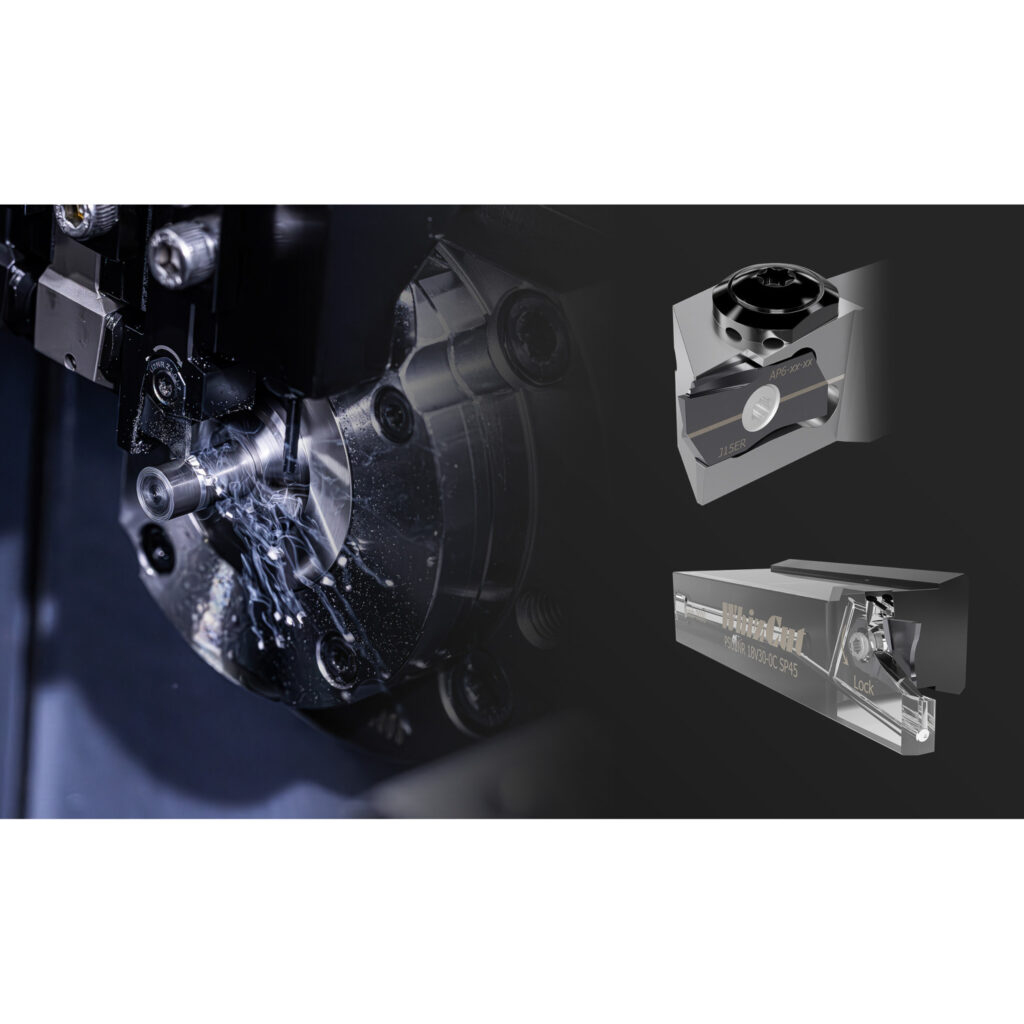
WhizCut at AMB Stuttgart 2026: Smarter Cutting Tools Target Material Waste, Productivity and Sustainable Machining
WhizCut is set to present its precision-tooling portfolio at AMB Stuttgart 2026, with products focused…