

What mattered at AMB × IMTS 2026?
The answer was bigger than any single CNC machine, robot, software platform or product launch.
Across Stuttgart and Chicago, manufacturers demonstrated a common direction: production is becoming more automated, connected, intelligent and data-driven—while precision, productivity and practical ROI remain at the center of every technology decision.
AMB 2026 brought together 1,195 exhibitors from 34 countries across all ten Messe Stuttgart halls, while approximately 65,000 visitors from 76 countries attended the five-day event.
Across the Atlantic, IMTS 2026 attracted more than 90,000 registrants from all 50 U.S. states and 113 countries, with 1,788 exhibiting companies, including 400 first-time exhibitors.
Different markets. Different exhibition formats.
But remarkably similar questions:
How can manufacturers produce more with less? How can automation address labor constraints? How can AI become useful on the shop floor? And how can machines, software, tooling and data work together instead of operating as isolated systems?
That was the real story of AMB × IMTS 2026.
AMB × IMTS 2026 by the Numbers
| AMB 2026 | IMTS 2026 | |
|---|---|---|
| Location | Stuttgart, Germany | Chicago, USA |
| Dates | Sept. 15–19, 2026 | Sept. 14–19, 2026 |
| Exhibitors | 1,195 | 1,788 |
| Exhibitor countries | 34 | — |
| Visitors / registrants | ~65,000 visitors | 90,000+ registrants |
| International reach | 76 countries | 113 countries |
| Major focus | Metalworking & machining | Manufacturing technology ecosystem |
AMB’s final figures show that visitor numbers remained around the 2024 level, while the proportion of decision-relevant manufacturing professionals increased to 68%, with 14% from business, company or operations management, compared with 10% in 2024.
IMTS likewise highlighted the concentration of manufacturers, technology decision-makers and prospective customers on its show floor. The event reported a floor-density ratio of 1.42, meaning 142 visitors for every 100 exhibitor personnel based on the pre-show calculation.
1. AI Moved Closer to the Machine
One of the clearest themes across both exhibitions was the transition of AI from a technology discussion into a manufacturing application.
At AMB, the official program included discussions on AI in Manufacturing and AI in Production – From Hype to Value Creation.
That wording matters.
The industry conversation is increasingly moving away from:
“Can AI be used in manufacturing?”
toward:
“Where does AI create measurable value inside production?”
At IMTS, the same movement appeared through AI-powered software, shop-floor interfaces, CAM automation, robotics and digital manufacturing systems.
The official IMTS press-conference program, for example, featured technologies addressing AI-powered operating systems, AI interfaces for shop-floor execution, agentic CAM and AI systems that work with CAD models, drawings and BOMs.
The important shift is not AI itself.
It is the integration of AI with existing manufacturing workflows.
2. Automation Was No Longer an Add-On
Automation was one of the strongest common threads between Stuttgart and Chicago.
Manufacturers increasingly showed complete production systems rather than standalone machines.
That means:
CNC machine + robot + tooling + inspection + software + data.
The goal is not simply to automate one operation.
The goal is to build a production cell capable of operating with greater consistency and less manual intervention.
This was visible across technologies presented at both exhibitions, from CNC automation and robotic handling to connected production systems.
At AMB, automation and handling technology was also one of the dedicated AMB Award categories.
At IMTS, automation, robotics, connected systems and digital technologies were among the central technology areas highlighted by the show’s media program.
3. CNC Machines Are Becoming Part of Larger Systems
The modern CNC machine is increasingly becoming one component of a much larger manufacturing architecture.
The machine still matters enormously.
But manufacturers are increasingly evaluating:
- machine performance
- automation capability
- connectivity
- process monitoring
- tool management
- inspection
- production scheduling
- data collection
- energy consumption
- software integration
together.
That changes the conversation around machine-tool investment.
A machine is no longer evaluated only by:
spindle speed + axis travel + cutting capacity.
The bigger question becomes:
What does this machine enable the entire production system to do?
That was one of the most important themes visible across AMB × IMTS 2026.
4. Physical AI and Robotics Became a Major Manufacturing Story
Robotics continued to move beyond repetitive material handling.
At IMTS, FANUC presented technologies spanning robotics, automation, Physical AI and CNC innovation.
Other exhibitors demonstrated increasingly integrated robotic workflows.
This matters because manufacturers are facing a practical challenge:
How do you increase production capacity when skilled labor is difficult to scale?
Automation provides one answer.
But the next generation of automation needs to be:
- easier to program
- easier to integrate
- flexible between jobs
- capable of working alongside people
- connected to production data
- economically practical for more manufacturers
The direction shown at IMTS suggests robotics is increasingly being positioned as part of the manufacturing system—not simply a separate automation product.
5. Digitalization Is Becoming the Infrastructure Behind Manufacturing
Another major AMB × IMTS takeaway was the growing importance of software.
Manufacturing is becoming increasingly dependent on digital infrastructure connecting:
Design → CAM → CNC → Automation → Inspection → Production Data → Analytics
This is why digitalization appeared alongside machine tools rather than separately from them.
At AMB, software and digitalization had their own AMB Award category, with autonomIQ technologies receiving recognition in that category.
At IMTS, software, AI, connected systems and digital technologies formed a major part of the exhibition ecosystem.
The implication is straightforward:
The future factory will not be defined only by the machines inside it. It will also be defined by how those machines communicate.
6. Additive Manufacturing Continued Moving Toward Production
Additive manufacturing was another important part of the IMTS technology landscape.
EOS, Stratasys and other companies brought production-oriented additive manufacturing technologies to Chicago.
EOS, for example, showcased its six-laser M4 Onyx in a North American debut at IMTS 2026.
Stratasys also positioned additive manufacturing around production applications spanning aerospace, defense, automotive and healthcare.
The larger trend is important.
Additive manufacturing is increasingly being discussed not simply as a prototyping technology but as one part of a broader production strategy.
That does not mean additive will replace CNC machining.
Instead, the two technologies increasingly exist within the same advanced manufacturing ecosystem.
7. Precision Still Wins
For all the discussion around AI, robotics and digitalization, AMB 2026 reinforced something fundamental:
Manufacturing still comes down to making physical parts correctly.
Precision tools, measurement, quality assurance, machine tools and process reliability remained central to the exhibition.
AMB’s award program recognized categories covering:
- machine tools and manufacturing facilities
- precision tools
- measuring technology and quality assurance
- software and digitalization
- automation and handling
- components and operating materials.
That combination tells an important story.
The manufacturing future isn’t simply about adding more technology.
It is about connecting technologies without losing control of the physical process.
8. Cybersecurity Is Becoming a Manufacturing Requirement
Another issue that deserves more attention is cybersecurity.
As CNC machines, robots, PLCs, production software, cloud platforms and factory networks become increasingly connected, the attack surface of manufacturing also changes.
Siemens’ AMB 2026 program specifically highlighted cybersecurity compliance alongside AI and manufacturing transformation.
That combination is significant.
The smart factory cannot simply be connected.
It has to be securely connected.
For manufacturers investing in Industry 4.0, cybersecurity is therefore moving from an IT-only concern toward an operational manufacturing requirement.
9. The Human Side of Manufacturing Still Matters
There was another story running underneath the technology:
People.
AMB included dedicated programming around young talent in mechanical engineering, while IMTS continued its Smartforce focus on students and educators.
This is critical.
Automation does not eliminate the need for manufacturing expertise.
It changes the expertise manufacturers need.
Tomorrow’s manufacturing workforce will increasingly require people who understand:
machining + automation + software + data + AI + process engineering.
The technology is evolving.
So is the job.
10. AMB and IMTS Showed Two Different Manufacturing Perspectives
Although both events covered advanced manufacturing, they offered different perspectives.
AMB 2026 — Stuttgart
AMB remained deeply rooted in the European metalworking and machining ecosystem.
Its focus covered the metal-cutting process chain, machine tools, precision tools, measurement, automation, software and related technologies.
With 1,195 exhibitors from 34 countries, the show demonstrated the international depth of Europe’s metalworking market.
IMTS 2026 — Chicago
IMTS presented a broader manufacturing technology ecosystem.
Machining, automation, robotics, software, additive manufacturing, AI, digital technologies and connected production all appeared together.
Its 1,788 exhibitors and more than 90,000 registrants demonstrate the enormous scale of the North American manufacturing technology market.
AMB showed the depth of metalworking.
IMTS showed the breadth of the manufacturing technology ecosystem.
Together, they provided a useful global snapshot of where industrial production is moving.
What Manufacturers Should Take Away From AMB × IMTS 2026
If there is one lesson from both exhibitions, it is this:
Don’t buy technology in isolation.
A new CNC machine can increase capacity.
A robot can reduce manual handling.
AI can improve decision-making.
Software can connect production data.
Inspection can improve quality.
But the greatest opportunity comes when these technologies work together.
The next competitive advantage will increasingly come from integration.
The Manufacturing Technology Stack Is Changing
The traditional manufacturing stack looked something like:
Machine → Operator → Part
The emerging model looks more like:
Design → Simulation → CAM → CNC → Automation → Inspection → Data → AI → Optimization
That is a fundamentally different production architecture.
And AMB × IMTS 2026 offered a look at many of the technologies making that architecture possible.
What Mattered Most?
After following developments from both exhibitions, the biggest themes were not individual product launches.
They were systems.
AI
Moving toward practical manufacturing applications.
Automation
Moving from individual robots toward integrated production cells.
Robotics
Becoming more intelligent, flexible and connected.
CNC
Becoming part of broader digital production ecosystems.
Software
Becoming critical infrastructure for modern factories.
Additive
Expanding its role in production applications.
Metrology
Remaining essential as manufacturing becomes more complex.
Cybersecurity
Becoming increasingly important as factories become connected.
Workforce
Evolving alongside automation and AI.
Integration
Emerging as one of the most important competitive factors.
A Thank You to the Manufacturing Community
From Stuttgart to Chicago, one thing stood out:
Manufacturing is still powered by people.
To every exhibitor who opened its doors, demonstrated a machine, shared a product launch, explained a technology, answered questions or invited the industry into its booth—thank you.
To the engineers, machinists, manufacturing leaders, automation specialists, software developers, students, distributors, integrators and decision-makers who walked the halls of AMB and IMTS—thank you.
And to everyone who followed the coverage remotely, shared our posts, commented, sent updates, tagged companies and helped us discover what was happening across both exhibitions:
Thank you for being part of the conversation.
Machina Today may not have been physically inside every aisle, but our goal throughout AMB × IMTS 2026 was simple:
Bring the manufacturing floor closer to you.
Because great manufacturing technology should not stay behind an exhibition wall.
It should be seen, understood and discussed by the global manufacturing community.
AMB × IMTS 2026: The Bigger Picture
The two exhibitions ended on September 19.
But the technology conversations do not end when the halls close.
The machines demonstrated in Stuttgart and Chicago will eventually enter factories.
The software platforms will continue evolving.
AI will become more embedded into manufacturing workflows.
Robotics will continue expanding.
Automation will become more accessible.
And manufacturers will continue asking the same fundamental question:
How can we make better parts, faster, more efficiently and more reliably?
That is the real legacy of AMB × IMTS 2026.
Not one machine.
Not one software platform.
Not one technology.
An industry moving toward more connected, automated and intelligent production.
Frequently Asked Questions
What were the biggest AMB 2026 highlights?
AMB 2026 highlighted machine tools, precision tooling, measurement and quality assurance, automation, software, digitalization and AI-driven manufacturing. The event brought together 1,195 exhibitors from 34 countries and approximately 65,000 visitors from 76 countries.
What were the biggest IMTS 2026 highlights?
IMTS 2026 brought together machining, automation, robotics, additive manufacturing, AI, software and digital manufacturing technologies. The show reported more than 90,000 registrants from 113 countries and 1,788 exhibiting companies.
What manufacturing technologies dominated AMB and IMTS 2026?
The strongest cross-show themes included AI, automation, robotics, CNC machining, digitalization, connected manufacturing, additive manufacturing, metrology and cybersecurity.
Was AI a major theme at AMB 2026?
Yes. The AMB program included dedicated sessions addressing AI in manufacturing and AI in production, including the question of moving from hype toward value creation.
What did IMTS 2026 show about the future of CNC machining?
IMTS demonstrated that CNC machining is increasingly being integrated with automation, robotics, software, AI, inspection and connected production systems rather than operating as an isolated manufacturing process.
When were AMB and IMTS 2026 held?
AMB 2026 took place September 15–19 at Messe Stuttgart, Germany, while IMTS 2026 ran September 14–19 at McCormick Place in Chicago, USA.
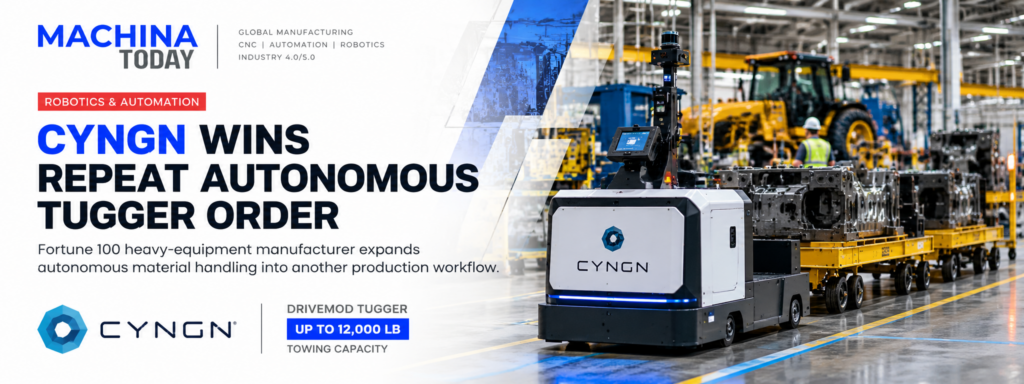
Cyngn Wins Repeat Autonomous Tugger Order from Fortune 100 Heavy Equipment Manufacturer
Autonomous material handling is moving from pilot projects toward repeatable production workflows as Cyngn expands…
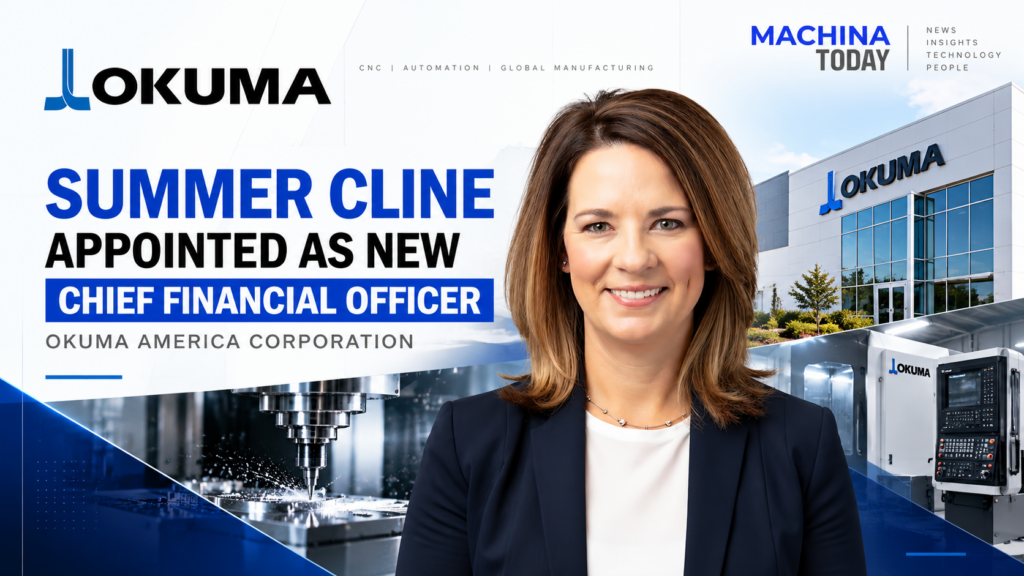
Okuma America Corporation Appoints Summer Cline as New Chief Financial Officer
Summer Cline has been promoted to Chief Financial Officer (CFO) of Okuma America Corporation, strengthening…
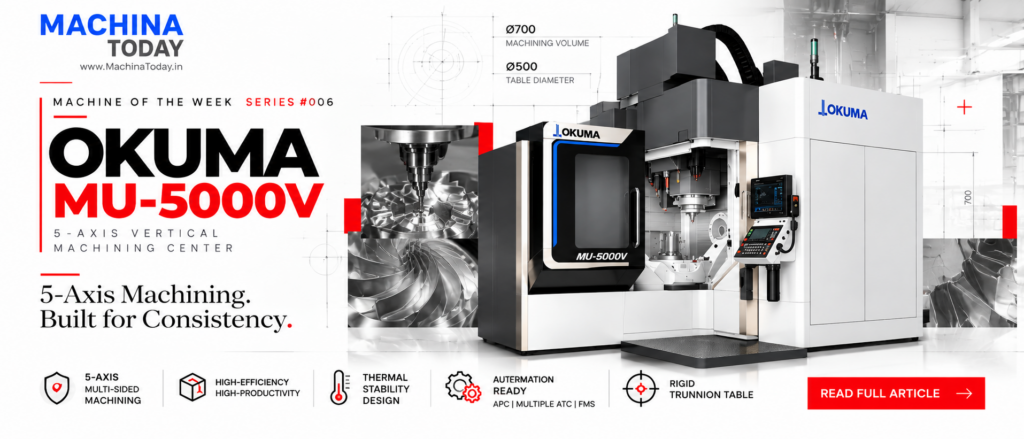
Okuma MU-5000V: 5-Axis CNC Machining Center for High-Precision Multi-Sided Machining
The Okuma MU-5000V is a 5-axis vertical machining center designed for high-efficiency, high-productivity multi-sided machining….
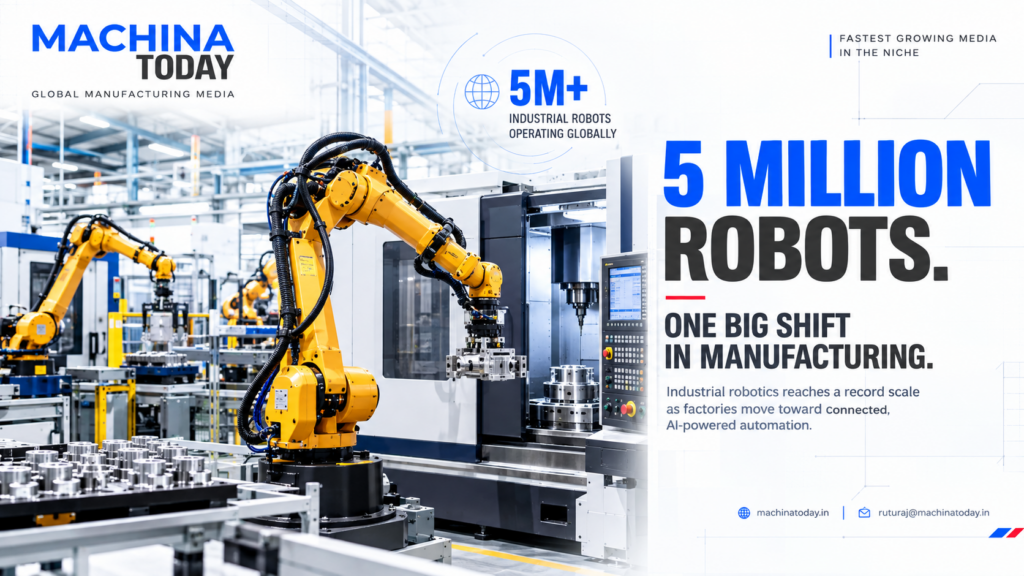
Five Million Industrial Robots Are Now Working in Factories — What It Means for Manufacturing
The global factory floor is becoming increasingly automated. According to the International Federation of Robotics…
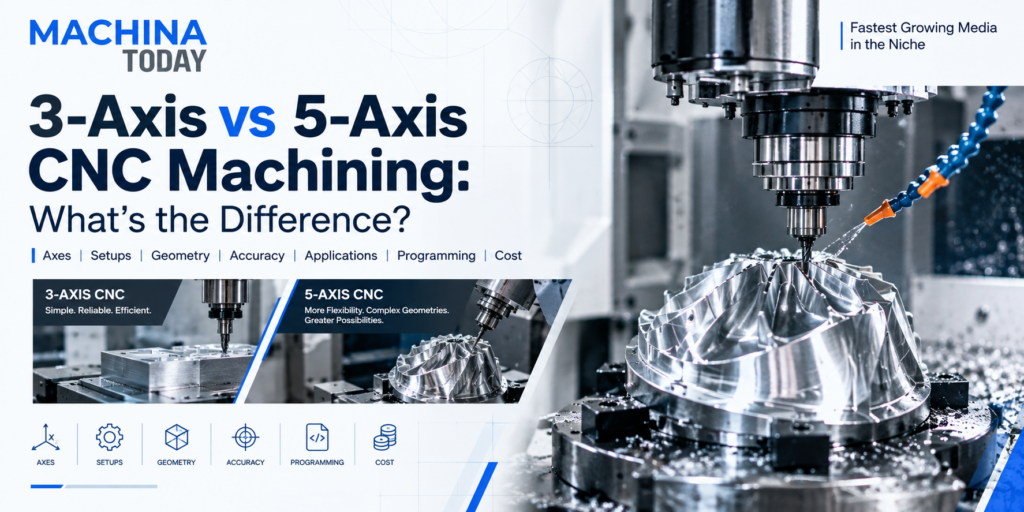
3-Axis vs 5-Axis CNC Machining: What’s the Difference?
3-axis vs 5-axis CNC machining is not simply a comparison between a basic machine and…
CNC Machining: Complete Guide to CNC Machines, Processes, Types and Applications
CNC machining is one of the foundations of modern manufacturing. From aerospace structures and automotive…
Sources & verification
The article’s key event figures and technology themes are based on current event and industry reporting, including:
- IMTS 2026 official event coverage
- IMTS official media resources
- Messe Stuttgart — AMB 2026
- AMB 2026 final attendance reporting: 65,000 visitors, 76 countries and 1,195 exhibitors.
- AMB 2026 program and AI themes.
Follow Machina Today for what comes next.
From CNC machines and automation to robotics, AI and the digital factory, we track the technologies shaping global manufacturing.
Machina Today — your window into global manufacturing.
YOU BUILD. WE GROW.
#Manufacturing #CNC #Machining #Automation #Robotics #IndustrialAI #SmartManufacturing #IMTS2026 #AMB2026 #MachineTools