Introduction: A Silent Revolution in Indian Workshops
Across India—from small machining units in Rajkot to fabrication shops in Coimbatore—a quiet transformation is underway. Machines are becoming smarter, processes faster, and decisions more data-driven.
Automation is no longer a luxury reserved for large corporations. Today, even small and medium enterprises (MSMEs) are embracing it—not just to survive, but to compete globally.
🏭 What is Driving Automation in Indian MSMEs?
The push toward automation is not accidental. It is driven by real business pressure:
- Rising labor costs
- Increasing demand for precision
- Global competition
- Export quality requirements
In industries like CNC machining, plastics, and automotive components, consistency is everything. One small defect can lead to rejected export shipments.
Automation helps solve this.
⚙️ Key Technologies MSMEs Are Adopting
🔹 CNC Machines & Advanced Machining
Modern CNC machines allow small units to produce complex components with micron-level accuracy.
🔹 Industrial Robotics
Robots are now used for:
- Loading/unloading
- Welding
- Packaging
Even small factories are deploying collaborative robots (cobots).
🔹 IoT & Smart Monitoring
Sensors track machine performance in real-time, helping reduce downtime.
🔹 ERP & Digital Systems
From inventory to production planning, digital tools bring efficiency and clarity.
📊 MSME Export Data & Growth (India)
MSMEs are the backbone of India’s economy:
- Contribute ~30% to India’s GDP
- Account for 45%+ of total exports
- Over 63 million MSMEs across sectors
In recent years, India’s exports crossed $750+ billion (goods + services), and MSMEs play a massive role in this growth.
👉 Key export sectors driven by MSMEs:
- Engineering goods
- Auto components
- Textiles & machinery
- Precision parts
Automation is helping these businesses meet international quality standards, making India a trusted global supplier.
🌎 Global Perspective: How India Compares
Globally, countries like:
- Germany
- Japan
- China
have already embraced automation at scale.
India is catching up fast.
The difference?
India’s strength lies in cost-effective automation + skilled workforce, making it highly competitive.
🚀 Real Impact: What Automation Actually Changes
✔ Increased Productivity
Machines can run longer with minimal human intervention.
✔ Better Quality
Consistent output = fewer rejections in exports.
✔ Faster Delivery
Automation reduces production time significantly.
✔ Global Opportunities
Automated MSMEs can supply to international OEMs.
👨🏭 Human Angle: Not Replacing Jobs, But Changing Them
One common fear is that automation will reduce jobs.
Reality is different.
Instead of removing workers, automation is:
- Creating skilled jobs
- Increasing demand for operators, programmers, and engineers
- Improving workplace safety
The role of a worker is evolving—from manual labor to machine supervision.
⚡ Challenges MSMEs Still Face
Despite benefits, adoption is not easy:
- High initial investment
- Lack of awareness
- Skill gap
- Fear of technology
But government schemes and financing options are slowly solving this.
🏗️ Government Support & Initiatives
India is actively promoting automation through:
- Make in India
- Digital MSME schemes
- Subsidies for machinery upgrades
These initiatives aim to push MSMEs toward Industry 4.0 readiness.
🔮 Future: Smart Factories & Global Dominance
The future of Indian MSMEs is clear:
- Smart factories
- AI-driven production
- Fully connected supply chains
The small workshop of today can become the global supplier of tomorrow.
🧩 From Local to Global
Automation is not just about machines—it’s about transformation.
Indian MSMEs are moving:
👉 From manual → digital
👉 From local → global
👉 From survival → growth
Those who adopt early will lead the next industrial revolution.

IMTS 2026 Opens in Chicago: AI, CNC, Robotics and Automation Take Center Stage
IMTS 2026 is officially underway in Chicago, bringing the global manufacturing technology industry together at…
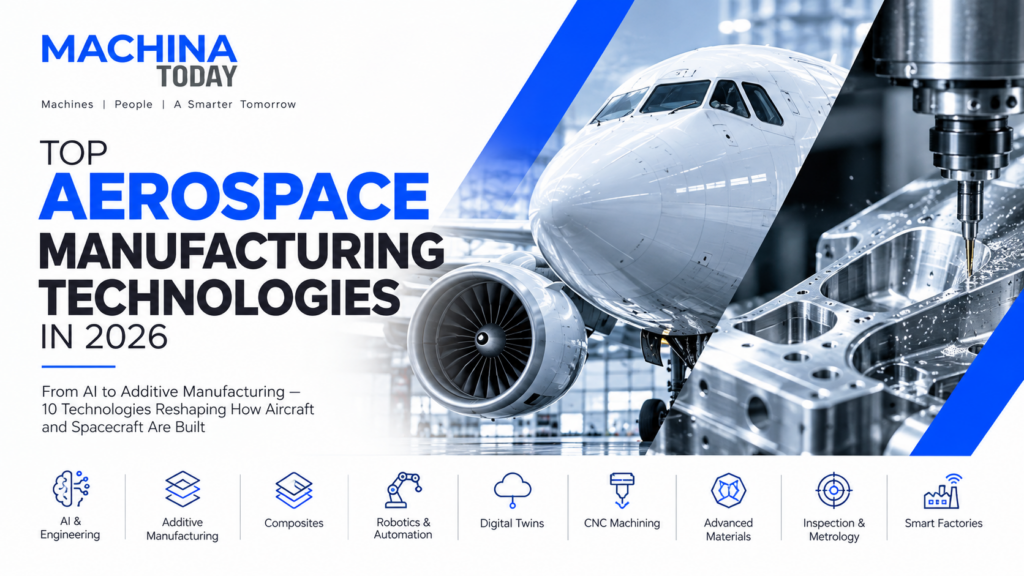
Top Aerospace Manufacturing Technologies in 2026: 10 Technologies Reshaping How Aircraft Are Built
Aerospace manufacturing is entering a new industrial era. From AI-driven engineering and digital twins to…
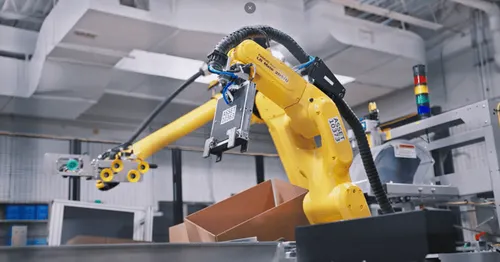
FANUC at IMTS 2026: Physical AI, Robotics and CNC Innovation Move Into the Factory
FANUC America is positioning IMTS 2026 as a showcase for the next stage of industrial…
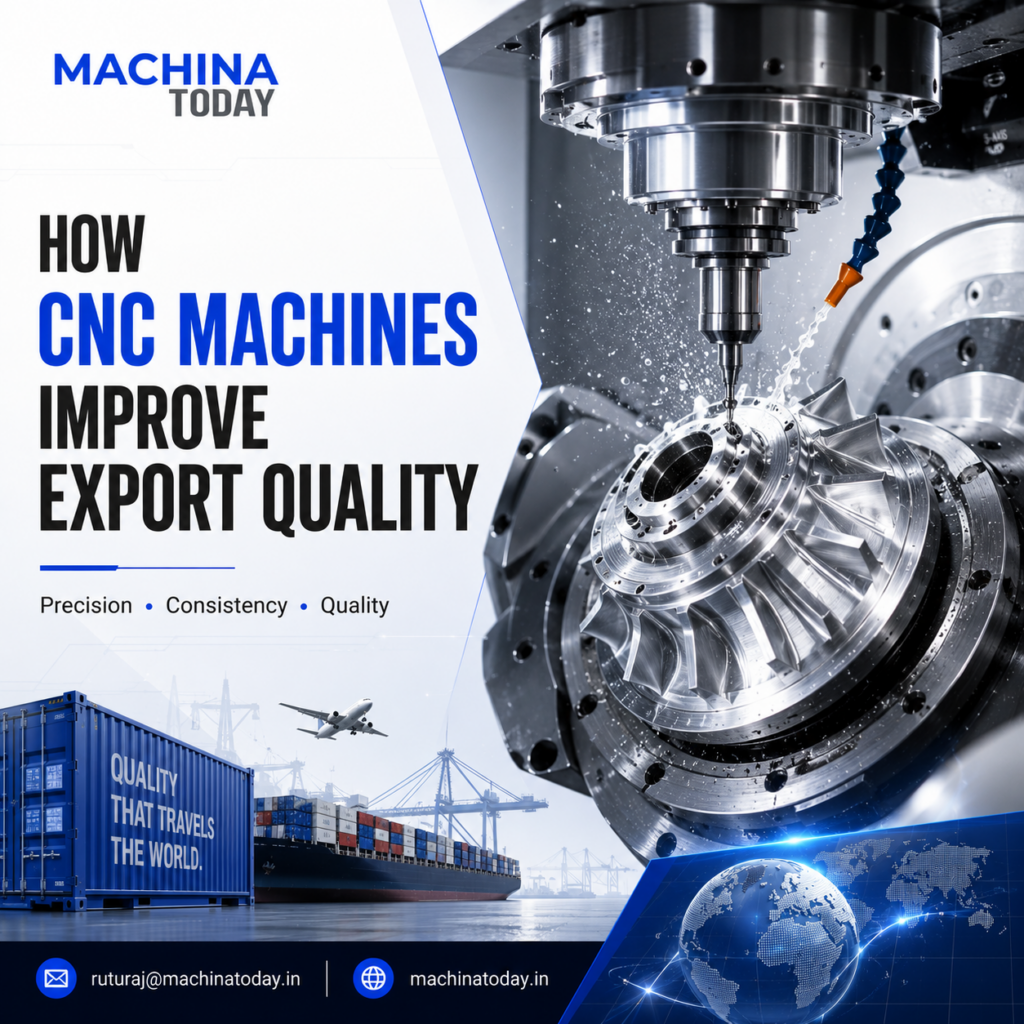
How CNC Machines Improve Export Quality: From Precision Machining to Process Control
Global manufacturing is increasingly built around supply chains where components may be designed in one…

ANCA at IMTS 2026: New Leadership, Precision Tooling and the Next Manufacturing Shift
A new CEO. A legendary founder. One booth. And a manufacturing industry moving faster than…
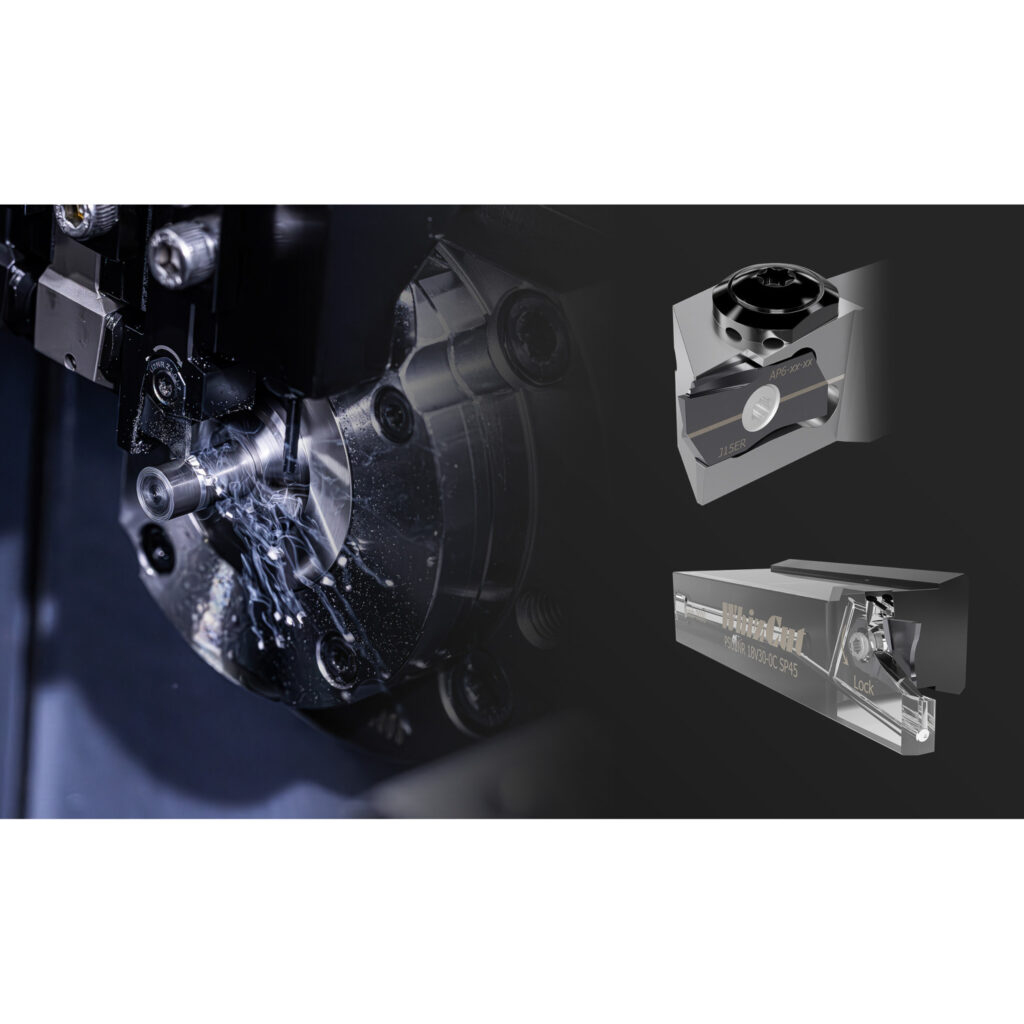
WhizCut at AMB Stuttgart 2026: Smarter Cutting Tools Target Material Waste, Productivity and Sustainable Machining
WhizCut is set to present its precision-tooling portfolio at AMB Stuttgart 2026, with products focused…