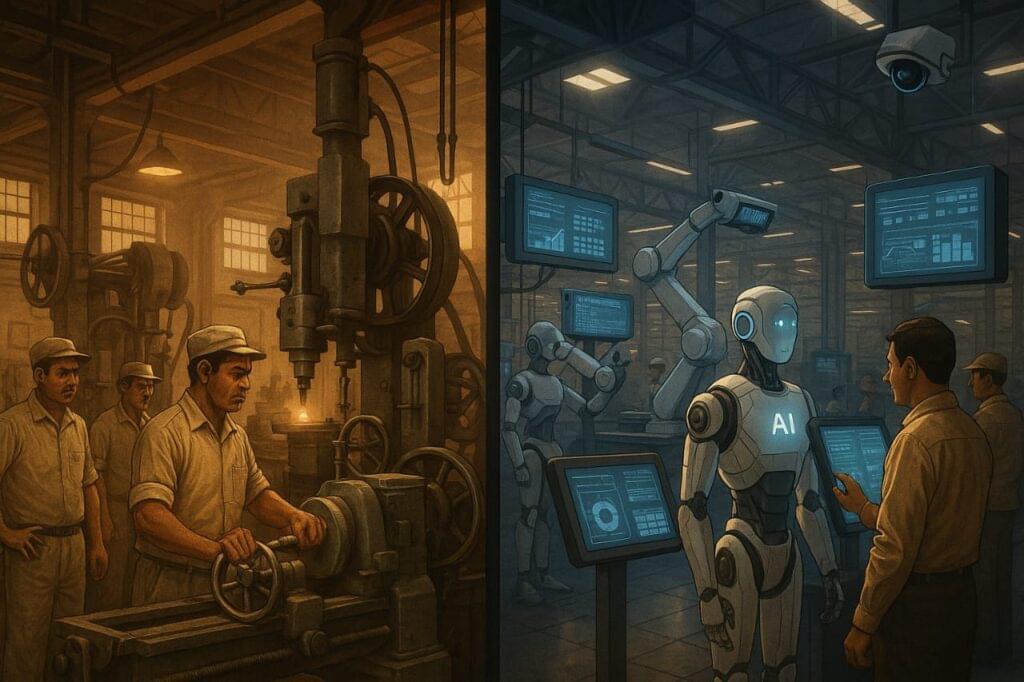
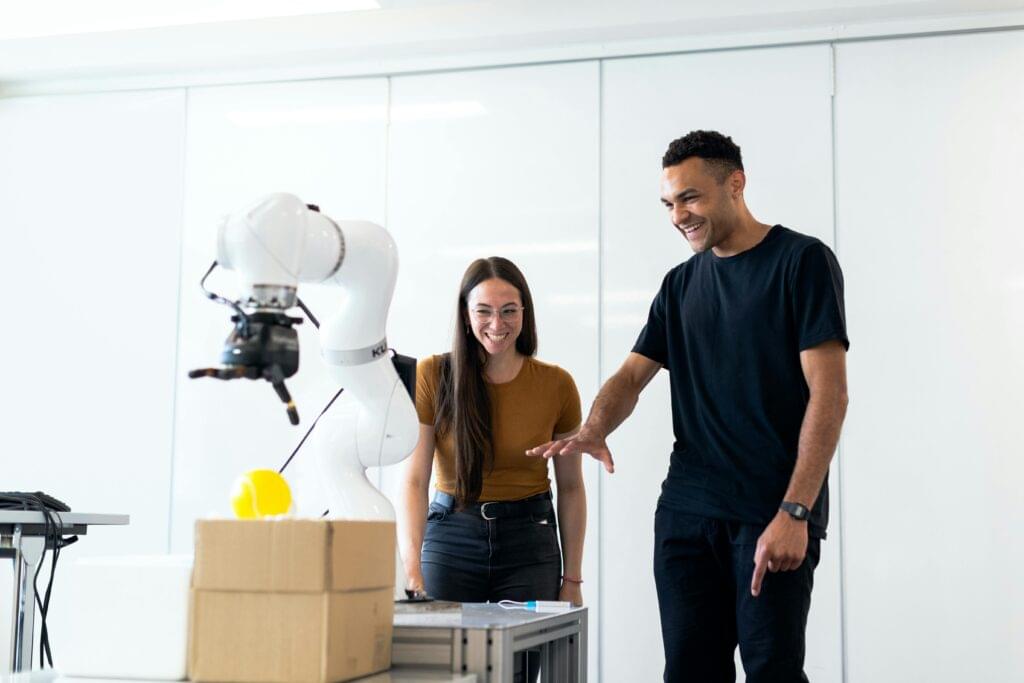
The fear that robots will replace humans in factories has been around for decades. But the reality of Industry 5.0 tells a different story — one where humans and robots work together, not against each other.
Welcome to the era of Collaborative Robots (Cobots) — intelligent, flexible, and safe machines designed to assist workers rather than replace them.
In India’s rapidly modernizing manufacturing landscape, cobots are emerging as the perfect balance between automation and human creativity. From automotive assembly lines in Pune to electronics units in Bengaluru, cobots are quietly reshaping how factories operate.
1. What Are Cobots?
Cobots (short for collaborative robots) are lightweight, sensor-equipped robots that can safely share workspace with humans. Unlike traditional industrial robots that operate behind safety cages, cobots are designed with:
- Advanced sensors to detect human presence
- AI-powered motion planning to avoid collisions
- Plug-and-play setup for quick deployment
- Ease of reprogramming for new tasks
Cobots are the physical embodiment of Industry 5.0’s human-centric innovation.
2. Why Cobots Matter for Indian Manufacturing
India’s manufacturing ecosystem — from small-scale units to large OEMs — faces three major challenges:
- Labor shortages in skilled roles
- Inconsistent quality across production lines
- Need for global competitiveness
Cobots help solve all three. They handle repetitive, hazardous, or precision-based tasks, allowing humans to focus on creativity, inspection, and problem-solving.
🔹 Key Advantages
- Boosts Productivity: Cobots can run 24/7 with minimal supervision.
- Improves Safety: They take over tasks involving heat, chemicals, or heavy lifting.
- Increases Consistency: Delivers perfect precision every time.
- Affordable Automation: Ideal for MSMEs that can’t afford large robotic systems.
3. Real-World Adoption in India
🇮🇳 Automotive Sector (Pune, Chennai, Gurugram)
Cobots handle welding, painting, and part inspection in automotive plants, helping meet global export standards.
🏭 Electronics and Electricals (Bengaluru, Noida)
In electronics manufacturing, cobots perform delicate soldering and assembly without fatigue, reducing product defects.
⚙️ CNC Workshops and MSMEs (Rajkot, Coimbatore, Ludhiana)
Indian MSMEs are integrating cobots with CNC machines for loading/unloading, increasing throughput by 25–30%.
4. The Numbers Behind the Revolution
According to IFR (International Federation of Robotics), cobot sales are growing 30% faster than traditional robots worldwide.
In India:
- Cobot installations grew by 28% in 2024, especially in MSMEs.
- Average ROI for cobot deployment = 18–24 months.
- Market forecast: $700 million by 2030 for collaborative robotics in India.
5. Human + Robot = Perfect Partnership
Cobots aren’t replacing humans — they’re augmenting human capabilities.
For example:
- A worker can operate multiple cobots via tablet interface.
- Cobots assist in high-precision assembly where human touch is crucial.
- Training programs like “Robotics for MSMEs” are helping small manufacturers adopt cobots with minimal disruption.
6. Challenges to Overcome
While adoption is accelerating, challenges remain:
- High initial cost for smaller units.
- Lack of skilled operators for setup and maintenance.
- Cybersecurity concerns in connected cobot networks.
Government programs like SAMARTH Udyog Bharat 4.0 and Skill India are addressing these gaps by promoting affordable robotics and operator training.
7. The Future of Cobots in India
By 2035, experts expect that 1 in 3 industrial robots in India will be a cobot.
With advancements in AI vision, 5G, and edge computing, cobots will become:
- Smarter (able to self-learn from human behavior)
- Faster (with low-latency networks)
- Safer (using AI-driven motion prediction)
The cobot revolution aligns perfectly with India’s “Make in India” and “Atmanirbhar Bharat” missions — empowering local industries to automate responsibly.
Collaborative robots represent the heart of Industry 5.0 — where machines enhance, not replace, human potential.
For India, cobots are not just tools of efficiency but partners in innovation — making manufacturing safer, faster, and smarter.
👉 Stay tuned with Machina Today for more insights into smart manufacturing, automation, and the technologies shaping tomorrow’s factories.

IMTS 2026 Opens in Chicago: AI, CNC, Robotics and Automation Take Center Stage
IMTS 2026 is officially underway in Chicago, bringing the global manufacturing technology industry together at…
Top Aerospace Manufacturing Technologies in 2026: 10 Technologies Reshaping How Aircraft Are Built
Aerospace manufacturing is entering a new industrial era. From AI-driven engineering and digital twins to…
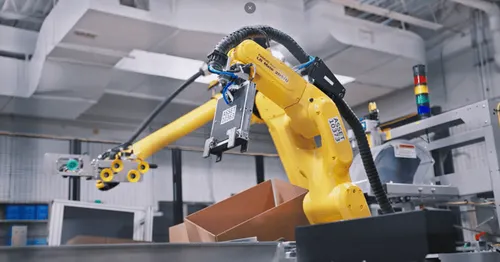
FANUC at IMTS 2026: Physical AI, Robotics and CNC Innovation Move Into the Factory
FANUC America is positioning IMTS 2026 as a showcase for the next stage of industrial…
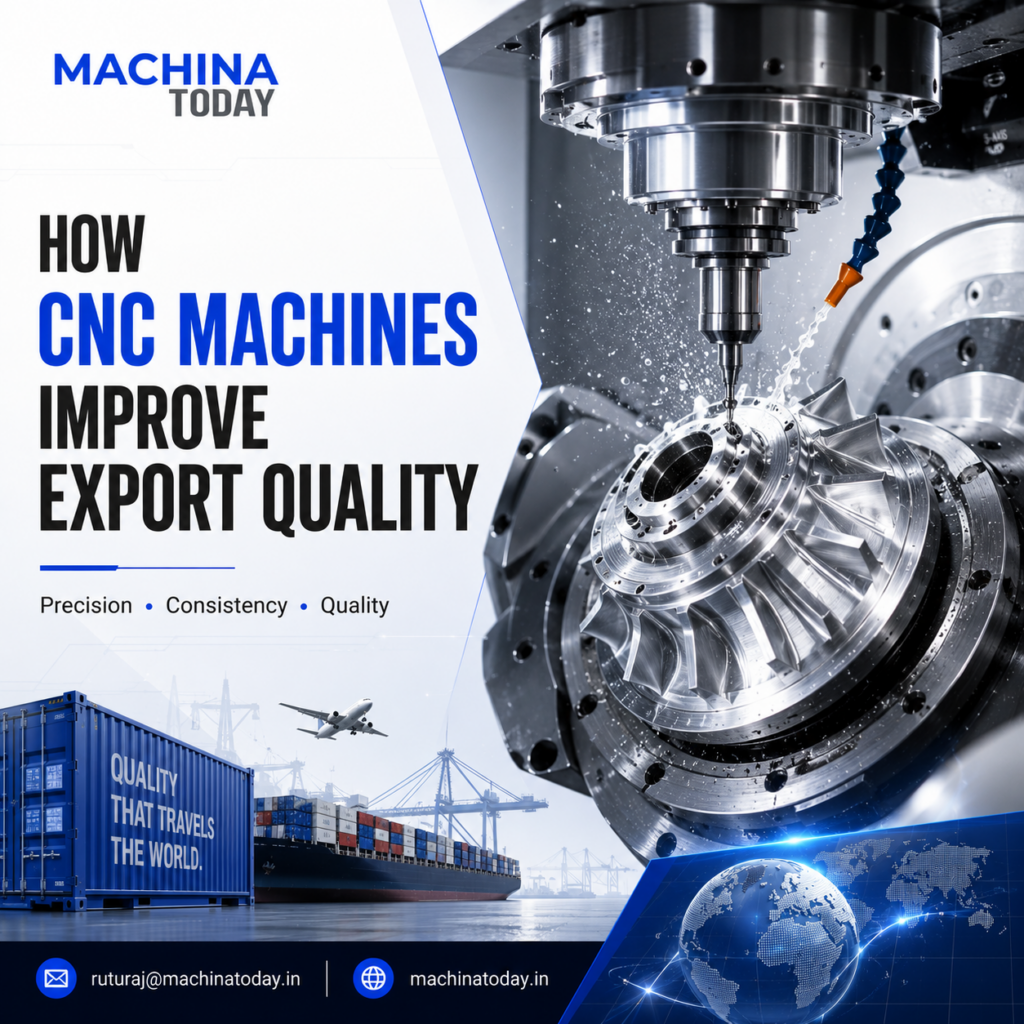
How CNC Machines Improve Export Quality: From Precision Machining to Process Control
Global manufacturing is increasingly built around supply chains where components may be designed in one…

ANCA at IMTS 2026: New Leadership, Precision Tooling and the Next Manufacturing Shift
A new CEO. A legendary founder. One booth. And a manufacturing industry moving faster than…
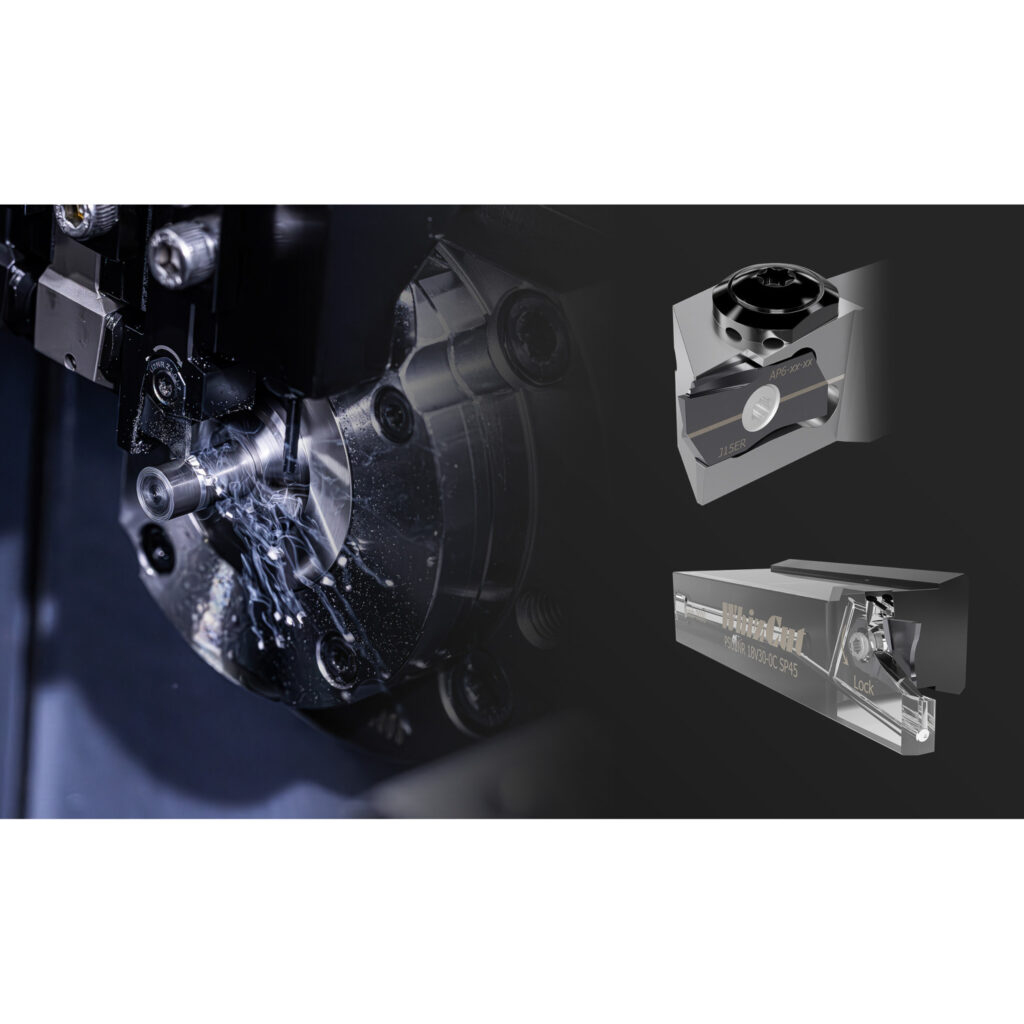
WhizCut at AMB Stuttgart 2026: Smarter Cutting Tools Target Material Waste, Productivity and Sustainable Machining
WhizCut is set to present its precision-tooling portfolio at AMB Stuttgart 2026, with products focused…