Imagine being able to simulate your entire factory in 3D, predict failures before they happen, and optimize production from anywhere in the world.
That’s not the future — it’s happening right now with Digital Twin Technology.
A Digital Twin is a virtual replica of a real-world system — machines, production lines, or even entire factories — that updates in real time using IoT, AI, and data analytics.
🔹 1. What Are Digital Twins?
Digital twins combine physical sensors and virtual models. Every machine’s performance data — temperature, vibration, power, and pressure — is mirrored in a virtual environment.
This helps manufacturers see problems before they occur and test improvements without disrupting production.
🔹 2. How Digital Twins Work in Manufacturing
A digital twin system collects live machine data through IoT sensors, sends it to the cloud, and visualizes it on dashboards or 3D models.
Engineers can then simulate “what-if” scenarios to improve speed, accuracy, and efficiency.
💡 Example: A CNC manufacturer can test new tool paths virtually before running them on the actual machine — saving time, material, and cost.
🔹 3. Benefits of Digital Twin Technology
- Predictive Maintenance: Detect wear and tear early and schedule maintenance before breakdowns.
- Product Quality: Run simulations to maintain consistent output.
- Reduced Downtime: Virtual testing means fewer line stops.
- Energy Optimization: Identify power-hungry systems and cut waste.
🔹 4. Industry 5.0: Human + Digital Collaboration
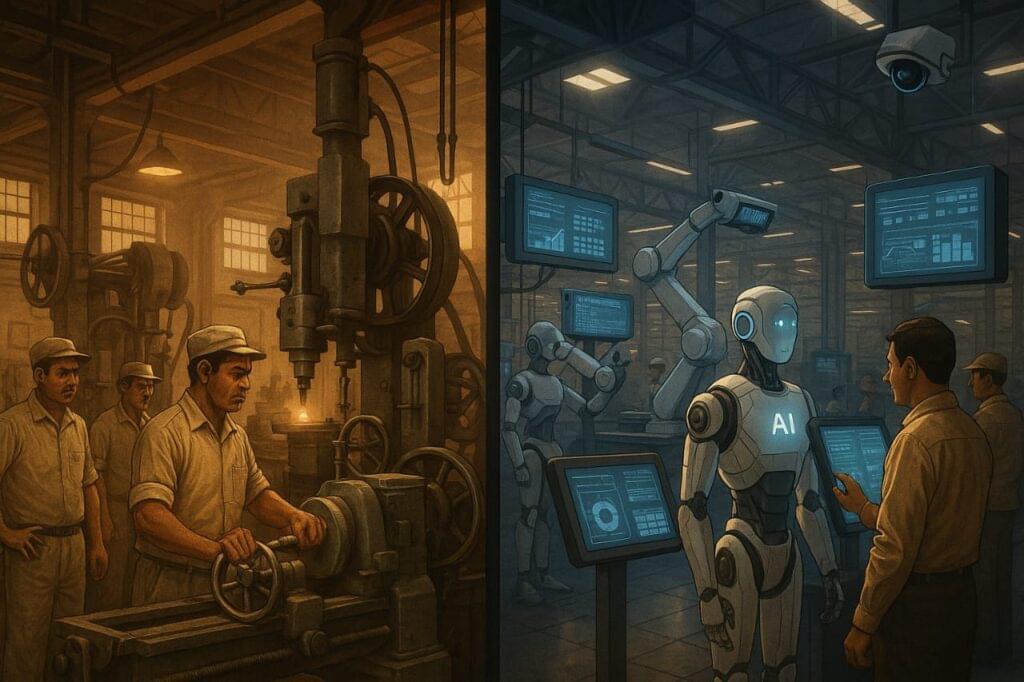
In the Industry 5.0 era, digital twins act as the bridge between human expertise and AI intelligence.
Operators gain full visibility of production — allowing smarter decisions, reduced risk, and faster innovation cycles.
🔹 5. Adoption in Indian Manufacturing
India’s adoption of digital twins is accelerating.
From Bharat Heavy Electricals (BHEL) to Tata Steel, companies are using virtual models for predictive maintenance, process optimization, and sustainable production.
Indian MSMEs are also catching up fast with affordable cloud-based simulation platforms.
Why Digital Twins Matter for the Future
By 2030, over 50% of global manufacturers are expected to use digital twin ecosystems.
This will lead to:
✅ Faster product development
✅ Smarter decision-making
✅ Lower operational costs
✅ Sustainable manufacturing growth

IMTS 2026 Opens in Chicago: AI, CNC, Robotics and Automation Take Center Stage
IMTS 2026 is officially underway in Chicago, bringing the global manufacturing technology industry together at…
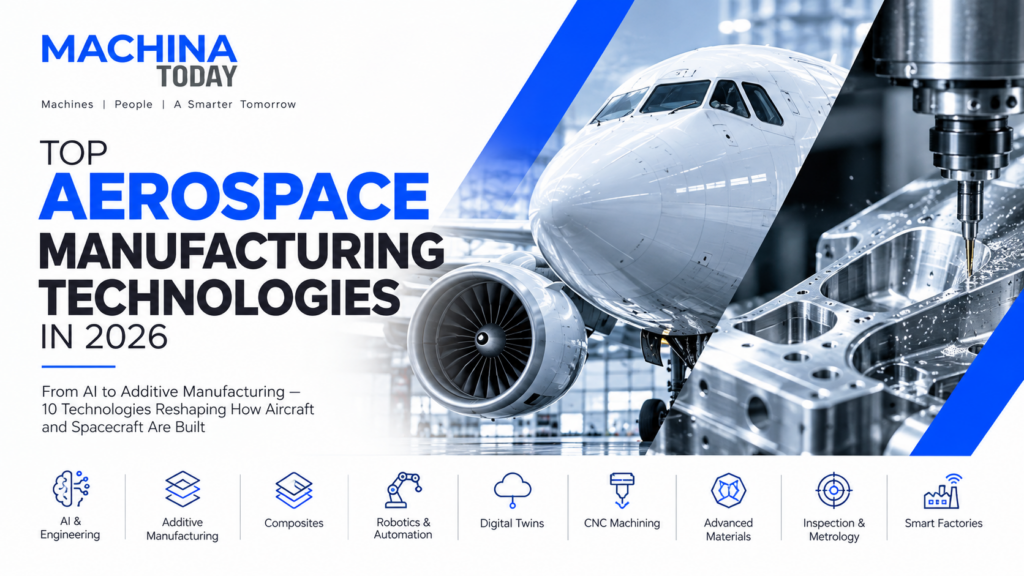
Top Aerospace Manufacturing Technologies in 2026: 10 Technologies Reshaping How Aircraft Are Built
Aerospace manufacturing is entering a new industrial era. From AI-driven engineering and digital twins to…
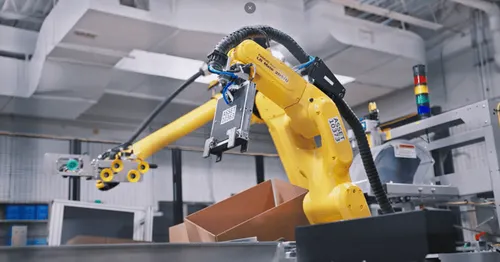
FANUC at IMTS 2026: Physical AI, Robotics and CNC Innovation Move Into the Factory
FANUC America is positioning IMTS 2026 as a showcase for the next stage of industrial…
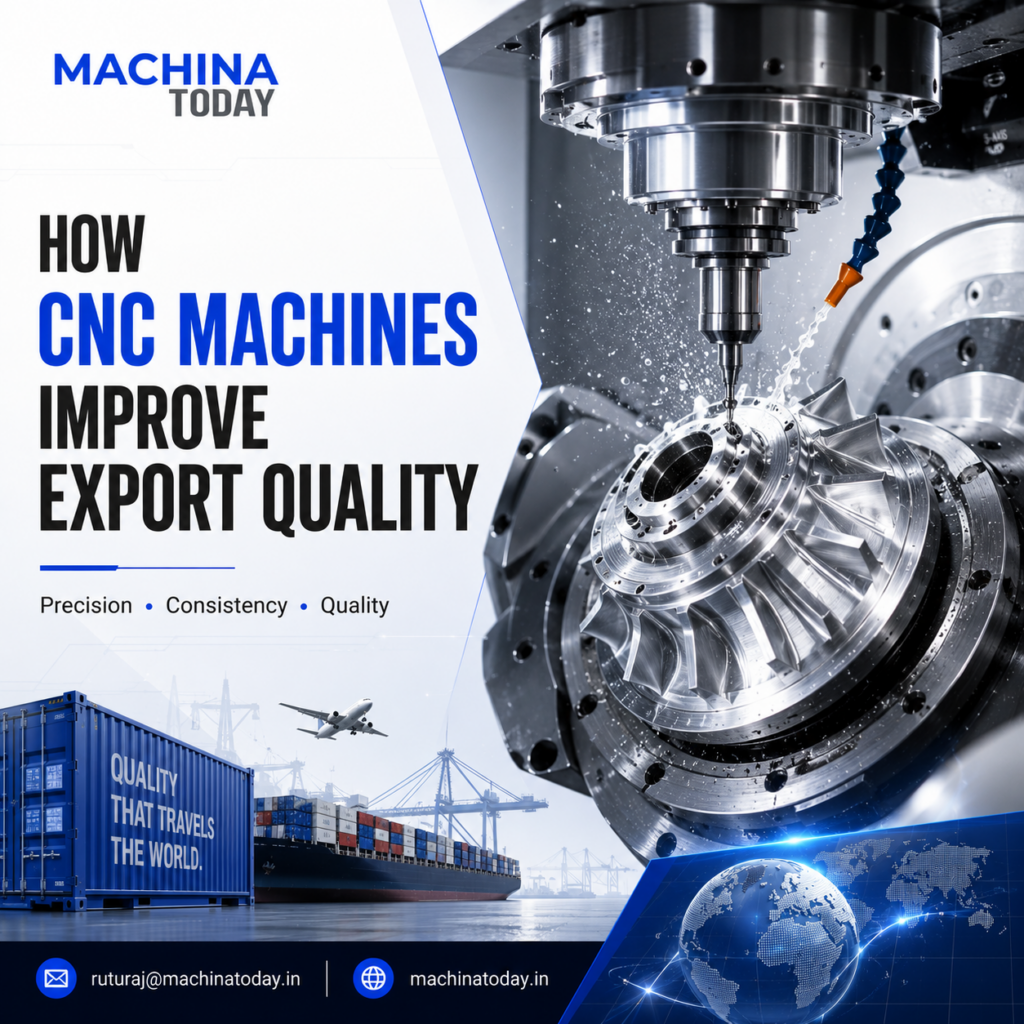
How CNC Machines Improve Export Quality: From Precision Machining to Process Control
Global manufacturing is increasingly built around supply chains where components may be designed in one…
ANCA at IMTS 2026: New Leadership, Precision Tooling and the Next Manufacturing Shift
A new CEO. A legendary founder. One booth. And a manufacturing industry moving faster than…
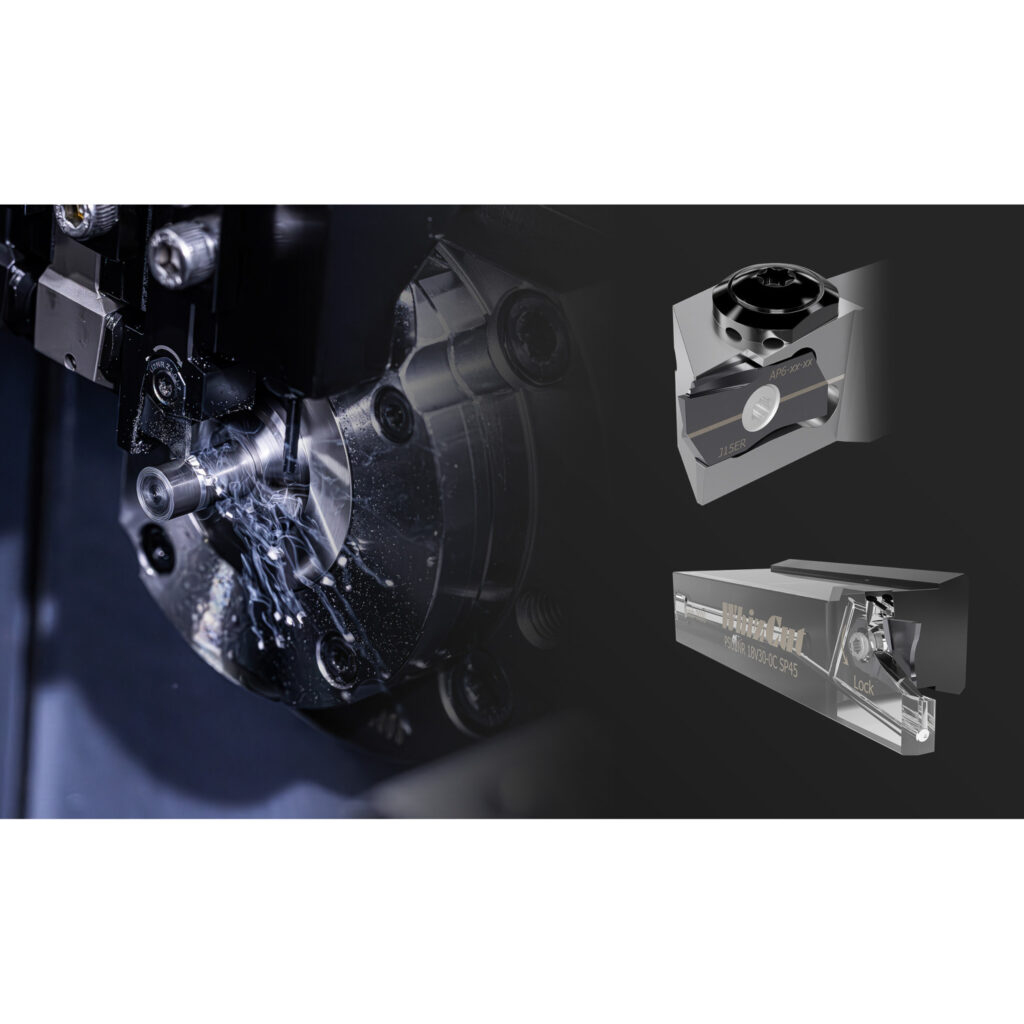
WhizCut at AMB Stuttgart 2026: Smarter Cutting Tools Target Material Waste, Productivity and Sustainable Machining
WhizCut is set to present its precision-tooling portfolio at AMB Stuttgart 2026, with products focused…