Manufacturing has always been one of the world’s most demanding industries. Every day, millions of workers operate heavy machinery, lift massive components, weld high-temperature materials, work around hazardous chemicals, and perform repetitive motions that can lead to long-term injuries.
While manufacturing remains the backbone of the American economy, workplace safety continues to be one of the industry’s biggest priorities.
Today’s manufacturers aren’t replacing people—they’re protecting them.
Industrial robotics, collaborative robots (cobots), Artificial Intelligence (AI), machine vision, and smart automation are transforming how factories operate. Dangerous, repetitive, and physically demanding tasks are increasingly handled by intelligent machines, allowing employees to focus on higher-value work requiring judgment, creativity, quality control, and technical expertise.
The result is fewer workplace injuries, higher productivity, better product quality, and improved employee satisfaction.
For manufacturers competing globally, robotics is no longer just a productivity investment—it’s a worker safety strategy.
Why Worker Safety Matters More Than Ever
Manufacturing environments present numerous risks:
- Heavy lifting
- Falling objects
- High-speed rotating equipment
- Welding sparks
- Metal chips
- Chemical exposure
- Extreme temperatures
- Forklift traffic
- Repetitive motion injuries
- Fatigue-related accidents
Even experienced operators can make mistakes when performing physically demanding tasks over long shifts.
According to workplace safety research, many industrial accidents are linked to repetitive manual work, fatigue, and exposure to hazardous environments.
Modern robotics significantly reduces these risks.
What Are Industrial Robots?
Industrial robots are programmable machines designed to perform manufacturing operations with exceptional precision and consistency.
Common applications include:
- Welding
- Material handling
- Machine tending
- CNC loading
- Packaging
- Assembly
- Palletizing
- Inspection
- Painting
- Cutting
- Grinding
- Deburring
Unlike humans, robots never experience fatigue, distraction, or repetitive strain.
How Robotics Improve Worker Safety
1. Eliminating Dangerous Manual Tasks
Many manufacturing jobs require workers to operate in hazardous conditions.
Examples include:
- Molten metal handling
- Press machines
- Heavy stamping
- Foundries
- Laser cutting
- Plasma cutting
- Chemical processing
Modern robotic systems perform these operations while workers supervise from safe locations.
Instead of standing next to dangerous equipment, employees monitor robotic operations using digital control systems.
This dramatically reduces exposure to injuries.
2. Reducing Heavy Lifting Injuries
Musculoskeletal disorders remain one of the largest causes of workplace injuries.
Workers frequently lift:
- Steel plates
- Automotive parts
- Heavy dies
- Castings
- Pallets
- Machine components
Industrial robots equipped with advanced grippers can safely lift hundreds or even thousands of pounds repeatedly without fatigue.
Employees no longer need to perform risky manual lifting throughout the day.
3. Preventing Repetitive Stress Injuries
Thousands of manufacturing employees perform the same movement every few seconds.
Examples include:
- Assembly
- Screw tightening
- Packaging
- Inspection
- Machine loading
After years of repetition, workers often develop:
- Carpal Tunnel Syndrome
- Tendonitis
- Shoulder injuries
- Neck pain
- Back pain
Collaborative robots automate repetitive work while employees focus on programming, monitoring, troubleshooting, and quality assurance.
4. Keeping Employees Away from Hazardous Environments
Some manufacturing environments expose workers to:
- Toxic fumes
- Welding smoke
- Paint chemicals
- High temperatures
- Dust
- Radiation
- Noise
Robotic automation reduces direct human exposure.
Instead of entering dangerous environments, operators supervise systems remotely.
The Rise of Collaborative Robots (Cobots)
Unlike traditional industrial robots that operate inside safety cages, collaborative robots are specifically designed to work safely alongside humans.
Cobots include advanced safety technologies such as:
- Force sensing
- Vision systems
- AI monitoring
- Speed limitation
- Collision detection
- Automatic stopping
- Safety scanners
If a worker approaches, the cobot immediately slows down or stops completely.
This makes automation accessible even for small and medium-sized manufacturers.
AI Makes Robotics Even Safer
Artificial Intelligence is revolutionizing industrial safety.
Modern robotic systems now use AI for:
Hazard Detection
AI cameras identify unsafe conditions before accidents occur.
Human Tracking
Vision systems continuously monitor worker movement.
Predictive Maintenance
AI predicts machine failures before dangerous breakdowns happen.
Intelligent Motion Planning
Robots automatically adjust movement paths when people enter nearby workspaces.
Safety Analytics
Factories analyze thousands of safety events to improve workplace procedures.
Real Manufacturing Applications
Automotive Manufacturing
Automotive factories use robots for:
- Spot welding
- Painting
- Engine assembly
- Material transport
- Battery manufacturing
These operations involve high heat, sparks, heavy components, and repetitive work.
Automation dramatically reduces employee exposure.
Aerospace Manufacturing
Aircraft components require extreme precision.
Robots perform:
- Composite trimming
- Precision drilling
- Sealant application
- Heavy component positioning
Workers avoid physically demanding and hazardous tasks.
Metal Fabrication
Robots automate:
- Laser cutting
- Grinding
- Welding
- Deburring
- Polishing
Employees avoid sharp edges, flying sparks, and metal dust.
Warehouse Automation
Autonomous Mobile Robots (AMRs) transport products safely throughout warehouses.
Benefits include:
- Less forklift traffic
- Reduced lifting
- Faster logistics
- Improved ergonomics
Food Manufacturing
Robotics minimizes contamination while protecting workers from:
- Cold environments
- Sharp cutting equipment
- Repetitive packaging
Robotics and OSHA Compliance
Many U.S. manufacturers invest in robotics to support workplace safety initiatives and strengthen compliance with occupational safety standards.
Automation can help companies:
- Reduce hazardous exposure
- Improve machine guarding
- Enhance process consistency
- Better document safety procedures
- Strengthen risk management
Robotics should complement—not replace—a comprehensive safety program that includes employee training, maintenance, and continuous improvement.
The Business Benefits of Safer Automation
Safety investments often create broader operational advantages.
Manufacturers commonly see improvements such as:
| Benefit | Business Impact |
|---|---|
| Fewer workplace injuries | Lower downtime |
| Better ergonomics | Higher employee satisfaction |
| Improved quality | Less scrap and rework |
| Higher uptime | Increased production capacity |
| Predictable operations | Better delivery performance |
| Safer environment | Easier talent attraction and retention |
Robotics Do Not Replace Skilled Workers
A common misconception is that robots eliminate jobs.
In practice, robotics often changes the nature of work.
Employees increasingly move into roles such as:
- Robot operator
- Automation technician
- Maintenance engineer
- Quality specialist
- Production planner
- Data analyst
- Manufacturing engineer
- Robotics programmer
People remain essential for decision-making, continuous improvement, troubleshooting, innovation, and customer requirements.
Emerging Safety Technologies
The next generation of smart factories combines robotics with technologies including:
- AI-powered computer vision
- Wearable safety sensors
- Digital twins
- Industrial IoT
- Autonomous mobile robots
- Edge computing
- Predictive analytics
- Machine learning
- Mixed reality maintenance
- Smart PPE
Together, these technologies create safer, more connected manufacturing environments.
Frequently Asked Questions (FAQ)
How do robots improve worker safety?
Robots perform hazardous, repetitive, and physically demanding tasks, reducing worker exposure to injuries while improving consistency and productivity.
Are collaborative robots safe?
Yes. Cobots are designed with safety features such as force sensing, collision detection, speed monitoring, and emergency stop functions so they can work alongside people when properly integrated and risk-assessed.
Which industries benefit most?
Automotive, aerospace, electronics, food processing, pharmaceuticals, logistics, metal fabrication, plastics, medical device manufacturing, and warehouse operations all benefit significantly.
Can small manufacturers use robotics?
Yes. Modern cobots are more affordable, easier to program, and suitable for many small and mid-sized manufacturers seeking to improve safety and efficiency.
Does robotics eliminate jobs?
Most manufacturers use robotics to automate hazardous or repetitive work while creating demand for higher-skilled technical roles involving programming, maintenance, quality, and process optimization.
Final Thoughts
Worker safety is no longer viewed as just a regulatory obligation—it’s a strategic investment. As U.S. manufacturers face labor shortages, rising quality expectations, and global competition, robotics offers a practical way to protect employees while improving operational performance.
The factories leading the next generation of manufacturing are those that combine skilled people with intelligent automation. By removing workers from hazardous tasks and enabling them to focus on higher-value activities, robotics helps build workplaces that are safer, more productive, and better prepared for the future.
Why Read Machina Today?
At Machina Today, we help manufacturers stay ahead with insights into robotics, automation, CNC machining, AI, Industry 4.0, and smart factory technologies. Our mission is to provide decision-makers with practical knowledge that supports safer operations and sustainable growth.
Looking to grow your manufacturing brand in the U.S. market?
Machina Today also partners with industrial companies on:
- Manufacturing SEO
- Industrial content marketing
- LinkedIn growth
- Technical blogging
- Website optimization
- AI search optimization (AEO/GEO)
- Digital lead generation for B2B manufacturers
Contact us: ruturaj@machinatoday.in
manufacturingmedia

IMTS 2026 Opens in Chicago: AI, CNC, Robotics and Automation Take Center Stage
IMTS 2026 is officially underway in Chicago, bringing the global manufacturing technology industry together at…
Top Aerospace Manufacturing Technologies in 2026: 10 Technologies Reshaping How Aircraft Are Built
Aerospace manufacturing is entering a new industrial era. From AI-driven engineering and digital twins to…
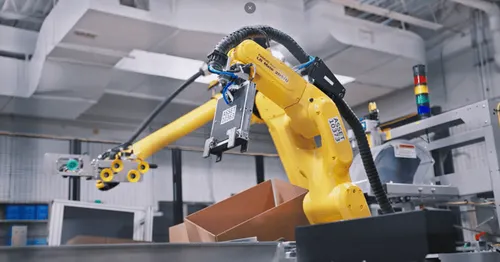
FANUC at IMTS 2026: Physical AI, Robotics and CNC Innovation Move Into the Factory
FANUC America is positioning IMTS 2026 as a showcase for the next stage of industrial…
How CNC Machines Improve Export Quality: From Precision Machining to Process Control
Global manufacturing is increasingly built around supply chains where components may be designed in one…

ANCA at IMTS 2026: New Leadership, Precision Tooling and the Next Manufacturing Shift
A new CEO. A legendary founder. One booth. And a manufacturing industry moving faster than…
WhizCut at AMB Stuttgart 2026: Smarter Cutting Tools Target Material Waste, Productivity and Sustainable Machining
WhizCut is set to present its precision-tooling portfolio at AMB Stuttgart 2026, with products focused…