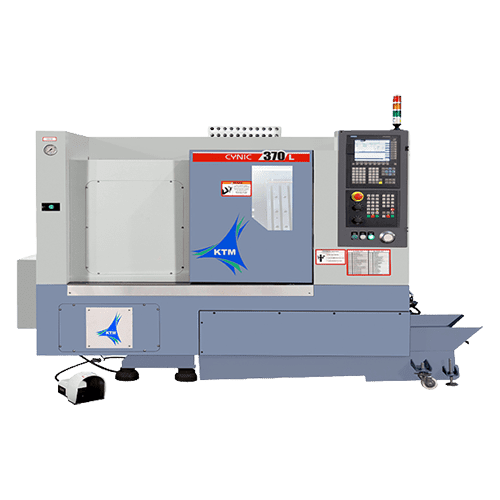
The global manufacturing industry is undergoing a massive transformation driven by automation, precision engineering, AI, and smart factories. At the center of this revolution is the CNC (Computer Numerical Control) machine market.
From automotive and aerospace to medical devices and electronics, CNC technology has become the backbone of modern manufacturing. As industries seek higher productivity, tighter tolerances, and reduced labor dependency, demand for CNC machines is accelerating worldwide.
According to recent market research, the global CNC machine market is expected to reach approximately USD 132.9 billion by 2030, growing at a CAGR of 10.3% between 2024 and 2030.
This growth signals enormous opportunities for manufacturers, machine builders, tooling companies, automation providers, and investors.
Global CNC Market at a Glance
| Metric | Value |
|---|---|
| Market Size (2023) | USD 66.7 Billion |
| Forecast Size (2030) | USD 132.9 Billion |
| CAGR (2024-2030) | 10.3% |
| Largest Region | Asia-Pacific |
| Fastest Growing Segment | CNC Milling Machines |
| Key Industries | Automotive, Aerospace, Electronics, Medical |
Source: Grand View Research Market Analysis
Why Is the CNC Market Growing So Fast?
1. Industry 4.0 Adoption
Manufacturers are rapidly adopting:
- Smart factories
- Industrial IoT
- Digital twins
- AI-powered production systems
- Real-time machine monitoring
Modern CNC machines are increasingly connected, allowing predictive maintenance and remote operation capabilities.
2. Labor Shortages Across Manufacturing
Many countries face shortages of skilled machinists.
CNC automation helps companies:
- Reduce dependency on manual labor
- Improve consistency
- Increase output
- Operate 24/7
This is especially important in North America, Europe, Japan, and rapidly industrializing nations.
3. Demand for Precision Manufacturing
Industries requiring micron-level accuracy continue expanding:
Aerospace
Aircraft parts require extremely tight tolerances.
Medical Devices
Implants and surgical instruments depend on precision machining.
Electronics
Miniaturized components demand advanced CNC capabilities.
Electric Vehicles (EVs)
Battery housings, motor components, and lightweight structures rely heavily on CNC machining.
4. Growth of Electric Vehicles
The global EV boom is creating significant demand for:
- Aluminum machining
- Battery component manufacturing
- Precision motor parts
- Lightweight structural components
Every EV factory requires advanced CNC infrastructure.
Which CNC Machines Will See the Highest Demand?
According to industry forecasts, CNC milling machines are expected to be among the fastest-growing machine categories due to their versatility and widespread application across industries.
Major categories include:
CNC Milling Machines
- Multi-axis machining
- Aerospace applications
- Mold & die manufacturing
CNC Turning Centers
- Shaft manufacturing
- Automotive components
- High-volume production
CNC Laser Machines
- Sheet metal processing
- Precision cutting
CNC Grinding Machines
- High-precision finishing
Hybrid CNC Systems
- Combining machining and additive manufacturing
Asia-Pacific Will Lead the Global CNC Market
Asia-Pacific remains the largest CNC market globally. Countries leading adoption include:
China
- World’s largest manufacturing base
- Heavy investment in automation
India
- Make in India initiatives
- Growing aerospace and defense sectors
- Rapid expansion of MSME manufacturing
Japan
- Precision engineering excellence
- Robotics integration
South Korea
- Electronics and semiconductor manufacturing
Asia-Pacific accounted for the largest share of the CNC market and is expected to maintain dominance through 2030.
Emerging Technologies Transforming CNC Manufacturing
AI-Powered CNC Machines
Artificial intelligence is enabling:
- Tool wear prediction
- Adaptive machining
- Process optimization
- Automated quality control
Digital Twin Technology
Manufacturers can now create virtual replicas of machines and production lines.
Benefits include:
- Faster setup
- Reduced downtime
- Better process planning
Robotics Integration
Collaborative robots (Cobots) are increasingly being paired with CNC machines to automate:
- Loading/unloading
- Inspection
- Material handling
Predictive Maintenance
IoT-enabled CNC systems can detect:
- Vibration anomalies
- Spindle wear
- Temperature fluctuations
before failures occur.
Opportunities for Indian Manufacturers
India is positioning itself as a major manufacturing destination.
Key growth sectors include:
- Aerospace manufacturing
- Defense production
- Electronics manufacturing
- Semiconductor ecosystem
- Automotive and EV production
Government initiatives and infrastructure investments are creating strong demand for CNC machinery and advanced manufacturing technologies.
For Indian machine shops, this means:
✅ More export opportunities
✅ Higher demand for precision components
✅ Greater adoption of automation
✅ Increased competitiveness in global markets
Challenges Facing the CNC Industry
Despite strong growth, several challenges remain:
Skilled Workforce Gap
Advanced CNC programming requires specialized expertise.
High Initial Investment
Modern multi-axis CNC systems involve significant capital expenditure.
Supply Chain Disruptions
Machine tool manufacturers continue managing component availability risks.
Cybersecurity Concerns
Connected factories require stronger cybersecurity measures.
CNC Market Forecast 2030
By 2030, CNC technology will become more intelligent, autonomous, and connected than ever before.
Industry experts expect:
- Wider adoption of AI-assisted machining
- Fully connected smart factories
- Increased robotic integration
- More sustainable manufacturing operations
- Expansion of multi-axis machining centers
The market is projected to surpass USD 132.9 billion by 2030, making CNC one of the most important technologies driving global industrial growth.
FAQ
What is the projected CNC market size by 2030?
The global CNC machine market is expected to reach approximately USD 132.9 billion by 2030.
Which region dominates the CNC market?
Asia-Pacific currently leads the global CNC market due to strong manufacturing activity in China, India, Japan, and South Korea.
What industries use CNC machines the most?
Major industries include automotive, aerospace, electronics, medical devices, defense, and industrial equipment manufacturing.
Why is CNC technology important?
CNC technology improves precision, productivity, consistency, and automation while reducing manufacturing costs and human error.
Want more insights on CNC technology, smart factories, automation, robotics, and manufacturing trends?
Follow Machina Today and subscribe to our newsletter for weekly industry intelligence, expert interviews, and future manufacturing insights.

IMTS 2026 Opens in Chicago: AI, CNC, Robotics and Automation Take Center Stage
IMTS 2026 is officially underway in Chicago, bringing the global manufacturing technology industry together at…

Top Aerospace Manufacturing Technologies in 2026: 10 Technologies Reshaping How Aircraft Are Built
Aerospace manufacturing is entering a new industrial era. From AI-driven engineering and digital twins to…
FANUC at IMTS 2026: Physical AI, Robotics and CNC Innovation Move Into the Factory
FANUC America is positioning IMTS 2026 as a showcase for the next stage of industrial…
How CNC Machines Improve Export Quality: From Precision Machining to Process Control
Global manufacturing is increasingly built around supply chains where components may be designed in one…

ANCA at IMTS 2026: New Leadership, Precision Tooling and the Next Manufacturing Shift
A new CEO. A legendary founder. One booth. And a manufacturing industry moving faster than…
WhizCut at AMB Stuttgart 2026: Smarter Cutting Tools Target Material Waste, Productivity and Sustainable Machining
WhizCut is set to present its precision-tooling portfolio at AMB Stuttgart 2026, with products focused…