For decades, manufacturers asked:
“How much will automation cost?”
Today, successful manufacturers ask:
“How much growth are we losing without automation?”
From automotive factories in Germany to precision manufacturers in Japan and growing industries in India and the USA, automation has become a competitive advantage.
Companies are not investing in robots, CNC automation, AI systems, and smart factories just because they look futuristic.
They are investing because automation creates measurable returns.
That is where Automation ROI (Return on Investment) becomes important.
What Is Automation ROI in Manufacturing?
Automation ROI measures the financial benefit a company receives after investing in automation technology.
Simple formula:
Automation ROI = (Financial Gain From Automation – Automation Investment Cost) ÷ Investment Cost × 100
Example:
A factory invests:
Automation system cost: $100,000
Yearly savings:
- Labor cost reduction: $40,000
- Less downtime: $25,000
- Higher production output: $50,000
Total benefit: $115,000
ROI:
($115,000 – $100,000) ÷ $100,000
= 15% first-year ROI
But the real value continues through multiple years.
5 Ways Automation Creates ROI for Manufacturers
1. Higher Production Output
Automation allows factories to produce more with the same resources.
Benefits:
✓ Faster cycle time
✓ 24/7 production capability
✓ Reduced manual dependency
✓ Higher machine utilization
Modern CNC automation, robotic loading systems, and smart production lines help manufacturers increase capacity without immediately expanding factory space.
2. Lower Manufacturing Costs
Automation reduces hidden factory costs:
- Production errors
- Material waste
- Machine downtime
- Rework
- Energy inefficiency
For global manufacturers competing on price and quality, cost reduction creates long-term market advantage.
3. Improved Quality & Precision
Human capability is valuable, but automated systems provide consistency.
Automation improves:
- Repeatability
- Accuracy
- Inspection quality
- Process control
This is especially important in:
- Aerospace
- Medical manufacturing
- Automotive
- Precision engineering
4. Solving Skilled Labor Challenges
Manufacturing industries worldwide are facing skilled worker shortages.
Automation does not simply replace workers.
It helps companies:
- Upgrade workforce skills
- Reduce repetitive tasks
- Improve safety
- Focus employees on higher-value activities
The future factory will combine:
Human expertise + Artificial Intelligence + Automation
5. Data-Driven Manufacturing Decisions
Modern automation creates valuable production data.
Smart factories can monitor:
- Machine performance
- Downtime reasons
- Production efficiency
- Maintenance requirements
With Industrial IoT and AI, manufacturers can predict problems before failures happen.
How Long Does Automation Take To Pay Back?
Payback depends on:
- Type of automation
- Production volume
- Labor cost
- Machine utilization
- Industry
Typical examples:
Robotic automation:
12–36 months
CNC automation:
18–48 months
Smart factory systems:
24–60 months
The companies that plan automation strategically usually achieve stronger returns.
Real Example: Small Manufacturers Can Also Benefit
Automation is no longer only for large corporations.
MSMEs and small manufacturers can start with:
- CNC automation
- Automatic tool changers
- Robotic handling
- Digital monitoring systems
- Production software
A small investment can create:
Higher productivity → Better delivery → More customers → Business growth
Common Mistake Manufacturers Make
Many companies calculate only the machine price.
They ignore:
❌ Lost production opportunities
❌ Quality problems
❌ Customer delays
❌ Labor dependency
❌ Future competitiveness
The correct question is:
“How much will staying manual cost us in the next 5 years?”
Future of Manufacturing: Automation Will Decide Global Competitiveness
Countries leading manufacturing:
- Germany
- USA
- Japan
- South Korea
- China
are increasing automation adoption because factories are becoming smarter.
The next generation of manufacturing will be built around:
AI + Robotics + CNC + Data + Human Expertise
Manufacturers who adopt early will have a stronger advantage.
Is automation expensive for small manufacturers?
Not always. Companies can start with targeted automation solutions that solve specific production problems.
How do manufacturers calculate automation ROI?
They calculate savings from labor, production increase, quality improvement, and reduced downtime.
Is automation replacing manufacturing workers?
Automation changes jobs rather than simply removing them. It increases demand for skilled technical workers.
Which industries benefit most from automation?
Automotive, aerospace, electronics, CNC machining, medical, and precision manufacturing industries.
Automation is not just a technology purchase.
It is a business strategy.
The manufacturers winning the future will not be the ones with the biggest factories.
They will be the ones with the smartest factories.
Machina Today Insight:
The future of manufacturing belongs to companies that measure technology not by cost — but by the value it creates.
Are you a manufacturing company exploring automation?
Follow Machina Today for global insights on CNC, robotics, Industry 4.0, and factory innovation.
For industrial features and partnerships:
ruturaj@machinatoday.in

IMTS 2026 Opens in Chicago: AI, CNC, Robotics and Automation Take Center Stage
IMTS 2026 is officially underway in Chicago, bringing the global manufacturing technology industry together at…
Top Aerospace Manufacturing Technologies in 2026: 10 Technologies Reshaping How Aircraft Are Built
Aerospace manufacturing is entering a new industrial era. From AI-driven engineering and digital twins to…
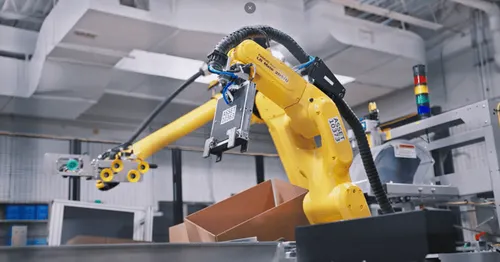
FANUC at IMTS 2026: Physical AI, Robotics and CNC Innovation Move Into the Factory
FANUC America is positioning IMTS 2026 as a showcase for the next stage of industrial…
How CNC Machines Improve Export Quality: From Precision Machining to Process Control
Global manufacturing is increasingly built around supply chains where components may be designed in one…

ANCA at IMTS 2026: New Leadership, Precision Tooling and the Next Manufacturing Shift
A new CEO. A legendary founder. One booth. And a manufacturing industry moving faster than…
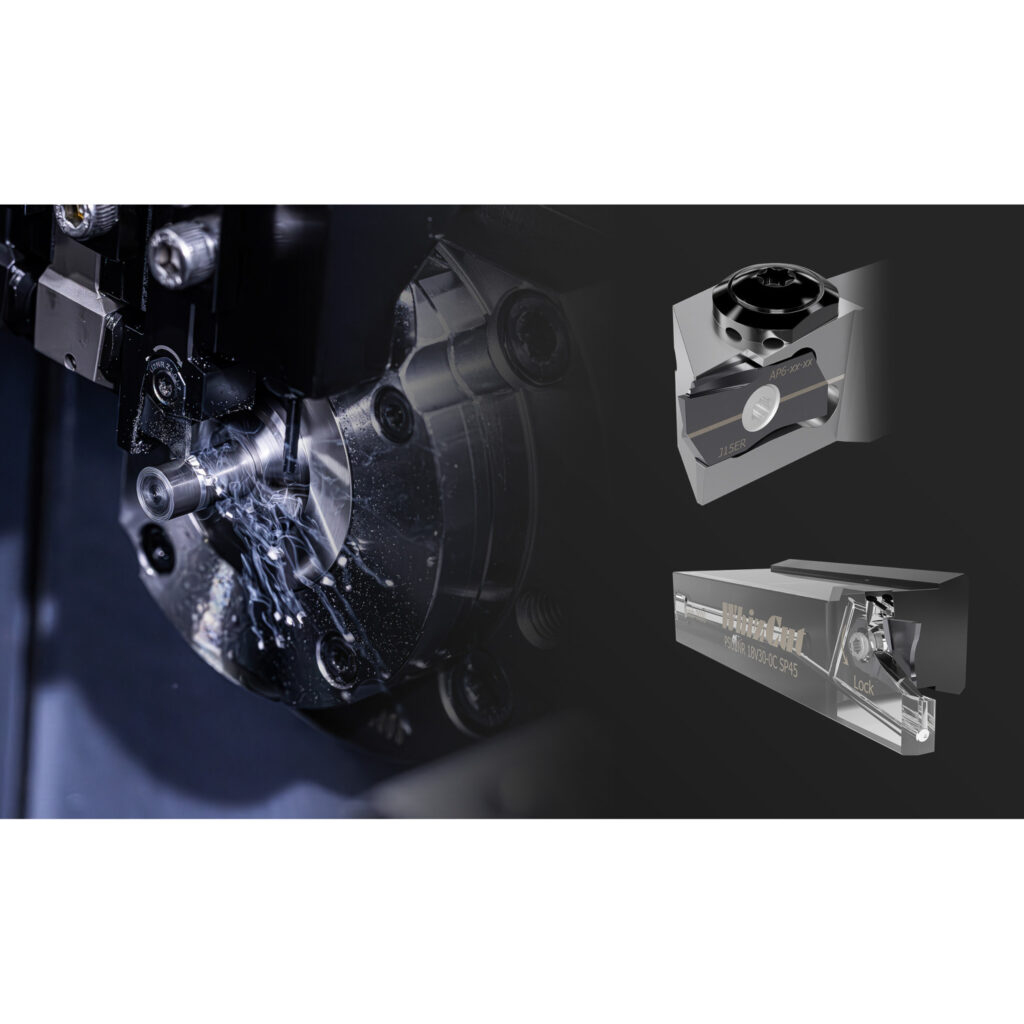
WhizCut at AMB Stuttgart 2026: Smarter Cutting Tools Target Material Waste, Productivity and Sustainable Machining
WhizCut is set to present its precision-tooling portfolio at AMB Stuttgart 2026, with products focused…