In today’s competitive manufacturing environment, product quality is no longer just a goal—it’s a necessity. Customers demand consistency, precision, and reliability, while manufacturers face increasing pressure to reduce costs and improve efficiency.
One technology transforming modern factories is the smart sensor.
Smart sensors are helping manufacturers detect defects earlier, monitor machines continuously, reduce downtime, and achieve unprecedented levels of production quality. As Industry 4.0 continues to reshape global manufacturing, smart sensors have become a critical component of smart factories worldwide.
In this article, we’ll explore how smart sensors improve production quality, their benefits, real-world applications, and why they are becoming essential for modern manufacturing operations.
What Are Smart Sensors?
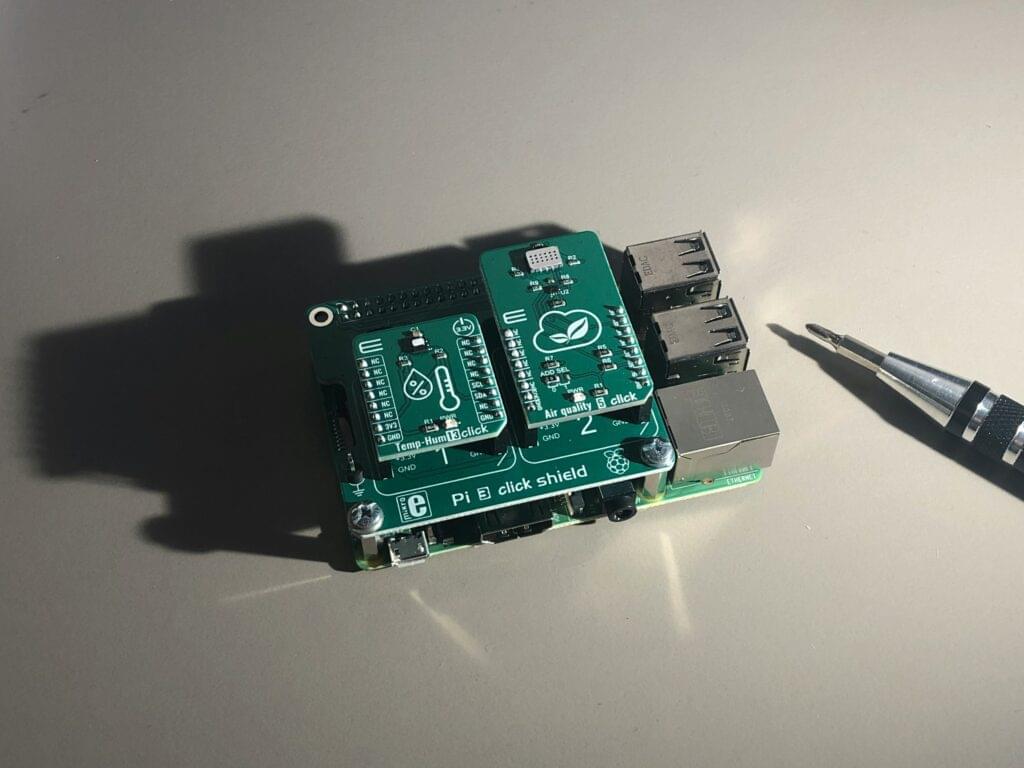
A smart sensor is an advanced sensing device that not only collects data but also processes, analyzes, and communicates information in real time.
Unlike traditional sensors, smart sensors can:
- Analyze data locally
- Communicate with machines and software
- Detect abnormalities automatically
- Trigger alerts instantly
- Support predictive decision-making
These sensors are often connected through Industrial IoT (IIoT) networks, enabling seamless communication across machines, production lines, and factory management systems.
Why Production Quality Matters More Than Ever
Poor production quality can result in:
- Product recalls
- Customer complaints
- Increased waste
- Higher manufacturing costs
- Damaged brand reputation
For manufacturers operating in sectors such as automotive, aerospace, medical devices, electronics, and CNC machining, even small quality deviations can lead to significant losses.
Smart sensors help manufacturers detect problems before they become costly failures.
How Smart Sensors Improve Production Quality
1. Real-Time Process Monitoring
One of the biggest advantages of smart sensors is continuous monitoring.
Sensors can track:
- Temperature
- Pressure
- Vibration
- Humidity
- Speed
- Tool wear
- Material flow
When a parameter moves outside acceptable limits, operators receive immediate alerts.
Example
In a CNC machining operation, vibration sensors can identify spindle imbalance before it affects surface finish quality.
This allows corrective action before defective parts are produced.
2. Early Defect Detection
Traditional quality inspection often occurs after production.
By then, hundreds or even thousands of defective products may already be manufactured.
Smart sensors enable:
- In-process inspection
- Continuous quality verification
- Automatic defect identification
Manufacturers can identify issues at the source rather than discovering them during final inspection.
Benefits
✔ Reduced scrap
✔ Lower rework costs
✔ Faster quality corrections
✔ Improved customer satisfaction
3. Predictive Maintenance Prevents Quality Issues
Machine wear is one of the most common causes of production defects.
Smart sensors monitor equipment health by measuring:
- Bearing conditions
- Motor performance
- Vibration patterns
- Lubrication status
- Temperature fluctuations
Using predictive maintenance, manufacturers can service equipment before failures occur.
This prevents:
- Unexpected downtime
- Quality inconsistencies
- Machine-related defects
4. Improved Process Consistency
Consistency is critical in manufacturing.
Smart sensors ensure production parameters remain within predefined tolerances.
For example:
In injection molding, temperature sensors continuously monitor mold temperatures to ensure every product meets quality standards.
The result is:
- Better dimensional accuracy
- Reduced variation
- Higher production consistency
5. AI-Powered Quality Control
Modern smart sensors often work with artificial intelligence systems.
AI algorithms analyze sensor data and identify patterns that humans may miss.
Applications include:
- Surface defect detection
- Dimensional verification
- Weld quality analysis
- Assembly inspection
AI-enhanced sensors continuously learn and improve detection accuracy over time.
6. Better Traceability and Compliance
Manufacturers increasingly need complete production traceability.
Smart sensors automatically record:
- Production parameters
- Machine performance
- Environmental conditions
- Operator actions
This data helps manufacturers:
- Meet regulatory requirements
- Improve audits
- Track root causes of defects
- Ensure quality documentation
Industries such as aerospace, automotive, and medical manufacturing particularly benefit from this capability.
7. Reduced Human Error
Manual inspections can be inconsistent.
Factors such as fatigue, distractions, and skill differences may affect quality outcomes.
Smart sensors provide:
- Automated measurements
- Continuous monitoring
- Objective quality assessments
This reduces reliance on manual checks and improves accuracy.
Industries Benefiting from Smart Sensors
Automotive Manufacturing
Applications include:
- Engine assembly monitoring
- Robotic welding inspection
- Paint quality control
Aerospace Manufacturing
Used for:
- Precision machining verification
- Composite material monitoring
- Structural component inspection
CNC Machining
Sensors monitor:
- Tool wear
- Spindle vibration
- Cutting temperatures
- Machine accuracy
Food and Beverage
Used for:
- Temperature control
- Hygiene monitoring
- Packaging verification
Electronics Manufacturing
Applications include:
- PCB inspection
- Component placement verification
- Environmental monitoring
Smart Sensors and Industry 4.0
Industry 4.0 relies heavily on connected devices and real-time data.
Smart sensors serve as the foundation for:
- Smart factories
- Digital twins
- Predictive maintenance
- Autonomous manufacturing
- Industrial AI systems
By combining sensor data with cloud analytics and machine learning, manufacturers gain deeper insights into production performance.
Future Trends in Smart Sensor Technology
Several emerging developments are making smart sensors even more powerful:
Wireless Industrial Sensors
Reduce installation costs and improve flexibility.
Edge Computing Integration
Allows data processing directly at the machine level.
AI-Driven Analytics
Enables faster decision-making and advanced quality predictions.
Digital Twin Technology
Virtual factory models use sensor data to simulate and optimize production processes.
Self-Calibrating Sensors
Reduce maintenance requirements while improving measurement accuracy.
These innovations will further enhance production quality and operational efficiency in the coming years.
Business Benefits of Smart Sensors
Manufacturers adopting smart sensors often experience:
| Benefit | Impact |
|---|---|
| Reduced Scrap | Lower material waste |
| Higher Product Quality | Improved customer satisfaction |
| Less Downtime | Increased productivity |
| Better Traceability | Easier compliance |
| Predictive Maintenance | Reduced repair costs |
| Faster Decision Making | Improved operational efficiency |
Challenges to Consider
Despite their advantages, smart sensor implementation may involve:
- Initial investment costs
- Integration complexity
- Data security concerns
- Employee training requirements
However, most manufacturers achieve a strong return on investment through improved quality and reduced operational costs.
Smart sensors are revolutionizing manufacturing quality control by providing real-time visibility into production processes. From detecting defects earlier to enabling predictive maintenance and AI-driven quality inspection, these technologies help manufacturers produce better products while reducing waste and downtime.
As Industry 4.0 adoption accelerates globally, smart sensors will continue to play a central role in creating smarter, more efficient, and higher-quality manufacturing operations.
For manufacturers seeking a competitive advantage, investing in smart sensor technology is no longer optional—it’s becoming a necessity.
What are smart sensors in manufacturing?
Smart sensors are intelligent devices that collect, process, and transmit real-time production data to improve monitoring, automation, and quality control.
How do smart sensors improve product quality?
They continuously monitor production processes, detect abnormalities, identify defects early, and help maintain consistent manufacturing conditions.
What industries use smart sensors?
Automotive, aerospace, electronics, CNC machining, food processing, pharmaceuticals, and many other manufacturing sectors.
Are smart sensors part of Industry 4.0?
Yes. Smart sensors are a core technology enabling Industry 4.0, Industrial IoT, predictive maintenance, and smart factory systems.
What is the ROI of smart sensors?
Most manufacturers see ROI through reduced scrap, lower maintenance costs, improved productivity, and higher product quality.

IMTS 2026 Opens in Chicago: AI, CNC, Robotics and Automation Take Center Stage
IMTS 2026 is officially underway in Chicago, bringing the global manufacturing technology industry together at…

Top Aerospace Manufacturing Technologies in 2026: 10 Technologies Reshaping How Aircraft Are Built
Aerospace manufacturing is entering a new industrial era. From AI-driven engineering and digital twins to…
FANUC at IMTS 2026: Physical AI, Robotics and CNC Innovation Move Into the Factory
FANUC America is positioning IMTS 2026 as a showcase for the next stage of industrial…

How CNC Machines Improve Export Quality: From Precision Machining to Process Control
Global manufacturing is increasingly built around supply chains where components may be designed in one…

ANCA at IMTS 2026: New Leadership, Precision Tooling and the Next Manufacturing Shift
A new CEO. A legendary founder. One booth. And a manufacturing industry moving faster than…
WhizCut at AMB Stuttgart 2026: Smarter Cutting Tools Target Material Waste, Productivity and Sustainable Machining
WhizCut is set to present its precision-tooling portfolio at AMB Stuttgart 2026, with products focused…